
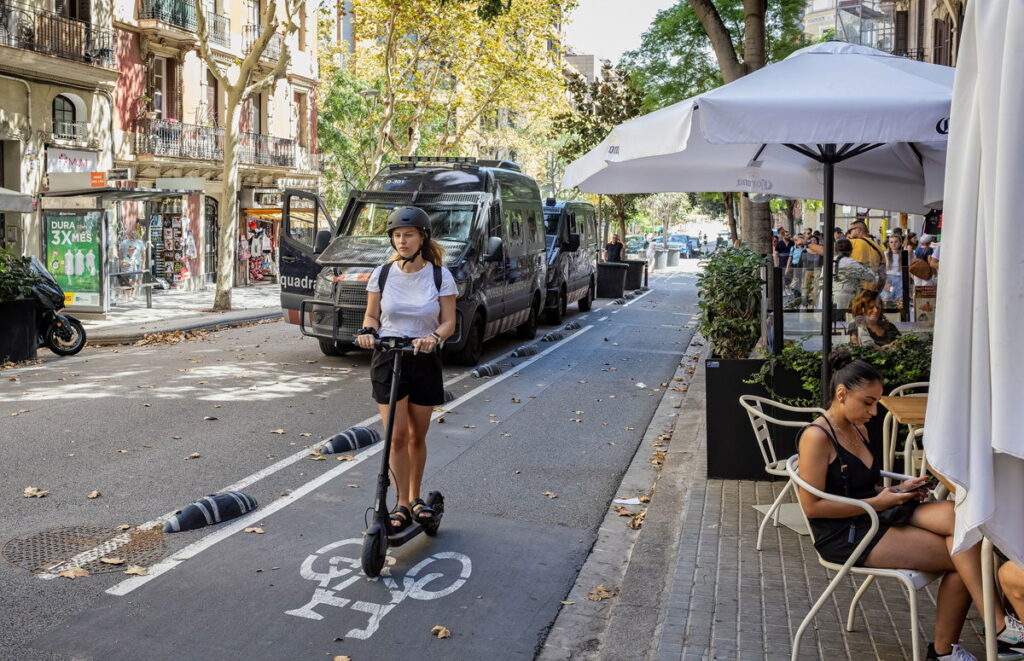
Spain plans stricter rules on electric scooters, with new controls for manufacturers and riders.
Credit : Nigel Jarvis, Shutterstock
If you use an electric scooter in Spain – or you’re thinking of buying one – things are about to change in a big way.
What started as a quick, cheap and flexible way to get around Spanish cities is now heading into far more regulated territory. Spain’s traffic authority, the Dirección General de Tráfico (DGT), is preparing to take direct control over who can manufacture electric scooters, who can sell them and which models are allowed on public roads.
The change comes after a modification to Spain’s General Vehicle Regulations, a legal update that quietly shifts electric scooters into a category that looks a lot closer to cars than to personal gadgets.
Most Read on Euro Weekly News
For many riders, this could mark the end of the ‘anything goes’ scooter era.
Electric scooters will soon be registered, tracked and linked to an owner
One of the most significant changes is the creation of a specific national register for electric scooters, officially classed as light personal vehicles. Until now, scooters have largely existed outside the traditional vehicle system. That is about to end.
Under the new rules, electric scooters will be entered into Spain’s National Vehicle Register, the same database used for cars and motorbikes. Each scooter will be linked to an owner and will carry a detailed administrative and technical record.
According to the updated regulation, this information will include the registered owner’s identity and address, the circulation certificate number, the scooter’s technical characteristics, manufacturer, brand, model, certification laboratory, registration number and compulsory insurance details.
Perhaps most importantly, ownership changes will be recorded. If a scooter is sold, transferred or taken out of circulation, that change will be logged officially. In practice, this means scooters will no longer be anonymous vehicles drifting through the city.
Industry sources say this move brings scooters closer to ‘car-style’ regulation, making it easier for authorities to identify responsibility in the event of accidents, fines or misuse.
Only DGT-certified scooters will be allowed on Spanish roads
The regulation doesn’t just affect users. It places heavy new responsibilities on manufacturers and sellers.
From now on, electric scooters will need to pass a formal certification process overseen by the DGT. This certification can be requested by the manufacturer, an authorised representative or, in exceptional cases, an individual owner. The stated aim is to ensure that only models meeting specific safety and technical standards are allowed on public roads.
Certification will involve testing in laboratories authorised by the DGT, which will verify that each model complies with the requirements for this category of vehicle. Once approved, manufacturers will be allowed to register the model and display the label ‘DGT certified’, including the use of the DGT logo in promotional material.
In simple terms, this gives the DGT the power to decide which scooter models can legally be built, marketed and sold in Spain. Models that fail certification could disappear from shops altogether.
This marks a major shift in the market and could affect prices, availability and the variety of scooters on offer.
Speed limits, exclusions and what won’t be affected
The regulation confirms that electric scooters will remain limited to a maximum speed of 25 km/h, reinforcing existing restrictions designed to reduce serious accidents in busy urban areas.
However, not all vehicles fall under the new framework. Several categories are explicitly excluded, including scooters designed exclusively for use on private land or competition, vehicles intended for people with reduced mobility, high-voltage vehicles exceeding specific electrical limits, toys with a maximum speed of 6 km/h, vehicles for military use and electric pedal-assist bicycles (EPACs).
For everyday riders, the message is clear: scooters are no longer seen as informal personal devices, but as vehicles that require traceability, certification and accountability.
Supporters of the change argue it will improve safety, reduce poorly built scooters on the roads and clarify responsibilities. Critics warn it could push smaller manufacturers out of the market and make scooters more expensive for consumers.
Either way, Spain is drawing a clear line. Electric scooters are staying – but they will now do so under rules that look far more like those governing cars than casual urban transport.
For anyone riding through Spanish streets, that shift is coming sooner than you might expect.
Stay tuned with Euro Weekly News for more news from Spain