
As the Trump train propels the country headlong into lawlessness with a new outrage every day, it’s hard to look away and focus on something else. But this is what I ask of you, gentle reader; we need to talk about a problem that would be facing us now even if The Donald had never been born.
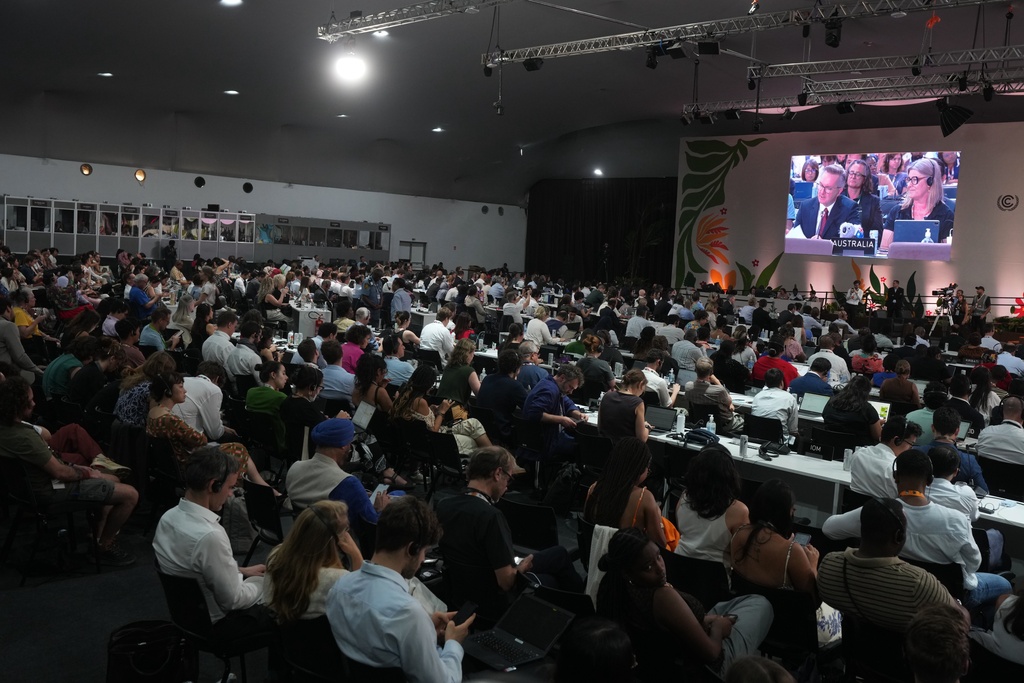
The COP 30 climate talks have ended in Brazil, where they went the way they have since they started. There were hundreds of representatives in attendance to protect the interests of the fossil fuel companies, and the talks ended without managing a statement to the effect that we need to get off of greenhouse gases.
Imagine a global get-together of lung specialists happening in, say, 1971, convened in order to address cancer. Then imagine that this global get-together is also attended by hundreds or perhaps thousands of flacks for Philip Morris and big tobacco. A cohort like that might very well fail to agree to a statement simply connecting cigarettes and lung cancer, as the science clearly indicated. That would really have been a bust from a public health perspective, wouldn’t it?
Then imagine that scenario repeating itself year after year for decades on end while the death toll rises and the connection between smoking and lung cancer becomes increasingly obvious. Every year the pulmonologists get together with, among others, the tobacco industry, and every year they don’t manage to say “Smoking causes cancer.” At some point, you’d think the world would have had enough of that.
That’s how it is with these climate talks, but it’s worse. Perhaps because the body count was so high and the deaths so awful, or perhaps because the evidence came in before the current era of denying scientific truth, the fact that smoking cigarettes is bad for you is not a well-kept secret and is not denied in public. In most places (and certainly in the U.S.), rates of smoking have declined.
Greenhouse emissions, on the other hand, have never gone down year-to-year during the 30 years of COP extravaganzas, except once during covid. Yes, a worldwide pandemic can put a dent in emissions. A global pompfest, not so much. All of the talking has, in effect, given cover for business as usual throughout the COP era.
Global warming is something that we experience personally, but it isn’t like losing a loved one to cancer. Flatly denying the fact of it remains, somehow, an option. Trump does it; Trumpers do it. In my book, COP 30 and all of those confabs have done it too. Our greenhouse gases are cooking the earth and we need to stop: if you won’t say that, you’re in denial.
So: the global invite-everybody-in-and-talk-about-it strategy has utterly failed. What is to be done?
At the other end of the spectrum, there are the not-at-all global actions that we can take as individuals. Things like turning lights off in empty rooms and insulating your dwelling are definitely not going to save the world, but they’ll help – in part, as a statement.
People say “Why should I bother about my own little life? It won’t make a difference; we need big systemic change.” The big systemic change doesn’t happen, and we’re cooking the earth on three burners at once. Some get sort of huffy about it: “Don’t be putting this on me. I didn’t put us where we are.” Mostly, nobody in particular did. But suppose we name and shame the oil/gas/coal CEOs, their henchpersons and the pols who take their money and do their bidding? Then we note that we aren’t them, but what does it buy us? If it buys you a clear conscience so you can go to the grocery store and pick up the dry cleaning in a vehicle that gets 14 miles to the gallon, you’re part of the problem. No, not as big a part as Chevron. But part of the problem, not part of the solution.
This sort of thing goes on at the national level as well. Why should we restrain our emissions if India doesn’t? Why should India if China doesn’t? Why should anybody until everybody does? If you’re interested in helping solve the problem rather than in rationalizing your continuing contribution thereto, the answer is simple: because (see COP 30 and its cousins by the dozens) everybody never will.
Between the extremities of the individual conserving energy at home and the whole world getting together to do nothing, there are millions of economic units — families, companies, towns, states, countries– that either do something about climate change or somehow justify doing little or nothing. Like it or lump it, these non-global entities are where the crisis will be faced or not faced. Any or all of them can always say “Not my fault” or “Not until so-and-so does it first,” but as a first step against excuse-making, I suggest we abolish the COP meetings. They are not having the desired effect, but they make it easier for people to not do anything real, anything small or medium-sized and doable, by giving the impression that big things are underway elsewhere. They aren’t.
Those of the intermediate economic entities that do decide to do something about global warming should look at the useless COP talks and remember that the more people and entities you get involved, the wider a net you cast, the more difficult it will become to agree to anything. It’s great to scale things up, but once you’ve included everybody, you have included people and entities that want you to fail.
I will end as I began, with Trump. He said he wasn’t sending a delegation to this year’s climate conference because global warming is a hoax. As so often, he has it exactly upside-down. Global warming is a very real threat to all of us; it’s the talks that are a hoax.
Eric Kuhn lives in Middletown.