1984 was somewhat similar with Reagan winning with near 60% while his party Congress downballot won less than 50%.
howdudo on
Nixon, a Republican, signed the bill that created the EPA. Upon signing he said
>Clean air, clean water, open spaces – these should once again be the birthright of every American.
“Conservatives” have changed sooooo much
hikerguy65 on
It is important to remember that the Democratic Party in that era included many conservatives members of Congress who later would switch to the GOP over the following decades. The political alignment was different than today.
scolbert08 on
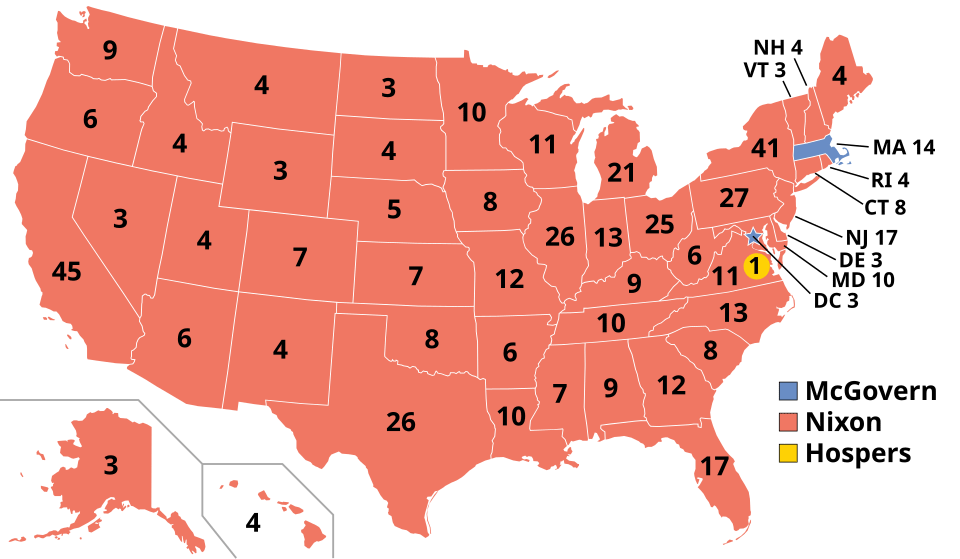
McGovern was a godawful candidate
FourteenBuckets on
Lots of southern conservatives still liked their old conservative Democrat/Dixiecrat Congressfolk, but for the federal race wanted nothing to do with an anti-war Massachusetts liberal.
Inevitable-Spirit491 on
The economy was very strong and the Democratic VP candidate admitted to having undergone electroshock therapy for depression two weeks after the convention and was forced to step down. Tough hurdles for any candidate to overcome.
Eypc2 on
Don’t blame me, I’m from Massachusetts.
Sea_Sheepherder_389 on
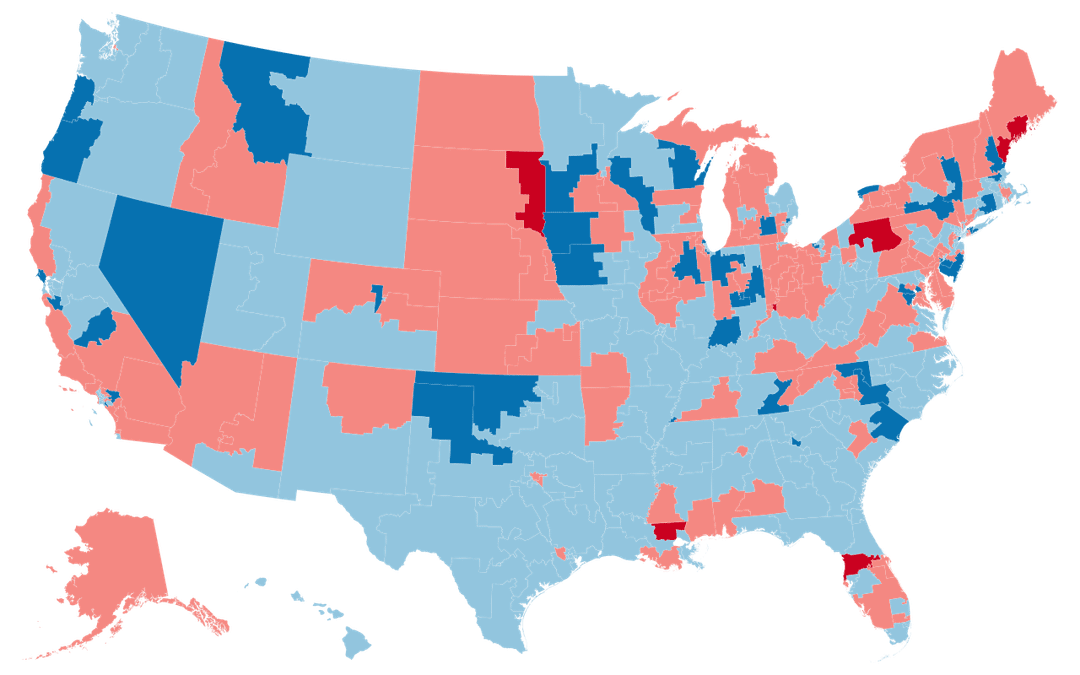
In a sign of how different things used to be, Nixon got 84% of the vote in Floridas first congressional district . Democrat Robert Sikes was unopposed for reelection.
Nixon also got 80% of the vote in North Carolina’s 9th District, basically Mecklenburg County under the lines at the time. That district, more or less the 12th, is represented by Alma Adams.
Trivia: only one Democrat running for the House lost in a district that voted for McGovern. That democrat was John Kerry.
lifasannrottivaetr on
Southern politics were very different back then. More transactional, and congressmen were expected to bring in federal spending for economic development.
melt11 on
I have a degree in history and I’ve never heard of Hospers lol
hundredjono on
My dad says Tricky Dick was the best president because he ended the draft lmao
dongeckoj on
Because Nixon’s Committee to Re-Elect the President interfered to ensure the Democrats would nominate McGovern, who was seen as the weakest candidate. This would be uncovered during Watergate, leading to Nixon’s resignation.
Tumbling-Dice on
That’s the 1974 House map. This is the 1972 House map:
Seattle being the only republican district in WA is pretty ironic given today’s politics.
firestar32 on
Although you got the percentages right, that’s actually the 1974 map, not the 1972 map.
Jack-ums on
Black text on a slightly different black for the background is diabolical
OkDistribution6931 on
1972 is a weird anomaly of an election.
All of the other epic EV landslides (Reagan 1984, FDR 1932 and Monroe 1820) involved a very popular incumbent running a re-election, and their opponent (to the extent there was one) was never able to overcome the baggage of their political party.
None of that applied to 1972. Nixon was a lot of things but popular was never one of them. And the Dems, while badly divided were not radioactive. The 1972 loss was a very specific rebuke of McGovern himself, his inexperience, his failure to unite the party, his host of poor decisions (like failing to vet and then firing his VP pick). Had the party gone the more conservative route and picked Muskie instead 1972 would have been a lot closer.
Intelligent-Wear-114 on
And then Nixon resigned less than 2 years later.
TheDomy on
HOLY COW I’VE NEVER SEEN THIS MAP
SadAnt2135 on
it is weird that up until 2010 there were actually many democrats from congress in the south
Keevan on
Black background and black legend text
nashdiesel on
I’m gonna posit this is because the democrats were a LOT more conservative back then, especially culturally. The entire South was dominated by Dixiecrats.
Nixon, while culturally conservative like the conservative wing of the democrat party, was economically more moderate which coincidentally also aligned with conservatives dems.
He also was from California which made him more appealing to moderate and liberal republicans in the cities.
Progressives didn’t exist as a serious political force back then. They existed in some conclaves of coastal cities and that was about it.
This map makes a lot of sense when you think about it in the context of the time.

23 Comments
That’s when Biden was first elected to the US Senate.
https://en.wikipedia.org/wiki/1972_United_States_Senate_election_in_Delaware
1984 was somewhat similar with Reagan winning with near 60% while his party Congress downballot won less than 50%.
Nixon, a Republican, signed the bill that created the EPA. Upon signing he said
>Clean air, clean water, open spaces – these should once again be the birthright of every American.
“Conservatives” have changed sooooo much
It is important to remember that the Democratic Party in that era included many conservatives members of Congress who later would switch to the GOP over the following decades. The political alignment was different than today.
McGovern was a godawful candidate
Lots of southern conservatives still liked their old conservative Democrat/Dixiecrat Congressfolk, but for the federal race wanted nothing to do with an anti-war Massachusetts liberal.
The economy was very strong and the Democratic VP candidate admitted to having undergone electroshock therapy for depression two weeks after the convention and was forced to step down. Tough hurdles for any candidate to overcome.
Don’t blame me, I’m from Massachusetts.
In a sign of how different things used to be, Nixon got 84% of the vote in Floridas first congressional district . Democrat Robert Sikes was unopposed for reelection.
Nixon also got 80% of the vote in North Carolina’s 9th District, basically Mecklenburg County under the lines at the time. That district, more or less the 12th, is represented by Alma Adams.
Trivia: only one Democrat running for the House lost in a district that voted for McGovern. That democrat was John Kerry.
Southern politics were very different back then. More transactional, and congressmen were expected to bring in federal spending for economic development.
I have a degree in history and I’ve never heard of Hospers lol
My dad says Tricky Dick was the best president because he ended the draft lmao
Because Nixon’s Committee to Re-Elect the President interfered to ensure the Democrats would nominate McGovern, who was seen as the weakest candidate. This would be uncovered during Watergate, leading to Nixon’s resignation.
That’s the 1974 House map. This is the 1972 House map:
[https://en.wikipedia.org/wiki/1972_United_States_House_of_Representatives_elections#/media/File:1972_United_States_House_of_Representatives_elections_by_congressional_district.svg](https://en.wikipedia.org/wiki/1972_United_States_House_of_Representatives_elections#/media/File:1972_United_States_House_of_Representatives_elections_by_congressional_district.svg)
Seattle being the only republican district in WA is pretty ironic given today’s politics.
Although you got the percentages right, that’s actually the 1974 map, not the 1972 map.
Black text on a slightly different black for the background is diabolical
1972 is a weird anomaly of an election.
All of the other epic EV landslides (Reagan 1984, FDR 1932 and Monroe 1820) involved a very popular incumbent running a re-election, and their opponent (to the extent there was one) was never able to overcome the baggage of their political party.
None of that applied to 1972. Nixon was a lot of things but popular was never one of them. And the Dems, while badly divided were not radioactive. The 1972 loss was a very specific rebuke of McGovern himself, his inexperience, his failure to unite the party, his host of poor decisions (like failing to vet and then firing his VP pick). Had the party gone the more conservative route and picked Muskie instead 1972 would have been a lot closer.
And then Nixon resigned less than 2 years later.
HOLY COW I’VE NEVER SEEN THIS MAP
it is weird that up until 2010 there were actually many democrats from congress in the south
Black background and black legend text
I’m gonna posit this is because the democrats were a LOT more conservative back then, especially culturally. The entire South was dominated by Dixiecrats.
Nixon, while culturally conservative like the conservative wing of the democrat party, was economically more moderate which coincidentally also aligned with conservatives dems.
He also was from California which made him more appealing to moderate and liberal republicans in the cities.
Progressives didn’t exist as a serious political force back then. They existed in some conclaves of coastal cities and that was about it.
This map makes a lot of sense when you think about it in the context of the time.