
The Prime Minister of North Macedonia, Hristijan Mickoski, has stated unequivocally that his government will not initiate constitutional amendments until conditions set by Skopje are met by both the European Union and Bulgaria. His comments come amid renewed discussions on the country’s stalled EU accession process.
Under the negotiating framework unanimously approved by all EU member states, North Macedonia is required to amend its Constitution before formal accession talks can begin. This requirement has been reiterated multiple times by senior European officials, including European Commission President Ursula von der Leyen, European Council President Antonio Costa, and Enlargement Commissioner Marta Kos. The prime minister’s remarks were made only hours before a crucial meeting of the EU General Affairs Council in Brussels.
At that meeting, ministers for European affairs from EU member states are expected to discuss and finalize draft conclusions on the progress and reform efforts of candidate countries, including Ukraine, Moldova, Georgia, Turkey, and those from the Western Balkans. The draft text urges North Macedonia to fulfill its obligation to amend its Constitution in order to move forward in the negotiation process. The General Affairs Council represents the final ministerial stage ahead of a summit of EU heads of state or government.
Mickoski outlined what he described as two non-negotiable conditions. First, he said Skopje needs clear and explicit guarantees from the European Council that Macedonian identity and the Macedonian language will not be challenged, that the language will be recognized as an official EU language, and that bilateral disputes will no longer be allowed to influence the accession process, which should instead be governed strictly by the Copenhagen criteria. He stressed that these assurances must be secured before any constitutional changes are considered.
Second, he argued that Bulgaria must fully meet its own obligations related to human rights. In particular, he pointed to the need for Sofia to allow the registration of non-governmental organizations such as OMO Ilinden-Pirin, in line with 14 rulings by the European Court of Human Rights in Strasbourg. According to him, this is a minimum step necessary to build trust in the accession process. Without transparency and mutual confidence, he said, participation in such a process is unacceptable.
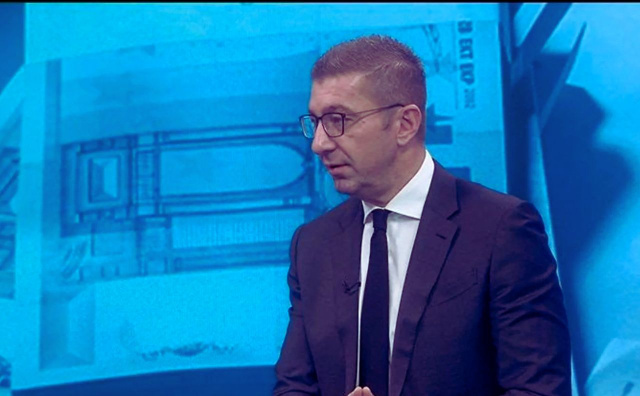
Speaking to local television channel Sitel, the prime minister emphasized that public patience has been exhausted. He noted that citizens feel deeply disappointed after having already made what he described as major sacrifices for European integration, including changing the country’s name, flag, banknotes, and amending the Constitution multiple times. Each fulfilled condition, he said, has been followed by the introduction of a new one. He added that he cannot subject the country to further uncertainty of this kind.
Mickoski also revealed that there had been attempts by influential EU member states and senior European figures to facilitate bilateral talks between Skopje and Sofia, including at the level of foreign ministers. According to him, these initiatives failed due to a lack of response from the Bulgarian side, further complicating efforts to resolve outstanding issues.
He concluded by reiterating that North Macedonia does not seek concessions or sympathy, but clear rules and guarantees. Without them, he said, constitutional changes and progress toward EU membership will not move forward.