
What is the Bill?
According to the proposed budget plan for 2026 released by the Trump Administration in July, national parks will lose over $1 billion in funding. Not only does this eliminate safeguards that protect these sacred areas and preserve the environment, it will also significantly impact educational resources that are created and provided accessible to everyone, field trips around the nation and environmental protections for those areas.
but
This plan was introduced in the Big Beautiful Bill, which was officially signed into law on July 3, 2025, but we are already seeing some of the effects taking place.
On Nov. 25, 2025 the Department of the Interior announced that non-residents of the U.S. will have to purchase The America the Beautiful Pass, and will have to pay $250 for annual passes or an entrance fee of $100 if they don’t have an annual pass. This is compared to residents, who only have to pay $80 for an annual pass.
Effects on Tourism
The department says that this is being implemented so that Americans can experience the parks for a lower cost, but it is most likely due to the significant cuts, and parks will need additional funding in order to keep the parks safe and open for international tourism. In addition to the higher cost for nonresidents, there will also be certain days where they will not be permitted to enter the park, such as Memorial Day and Independence Day.
Tourism for national parks will most likely plummet since the United States relies heavily on National Parks for tourism according to USA Facts. Since travelers from other countries may not be able to afford the raised entrance fees, as well as the additional fees they will incur throughout their trip—food, water, necessities, etc.
Atlanta: The Civil Rights Movement Hub
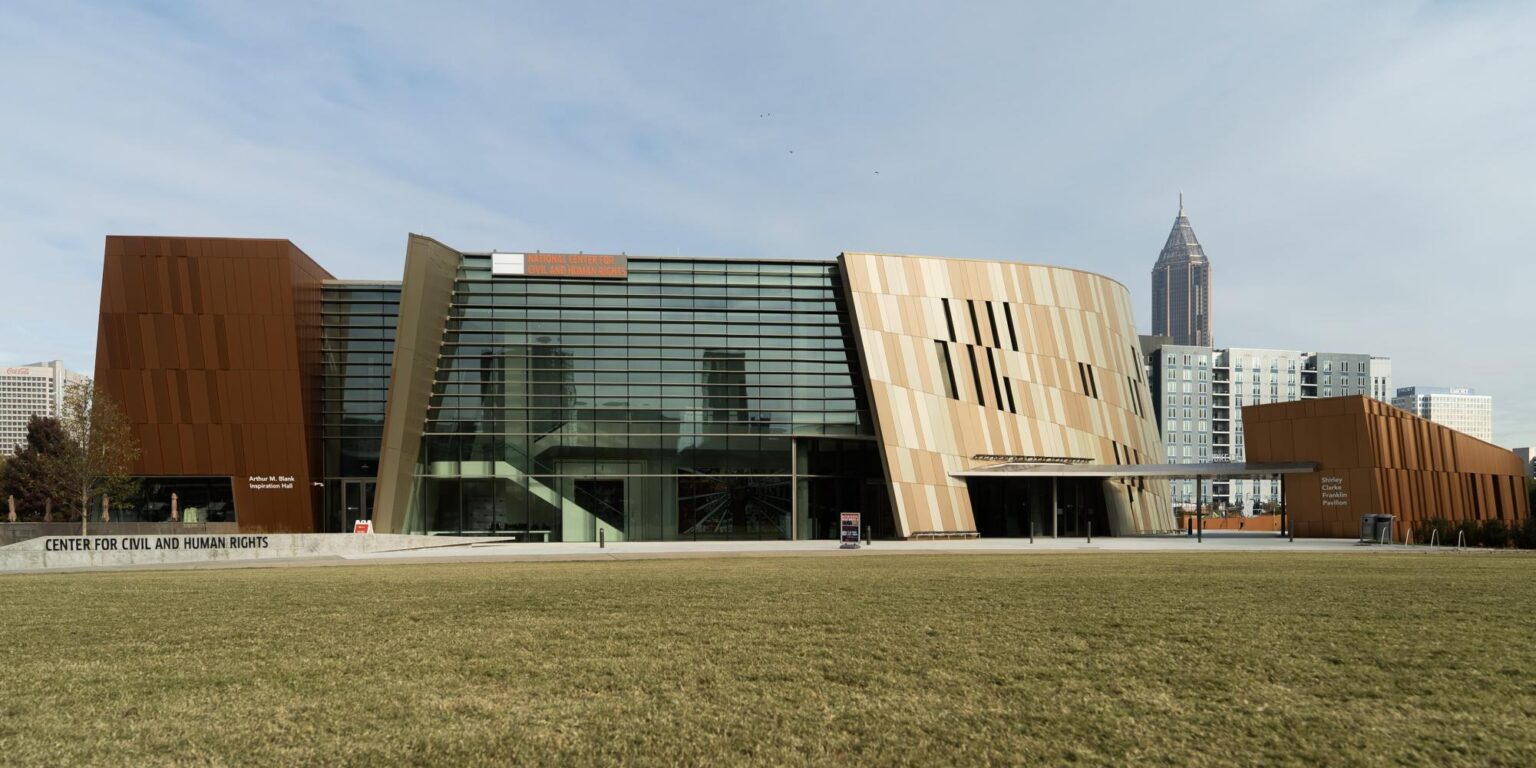
Atlanta is full of historically significant places, especially with Black History and honoring the Civil Rights movement, which this city played a major part in. Atlanta hosts the Martin Luther King Historical Home, the Ebenezer Baptist Church and the National Center for Civil and Human Rights, whose website states that it is a unique place to explore the civil rights movement’s history around the world.
The National Center for Civil and Human Rights is one of the only places globally where civil rights movements can be portrayed through a variety of arts, writings, and artifacts. Jill Savet, the president and CEO says that the recent reopening and redesign of the center will create more ways to share the stories of America’s past.
“American history has never been a straight road,” Savitt said. “It has always been a dialogue between progress and pushback, between our highest ideals and forces that resist them. This expansion gives us new ways to share those stories with integrity, and to remind people that all of us can help bend the arc toward justice.”
Lack of Funding will Cause Widespread Effects
National Parks and historical centers with low funding may contribute to a possible economic decline for tourism, and there may also be a lack of updated educational resources that educators, students and the general public may be able to access. The cuts could also impact state parks and historic sites, which many schools incorporate into their curriculum through field trips.
According to a press release from the National Parks Conservation Association, Emily Douce, who is the deputy vice president for government affairs, says that national parks are already struggling and she is unsure about how the increased fees for nonresidents will be ensured due to the staffing shortages parks are already experiencing.
“Any policy that keeps people from visiting our national parks is a problem,” Douce said. “While we support new and innovative ideas to fund maintenance projects in our national parks, we have several questions and concerns about this new fee policy, and it’s unclear how these changes will be implemented to reduce impacts on park visitors and staff.”
Science teacher Madeline Oliff, says that she is also concerned about the cuts that are being made and how that may affect the safety of visitors and animals due to the reduced rangers.
“Park workers are essential to ensuring that parts of the park are not overused and also the animals in the park are safe,” Olliff said. “I can’t tell you how many times I’ve seen people try to approach bears or elk in the smokies. Park rangers serve as an invaluable source of information so people can enjoy the parks safely as well in terms of backpacking and hiking trails, and outdoor preparedness. With fewer park rangers makes our parks more susceptible to over use and damage, like littering, parking off road, or going off trail.”
Using federal funding has been vital in ensuring that the parks stay open and are able to accommodate the high numbers of visitors year-round, based on a study conducted by Margeret Boorstein, a professor of geography and department chair of the Earth and Environmental Science Department at Long Island University.
“Initially, national park operations in the United States were complicated because no single central federal office existed to coordinate activities,” the study says. “After much controversy, Congress passed the National Parks Act, or the Organic Act, of 1916. The act established a central authority called the National Park Service and stated its responsibilities, which include conserving and providing for the enjoyment of the scenery, natural and historic objects, and wildlife in the parks while leaving them unimpaired for the enjoyment of future generations.”
Environmental Protection
Sophomore Lucy Timmons says that she wasn’t aware of the cuts and says that she hopes that the administration will find a way to protect the environment, but is not fully sure they will follow that route.
“I love to go on hikes and discover new places.” Timmons said. “I’ve been to a few National Parks like Zion and the Grand Canyon, and I also didn’t even know about the cuts. This is very worrying to me because I loved seeing those places, and I hope that the government will be able to keep them open for people no matter where they are from.”
Olliff says that she thinks that National Parks should be protected as we are humans and we rely on the parks to combat climate change as much as they rely on us.
“National Parks offer a whole host of ecosystem services including helping against global climate change, not to mention the cultural value of allowing a relatively safe space for people to interact with nature,” Olliff said. ”They also serve as a way to preserve delicate ecosystems that could very easily become destroyed quickly if not managed properly. I think as humans and being good stewards of the Earth we have a responsibility to protect these important places.”
Oliff also expressed how after living in the Smoky Mountains and visiting multiple national parks, she knows there are deep connections to the land and they are essential for conducting research and providing employment.
“I have been to four national parks; Rocky Mountain, Congaree, Shenandoah, and Great Smoky Mountains National Parks,” Oliff said. “After I got my masters in biology, I did an internship with the nonprofit called Discover Life in America and lived in the Smokies for about 4 months, so I have been able to see most of the park. The nonprofit is dedicated to cataloging biodiversity in the smokies which is one of the most biodiverse places on Earth in addition to the Cherokee people having deep ancestral ties to this land. National Parks offer so many jobs as well as being places to be able to conduct important scientific research. One of my field sites for my masters research was in the Smokies.”