
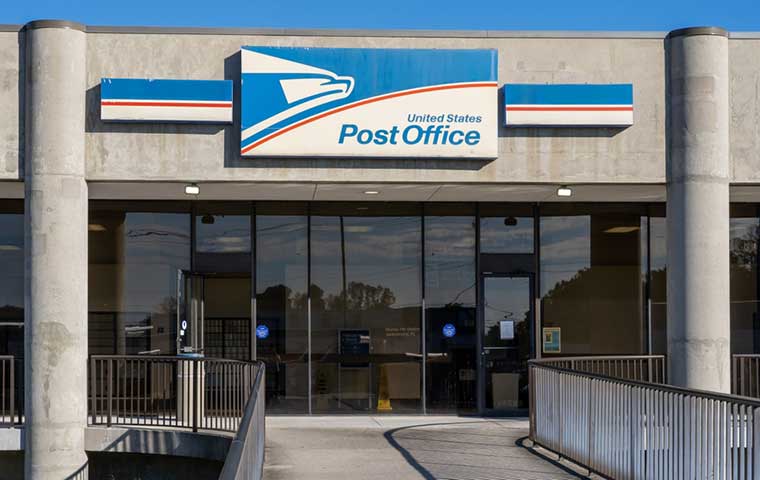
Among the options that would require changes in law were also familiar ones to reduce required mail delivery days, lease out space in its facilities, use facilities to provide banking services, privatize the agency, or revert to being an appropriated agency as it was before a 1970 law turned it into a government corporation. Image: Frame Craft 8/Shutterstock.com
By: FEDweek Staff
The Postal Service’s business model is “unsustainable” despite changes in law and USPS initiatives of recent years designed to hold down costs and increase revenues, the GAO has said.
The report cited familiar data showing that the USPS has lost money each year since 2007—a total of $118 billion—when the historic growth in mail volume turned into a decrease, largely due to the growth of electronic commerce and messaging. It also noted responses including the Delivering for America program the USPS started in 2021 involving increasing prices, introducing new products and redesigning its transportation network and processing operations; a $10 billion pandemic-related cash infusion from Congress in 2020; and a 2022 law canceling some $57 billion in missed payments to prefund retiree health care costs that had been required under an earlier law.
“However, USPS’s financial condition remains poor. While USPS has increased revenue, its total expenses continue to outpace total revenue leading to further losses. In addition, USPS’s unfunded liabilities and debt have steadily increased since fiscal year 2022. USPS projects that if it made all its required payments toward its unfunded liabilities in full, it would run out of cash as early as fiscal year 2026,” the GAO said.
It noted that while the USPS no longer must pre-fund retiree health care costs, it still must pay the employer share of ongoing costs—from a fund projected to be depleted in six years, requiring payment afterward from revenue. GAO also cited the need to pay ongoing annuity benefits for retirees, from an account that it said also is underfunded.
The report also listed options—many of them also familiar—raised by stakeholders it consulted. Among the potential actions for USPS alone were more incentives for large mailers to presort mail; consolidating delivery by delivering to more centralized locations rather than individual addresses; and obtaining “more favorable terms in collective bargaining agreements” with its unions.
Regarding the latter, the GAO said that while it could lower compensation and benefit costs, “negotiation could take years, and meaningful reductions may not be realized.”
Among the options that would require changes in law were also familiar ones to reduce required mail delivery days, lease out space in its facilities, use facilities to provide banking services, privatize the agency, or revert to being an appropriated agency as it was before a 1970 law turned it into a government corporation.
The GAO did not recommend any of those steps, although it did recommend that the Postal Service produce an updated long-term financial projection. The USPS disagreed, citing the uncertainty of such projections and the criticism it took when it did not meet the projection that the Delivering for America plan would make it profitable by 2024.
The GAO in turn stood by that recommendation, saying that such a projection would help both the USPS and Congress with future decisions.
Provision to Restore Union Rights at DoD Dropped from Key Bill
Courts Consider Cases Affecting Future of Agencies Like MSPB, FLRA, EEOC
OPM Previews Plans to Seek Forced Ratings Distribution for All Federal Employees
Path Cleared for Long-Delayed Raises for Wage Grade Employees, Says AFGE
Precedent Is in Favor of 4-Day Xmas Weekend
OPM Tells Agencies to Actively Consider Reassigning ‘Entrenched’ SES
See also,
How Withdrawal Order Affects Taxes for Federal Retirees
Eight Key Topics to Cover Before Your Federal Retirement
What Retirement Date Maximizes My Federal Benefits?
FERS Retirement Guide 2025 – Your Roadmap to Maximizing Federal Retirement Benefits