
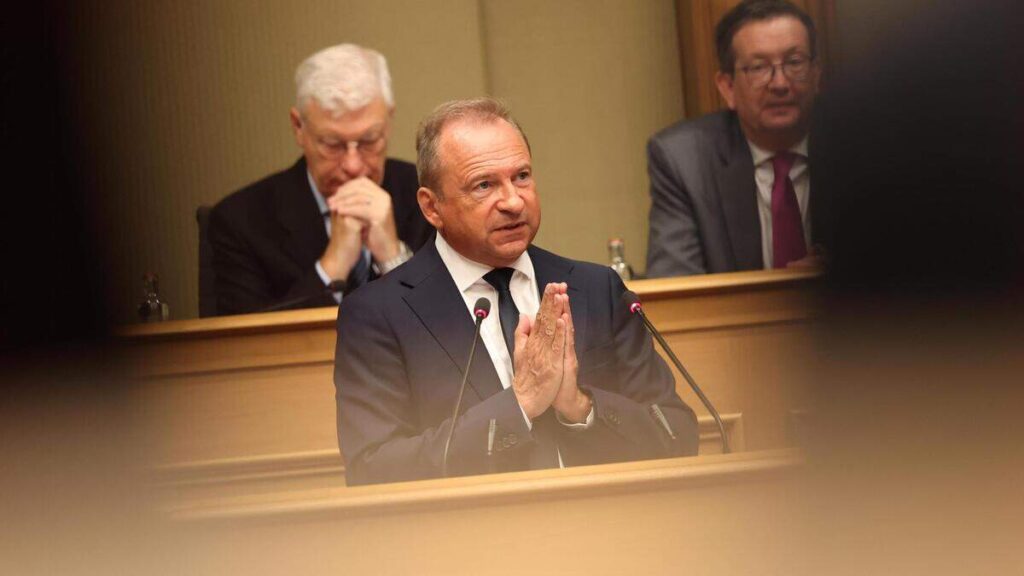
Opposition parties will probably fire a broadside at the government during two parliamentary sessions on Wednesday dedicated to debating the 2026 state budget, as the deficit is growing and the government’s room for manoeuvre is shrinking.
Exceptional economic and, above all, employment growth, has given Luxembourg a leading position among its European neighbours in recent decades, but this has now slowed down considerably.
After only 0.4% economic growth last year, Statec is expecting GDP growth of 1% this year and 2% for 2026. This is well below the average growth of 2.9% between 1995 and 2024.
The trend in employment is even clearer. It grew by just 1% in 2024 and 2024, and is expected to rise by 1.5% in the coming year. On average over the last 20 years, however, the number of people employed in the country has grown by around 3% per year.
Luxembourg’s Chamber of Commerce earlier this month warned of an unprecedented economic downturn.
Also read:Luxembourg budget deficit could more than double to under €3bn, watchdog warns
Social security no longer saves the budget
The development is also reflected in the budgets of recent years. While surpluses were still regularly achieved in the decade before the Covid-19 pandemic (peaking in 2018 with a surplus of almost €2 billion), this has turned negative in most years since then.
For the coming year, Finance Minister Gilles Roth (CSV) is forecasting a deficit of €408 million. Further deficits are expected for the following years.
In addition to increased spending on combating crises, and now rising defence spending, this is also due to the shrinking social security surplus, which regularly turned the overall budget into a surplus.
While this surplus was still over €1 billion two years ago, it will shrink to around €145 million by the end of the decade. Here, too, expenditure is growing due to demographic change, while revenue is rising at a much slower rate.
Public debt stabilises at a higher level
This development is reflected in the national debt. Luxembourg’s debt will remain at around 27% of economic output until at least 2029, making the country something of a model pupil compared to other European countries.
But the trend is clear. As recently as 2007, the debt ratio was just 8% of gross domestic product. In per capita terms, that was just under €6,200. In contrast, every inhabitant of the Grand Duchy today has a statistical debt of over €34,000.
The CSV-DP government abandoned a long-held target of keeping the public debt to GDP ratio below 30%. Should debt become to high, however, it could jeopardise Luxembourg AAA credit rating.
Defence spending not sufficiently taken into account
The government has also committed Luxembourg defence spending to increase to 2% of gross national income (GNI) in the short term, and even to 5% by 2035. Spending will increase from €724 million in 2024 to over €2 billion in 2028.
In its statement on the budget, the Court of Auditors criticised that this increase in defence spending is not reflected in the ministry’s multi-year forecast. The assumptions regarding the development of the budget deficit are therefore too optimistic, the court said in its opinion.
”The court therefore urges the government to define a clear roadmap for defence spending until 2035 and to integrate all international commitments into the development of future multi-annual financial plans,” it said.
Also read:Huge rise in health and defence spending planned under draft 2026 budget
The employee lobby group Chambre des Salariés fears that increased defence spending will come at the expense of the country’s most pressing problem: the crisis in the housing market. In their statement, they calculate that spending on housing will stagnate in the coming years, while spending on defence will go through the roof.
(This article was first published by Luxemburger Wort. Machine translated with editing by Duncan Roberts)