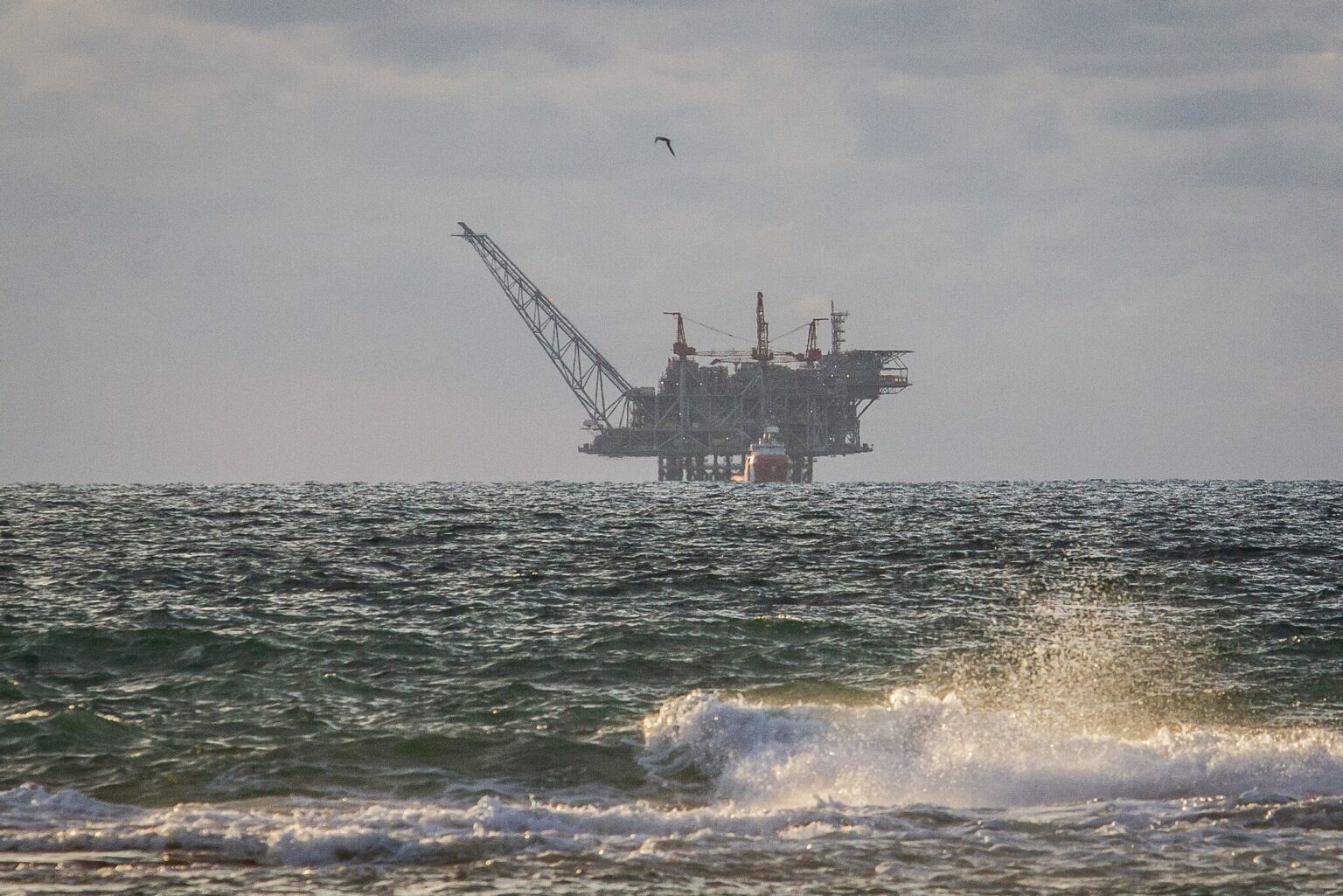
Prime Minister Benjamin Netanyahu announced on Wednesday that he had approved the largest energy deal in Israel’s history with neighboring Egypt, expected to boost Israel’s economy by billions of shekels within the coming years.
In a video statement alongside Energy Minister Eli Cohen, Netanyahu said that the natural gas deal with Cairo was worth NIS 112 billion ($34.7 billion), of which NIS 58 billion ($18 billion) would go into public coffers. In the first four years, he said, around NIS 500 million ($155 million) would go to the state, and this was expected to climb to NIS 6 billion ($1.9 billion) by 2033.
“The agreement is with the American company Chevron, with Israeli partners who will supply gas to Egypt,” Netanyahu said.
“This money will strengthen education, health, infrastructure, security, the future of the coming generations,” said Netanyahu, adding that he only approved the deal, which was held up in October, after he ensured that it met Israel’s vital needs, including security.
“The deal greatly strengthens Israel’s position as a regional energy superpower, and contributes to regional stability,” argued Netanyahu, adding that it would encourage other countries to search for gas in Israel’s waters.
He stressed that the companies would be required to sell natural gas to Israelis “at a good price.”
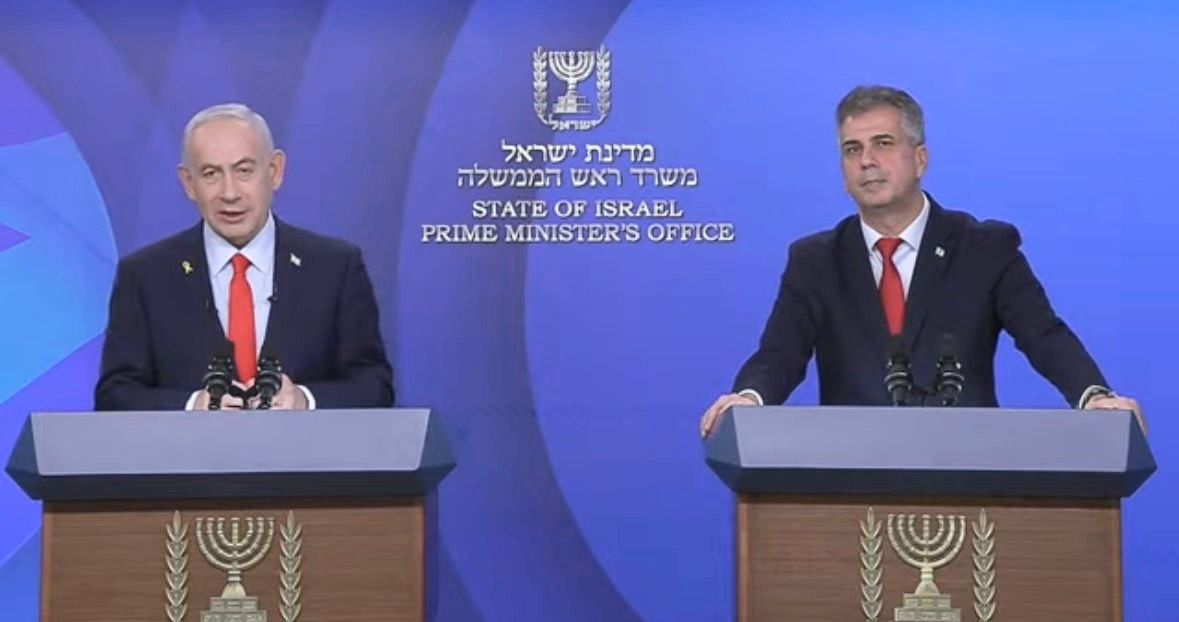
Prime Minister Benjamin Netanyahu, left, in a video statement alongside Energy Minister Eli Cohen, announcing a record gas deal with Egypt, December 17, 2025. (Energy Ministry)
“We have brought another jug of oil to the nation of Israel,” Netanyahu said in a reference to the story of Hanukkah, in which one jug of oil lasted for eight days.
Cohen, standing alongside Netanyahu, called the deal “a historic moment for Israel,” and noted that it was the largest export deal in the country’s history.
Natural gas “is a strategic asset” for Israel, Cohen stressed.
Israeli firm NewMed Energy announced in August the signing of a $35 billion deal to provide Egypt with natural gas. But the deal, which has clear economic incentives for both sides stalled after Cohen initially refused to approve it, citing a lack of assurances that the Israeli market would receive “fair prices.”
Cohen had also expressed concern that the exports could deplete Israel’s natural gas reserves and harm domestic energy security
The US was reported to have played a significant role in pressuring Cohen and Netanyahu into the agreement with Egypt, and US Energy Secretary Chris Wright canceled a six-day visit to Israel in October after Cohen refused to sign the deal.
Washington’s interest in the deal stems from a desire to push Israel and Egypt into warmer relations through shared economic interests, Axios reported earlier this month.
Relations between the two countries have become strained over the past two years following the October 7, 2023, Hamas assault and the subsequent war in Gaza, and the Trump administration is eager to change this, Axios reported, hoping that it will lead to other breakthroughs between Israel and its neighbors.
As such, the outlet reported that US President Donald Trump was looking to broker a summit between Netanyahu and his Egyptian counterpart, President Abdel-Fattah el-Sissi.
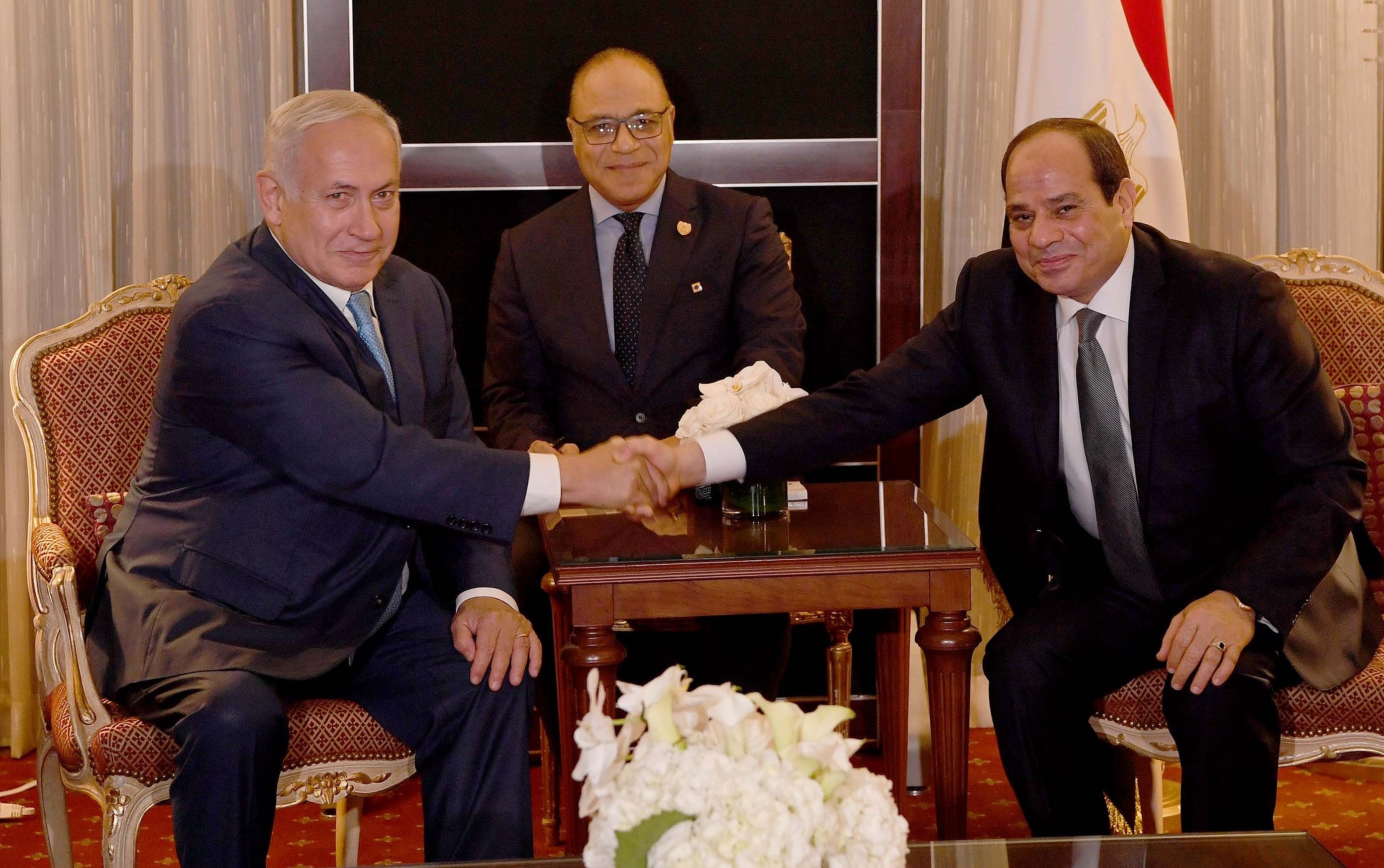
Prime Minister Benjamin Netanyahu (left) with Egyptian President Abdel-Fattah el-Sissi (right) on the sidelines of the UN General Assembly in New York on September 27, 2018. (Avi Ohayon / PMO/ File)
In order to entice Sissi to attend such a meeting, Axios said Israel would be required to make a range of concessions — including signing a strategic gas deal with Cairo.
In a statement issued late on Wednesday, NewMed Energy said it had received “approval to export gas to Egypt, enabling the execution of a deal estimated at roughly $35 billion.”
“This is a historic day for the natural gas sector, one that guarantees continued investment in Israel and creates regulatory stability for years to come,” NewMed CEO Yossi Abu was quoted as saying in the statement.
Both Israel and Egypt have emerged as gas exporters in recent years following major offshore discoveries. Israeli gas accounts for some 15-20 percent of Egypt’s consumption, according to data from the Joint Organisations Data Initiative.
Earlier this year, the Finance Ministry warned that Israel is poised to face a natural gas shortage in the next 25 years as domestic energy needs are growing faster than forecast and gas export sales are robust. A shortfall would lead to higher electricity prices for consumers.
Natural gas from Leviathan, one of the world’s largest deep-water gas discoveries, started to flow to the Israeli domestic market in December 2019.
The partners in the Leviathan reservoir began exporting natural gas to Egypt in January 2020 after signing a deal for 60 billion cubic meters, which is expected to be supplied by the early 2030s.
As of September 2025, Leviathan had supplied 23.5 billion cubic meters of gas to the Egyptian market.