
There are growing concerns over how these projects will affect the power grid and utility bills.
On Wednesday, the announcement of a new artificial intelligence data center in Louisiana came just hours before state regulators voted on how to balance economic development with ratepayer guardrails.
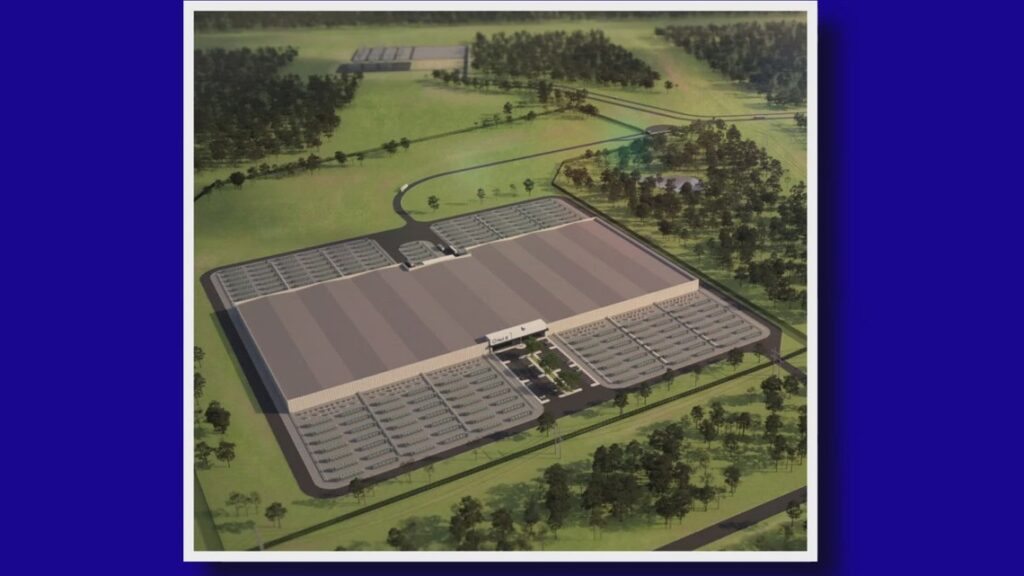
The Louisiana Economic Development Office said Hut 8 Corp. has begun construction on a massive $10 billion artificial intelligence data center. The project, known as the River Bend Campus, is poised to turn 611 acres near St. Francisville into one of the nation’s premier hubs for high-performance computing.
The facility is expected to be fully operational by the second quarter of 2027. At the peak of construction, approximately 1,000 construction jobs will be generated and at least 75 permanent roles once completed, according to LED.
The regulatory speed trap
Projects like these have forced the Louisiana Public Service Commission (LPSC) to rapidly overhaul its regulatory playbook. On Wednesday, in a 4-to-1 vote, the Commission approved the “Lightning Initiative.”
Requested by Governor Jeff Landry, the initiative aims to accelerate the timeline for major employers to secure the massive amounts of power they require.
The new rules effectively waive certain standard requirements for new power capacity if a project meets specific criteria, such as having a 15-year service agreement and support from Louisiana Economic Development (LED).
“We need to leave a process that does not impede our state from accelerating and being hyper-competitive,” said Commissioner Eric Skrmetta, “I think the commission, with its authority, can protect the ratepayers.”
Concerns over rising bills
However, there are growing concerns over how these projects will affect the power grid and utility bills. Commissioner Davante Lewis, the lone “no” vote, warned that bypassing traditional safeguards could leave residents vulnerable.
The LPSC waived a key rule—the “Market-Based Mechanisms Order”—which typically requires utilities to prove they are choosing the least-cost option for new infrastructure.
“If you’re a Louisiana ratepayer, you’re wondering what we did today,” Lewis said, “I think we brought uncertainty to your future of how stable our grid will be and how affordable your bills will be.”
Critics, including the Alliance for Affordable Energy, argue that these “hyperscalers” consume as much power as an entire city, potentially straining the grid and driving up costs for everyday families.
“We’re all part of the same grid, and these five elected individuals make decisions that impact our homes and our bills every single month,” Executive Director of the Alliance for Affordable Energy, Logan Burke, said.
A global competitor
Despite the friction, Governor Landry remains focused on the economic horizon. He described the Hut 8 project as a “win” that cements Louisiana as a national leader in innovation.
With the Meta data center already announced for Richland Parish, the LPSC’s new seven-month fast-track for power applications ensures that more “lightning” fast developments are likely on the way.