
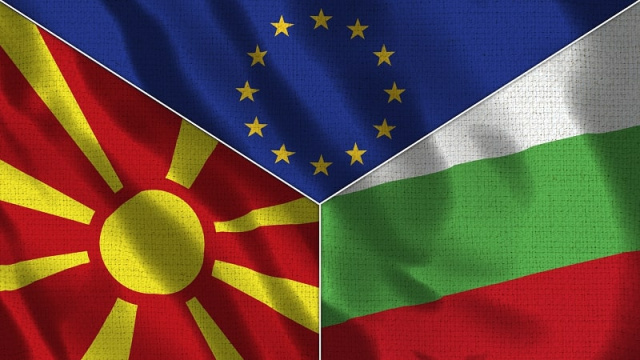
The expansion of the European Union towards the Western Balkans will proceed strictly on the basis of individual merit and full respect for international obligations already undertaken by candidate countries, including the Treaty of Friendship, Good Neighbourliness and Cooperation between Bulgaria and North Macedonia. This is outlined in the Brussels Declaration adopted at the EU-Western Balkans summit held in Brussels on December 17.
The meeting brought together the heads of state and government of all Western Balkan candidate countries, with the exception of Serbia. Serbian President Aleksandar Vučić announced a day earlier, on December 16, that he would not take part in the summit.
EU leaders and representatives of the member states, together with their regional partners, reaffirmed that the future of the Western Balkans is within the European Union. Enlargement was described as a strategic investment in long-term peace, security, stability and prosperity. The declaration underlines that faster progress towards membership depends on credible reforms, strict and fair conditionality, and an assessment process based solely on tangible results.
The document places particular emphasis on regional cooperation, reconciliation and good neighbourly relations as indispensable components of the enlargement path and the creation of a shared European future. In this context, the EU stresses the importance of the genuine and effective implementation of binding international agreements, including the Prespa Agreement with Greece and the Treaty of Friendship and Good Neighbourliness with Bulgaria, both of which North Macedonia is obliged to uphold.
At the same time, the declaration points out that EU enlargement must advance in parallel with the Union’s own internal preparations. Candidate countries are encouraged to accelerate reforms, especially in key areas such as the rule of law, the functioning of democratic institutions, media freedom and the protection of minority rights.
The text also recalls that the gradual integration of the Western Balkans into the EU has already begun in several policy areas. This process is described as reversible and merit-based, offering concrete benefits to citizens even before full membership. The EU highlights that deeper economic integration must safeguard the integrity of the single market and ensure fair competition.
In addition, EU leaders reaffirm their expectation that Western Balkan partners will align with the Union’s Common Foreign and Security Policy, including the application of restrictive measures. They also call for stronger efforts to combat corruption, organised crime and hybrid threats.
It was also announced that the next EU-Western Balkans Summit is scheduled to take place in Montenegro in June 2026.