
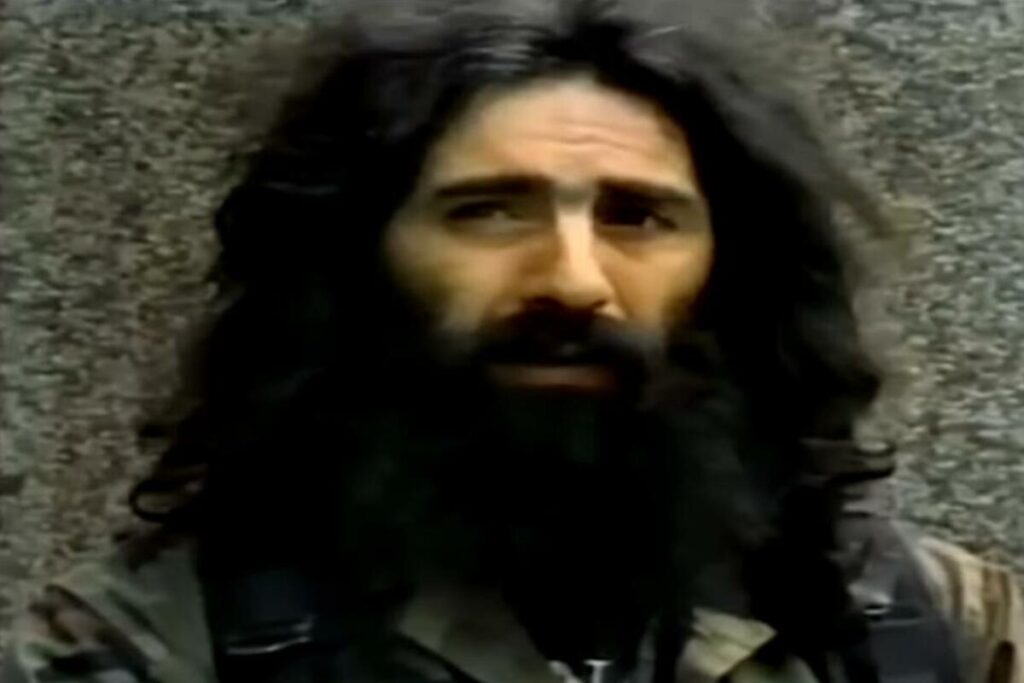
Slavko Aleksić, the infamous Chetnik voivode and commander of the paramilitary formation “Novosarajevo Chetnik Detachment”, died this morning in Trebinje, reports N1 Sarajevo.
This information was confirmed for Trebinje residents.
Who was Slavko Aleksić?
Aleksić is one of the most controversial and notorious figures associated with the war in Bosnia and Herzegovina and the years-long siege of Sarajevo.
Aleksić’s name in the public of Bosnia and Herzegovina has remained permanently linked to the period of the siege of the capital, where he is remembered as a symbol of sniper and military terror against the civilian population. He is a person whose actions are considered one of the controversial and dark chapters in the contemporary history of Sarajevo and the state of Bosnia and Herzegovina, writes N1.
Born in Bogdašići in 1956, Aleksić spent most of his life in Sarajevo, where he worked and studied law. In the late 1980s and early 1990s, he became actively involved in nationalist structures, and in 1990 he was among those who participated in the renewal of the Chetnik movement in Sarajevo. In the same year, he became a member of the Serbian Radical Party.
After the murder of an old wedding party in front of the Old Orthodox Church in Baščaršija on March 1, 1992, Aleksić took over the role of commander of the “Novosarajevo Chetnik Detachment”, whose headquarters were in Grbavica. During the war, he operated within the forces that participated in the siege of Sarajevo, and is particularly associated with the demarcation lines in the area of Grbavica and the Jewish Cemetery, one of the most difficult and bloodiest points of conflict between the Army of Republika Srpska and the Army of the Republic of Bosnia and Herzegovina.
Formations under his command were present in positions from which the city was exposed to constant fire, and numerous testimonies from civilians and allegations from various reports linked his units to attacks on the civilian population and the spread of fear among Sarajevans during the years-long siege. Although his name and actions have often been linked to serious violations of the laws of war, Slavko Aleksić has never been prosecuted in domestic or international courts.
During the war, he was wounded several times, and in addition to local units, he also commanded a detachment of Russian volunteers in the area of what was then “Serbian Sarajevo.” He was proclaimed a Chetnik voivode by war criminal Vojislav Šešelj in 1993, and later by Chetnik voivode and Orthodox priest Momčilo Đujić, according to N1.
After the NATO bombing and the signing of the Dayton Peace Agreement, in March 1996, he led the withdrawal of Serbian forces and part of the population from Grbavica, and participated in the symbolic acts that accompanied the departure from Sarajevo’s settlements.
After the war, Aleksić retreated to eastern Herzegovina, mainly to the area around Bileća, where he continued his political and ideological activities through Chetnik and Ravna Gora organizations. He regularly attended rallies of a radical and revisionist nature, where the events of the war and his own role during the siege of Sarajevo were often glorified.
In recent years, his name has resurfaced in public in the context of an investigation known as the “Sarajevo Safari” case, which is being conducted before judicial institutions in Milan, and concerns allegations of organized sniping against civilians in besieged Sarajevo.
The death of Chetnik commander Slavko Aleksić has reopened questions of responsibility, unpunished crimes, and attitudes towards the legacy of the Siege of Sarajevo, one of the most difficult periods in the recent history of Bosnia and Herzegovina.
Siege of Sarajevo
The Siege of Sarajevo lasted 1.425 days, from April 5, 1992, to February 29, 1996, and is considered the longest siege of a capital city in modern history, and snipers were one of the main instruments of terror.
For almost four years, the city was completely surrounded by forces of the Army of Republika Srpska, exposed to daily shelling, sniper fire, and systematic terror against the civilian population.
According to data from relevant institutions and research centers, more than 11.500 civilians were killed in Sarajevo during the siege, including more than 1.600 children. Tens of thousands of citizens were wounded, while the entire population lived without basic living conditions – regular water, electricity, heating and safe movement. Sniper operations, especially on busy city streets, bridges and approaches to schools, markets and hospitals, became an everyday occurrence, which is why Sarajevo was labeled by the international public as a city under constant terror.
The International Criminal Tribunal for the former Yugoslavia has determined in several judgments that the siege of Sarajevo constituted an organized campaign against the civilian population, with the aim of spreading fear and coercion, which is qualified as a war crime and a crime against humanity.
Numerous VRS members were convicted by the International Criminal Tribunal for the former Yugoslavia (ICTY) for crimes related to the siege, including sniping.
The siege left profound demographic, psychological and urban consequences, and the destruction of Sarajevo is still considered one of the most powerful symbols of aggression against Bosnia and Herzegovina.
The name of Slavko Aleksić in public discourse in BiH is associated precisely with this form of war crime, and in Sarajevo he is remembered as a symbol of sniper terror.

News