
As the world prepares to transition to a new year, climate change remains the most pressing issue humanity faces heading into the future.
Tragically, we are already seeing corrosive effects of climate change on both the large-scale and the small-scale, from the potential disappearance of Mount Fuji’s iconic snows to the harmful changes in the migration patterns of small birds like the least flycatcher.
America’s famous national parks are in no way immune to the devastating impact of climate change. In fact, with so many well-preserved and fragile ecosystems within their boundaries, America’s national parks are some of the clearest windows for observing the effects of climate change in real time.
For years, park administrators, scientists, and dedicated stakeholders have done incredible work to protect the nation’s national parks from climate-related damage. However, there is only so much that even the most dedicated advocates can do, and observable effects of climate change continue to affect parks around the country and the world.
As eco-conscious travelers work hard to mitigate the effects of climate change, some additional planning may, unfortunately, be necessary for national park trips in the coming years. If you have a “national park bucket list” of the innumerable sights, activities, and experiences you can find in America’s national parks, climate change has become an unavoidable consideration.
Here are some of the major ways in which climate change is affecting U.S. national park experiences, and how you can plan ahead to still get the most out of your trip.
America’s Most Iconic Landscapes Are Changing—Sometimes Permanently
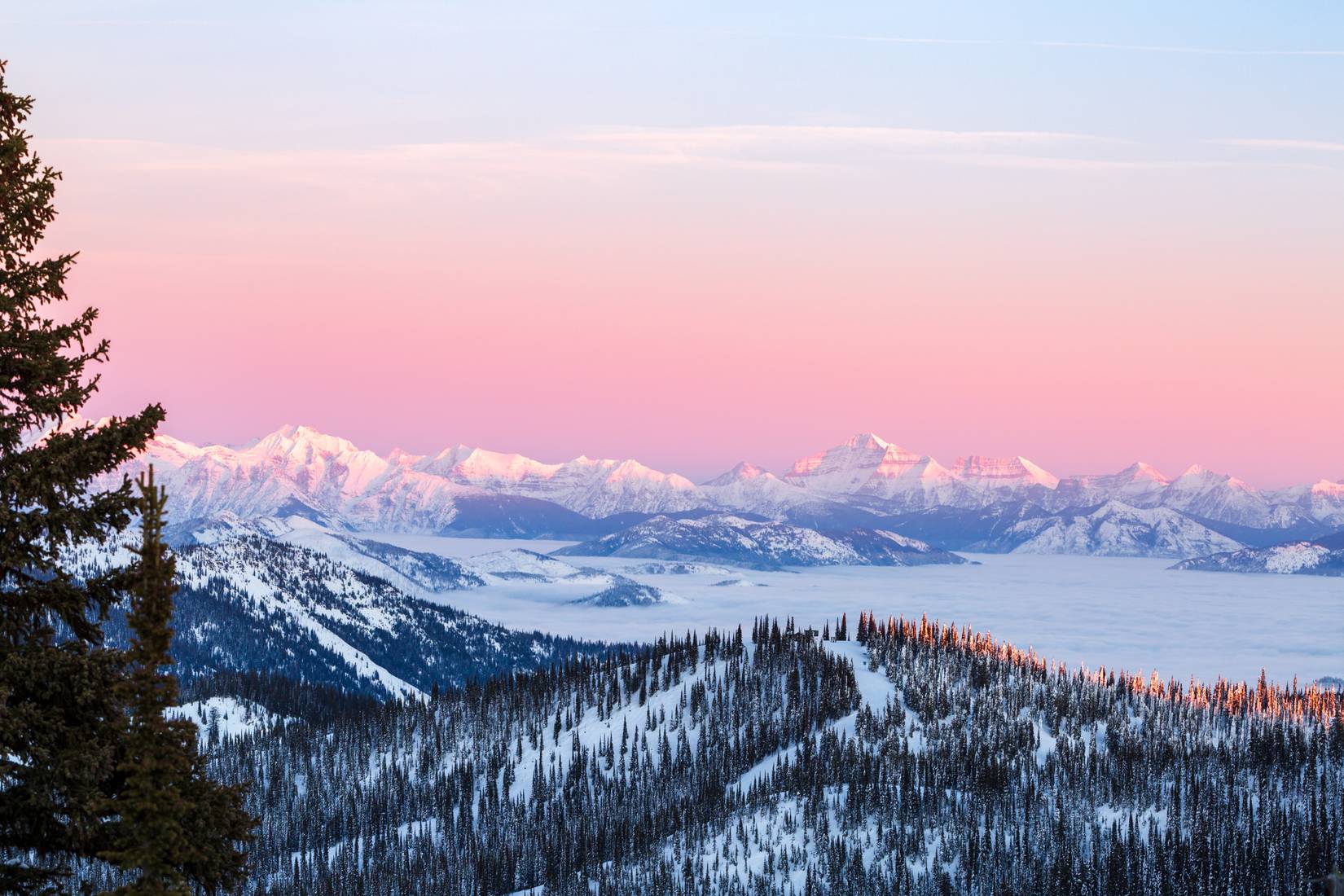
Sunset in Glacier National ParkCredit: Shutterstock
The 63 national parks in the United States — as well as the hundreds of other National Park Service-managed sites — protect a diverse range of climates, landscapes, and ecosystems. As a result, the effects of climate change can vary from park to park, depending on the main natural features of each.
The one constant, however, is that many of America’s most famous landscapes are changing in ways that can alter the nation’s iconic national park views.
Among the many malignant effects of climate change, one that draws significant attention is the destructive effect of a warming climate on Earth’s glaciers. According to some studies, the Earth is losing about three Olympic pools of glacial ice per second, thanks to climate change.
Glaciers happen to be a major feature in several U.S. national parks, particularly Mount Rainier, North Cascades, and (of course), Montana’s Glacier National Park. Sadly, glacial melt is already evident in these and other glaciated national parks. Washington’s Mountain Rainier, famous for its epic glaciers, may be shrinking as its glaciers continue to melt.
Elsewhere in the Cascade Range, the pristine North Cascades National Park has lost about 53% of its mighty glaciers since 1900. And Glacier National Park, the one national park named after its glacial features, has experienced atmospheric warming at twice the global average rate, with a noticeable loss of ice cover on its iconic mountains to show for it. Going by the most dire projections, Glacier National Park may be completely glacier-free by 2030.
As glaciers and ice caps melt, sea levels will rise, a prospect that would have equally devastating effects on the roughly one-fourth of American national parks near the coast.
Florida, being both the flattest state and the one with the longest coastline in the contiguous U.S., will see the effects of rising sea levels more dramatically than anywhere else. This is bad news for Florida’s acclaimed national park sites, which protect some of the most remarkable coastal and wetland regions in North America.
Rising sea levels will have devastating effects on the beautiful but fragile ecosystem in the famous Everglades National Park, which is also at risk from other climate-related perils like increased precipitation and intensifying hurricane seasons.
Florida’s underrated spring break alternative of Biscayne National Park is likewise at risk from rising sea levels (as much of the park is literally underwater), particularly its picturesque coastal forests of mangrove trees.
Even outside of Florida, rising sea levels and subsequent erosion threaten the National Park Service sites designated as national seashores, like North Carolina’s popular Cape Hatteras.
The effects of a warming climate may be the most noticeable (and the most dire) in the U.S.’s many desert national parks. Death Valley National Park, already known for extreme heat, could become entirely inhospitable if its temperatures continue to rise.
However, climate change is also affecting Death Valley in other, less obvious ways. In 2025, Death Valley saw record levels of rainfall, with November alone bringing more rain than the park normally sees in an entire year.
Heavier rains in Death Valley mean more flash floods, road closures, and infrastructure damage that will both alter the landscape and impact tourism. Another famous California desert site, the mythical Joshua Tree National Park, has seen hotter temperatures, worsening droughts, and more wildfires in recent years.
These particular effects of climate change are forcing many of the park’s animal residents to adapt or leave the park’s ecosystem entirely. More significantly, climate change is also threatening Joshua’s Tree’s iconic namesake trees.
As with most effects of climate change, these impacts on national parks do not necessarily happen overnight. However, as change becomes undeniable within a single year, unchecked climate change can cause noticeable (and possibly irreparable) changes to these iconic parks within a single generation.
Wildfires, Heat, And Extreme Weather Are Reshaping The Visitor Experience
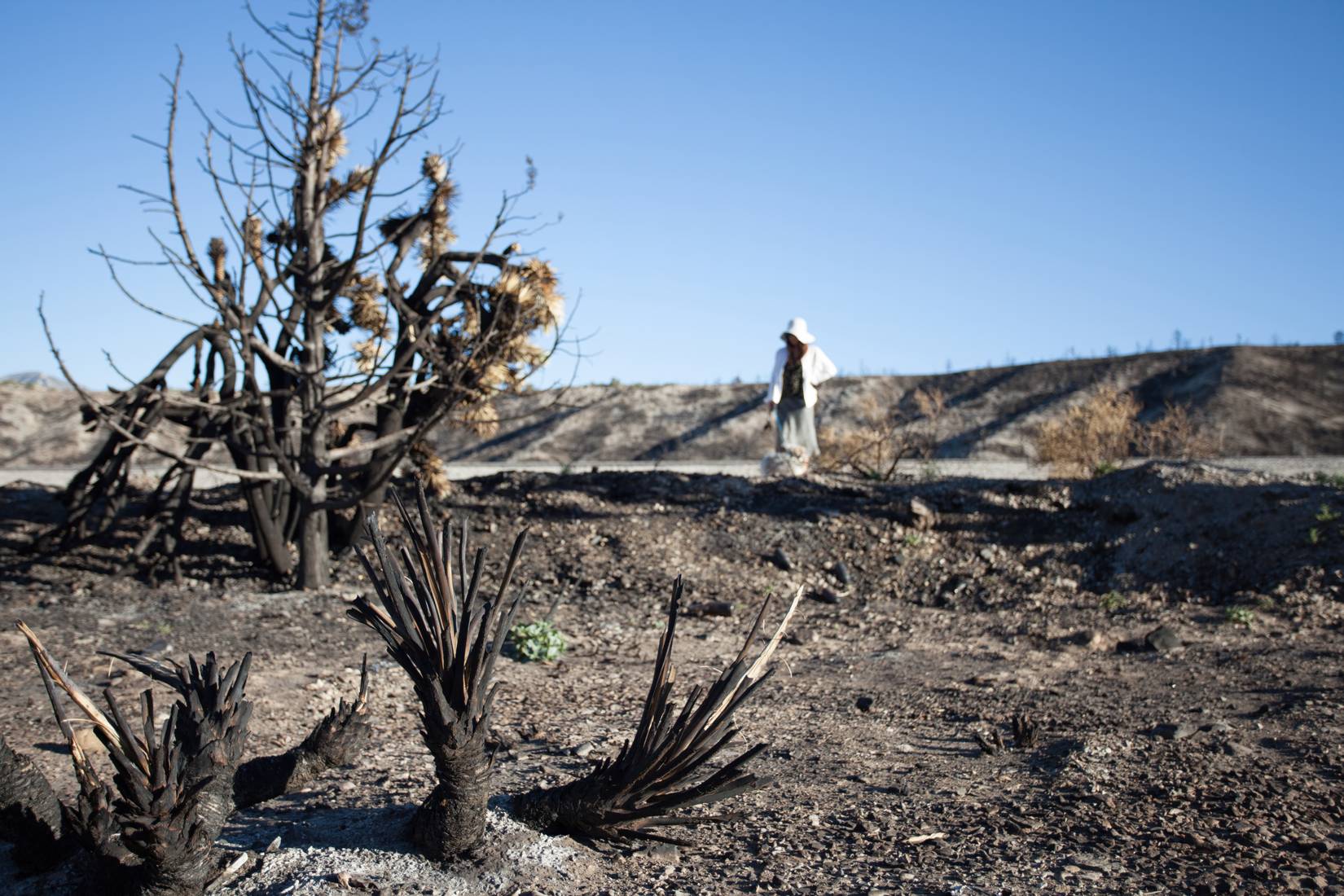
Aftermath of a wildfire in Joshua Tree, with charred landscape and a person in the distanceCredit: Shutterstock
Climate change-caused alterations in a national park’s landscape or ecosystem can also negatively affect that park’s overall visitor experience.
Wildfires are among the deadliest and most destructive natural disasters that can hit a national park, and with the frequency of wildfires increasing under the changing climate, national park visitors may increasingly see their trips affected.
The consequences of unchecked wildfires are already being seen in national park infrastructure. Just in 2025, the historic Grand Canyon Lodge was destroyed in a wildfire at Grand Canyon National Park’s North Rim. Even if a wildfire doesn’t destroy park infrastructure, it can still produce potentially dangerous smoke or damage scenic vistas and trails.
Likewise, heat waves and droughts can negatively affect visitor safety, especially in national parks located in desert climates. According to some studies, the 25 most-visited national parks are likely to see five times more “extremely hot” days by 2050.
This means that heat-related illnesses can become an issue in more temperate parks like Yosemite and the Great Smoky Mountains, while hot desert parks like Death Valley and Big Bend may become too dangerous to engage in any outdoor activities at all, at least during the peak summer season.
On the opposite end of the climate spectrum from heat waves and droughts, climate change is also producing heavier rain in some national parks, which can result in severe flooding, road closures, and other infrastructure damage. Death Valley, one of the national parks most at risk for deadly heat waves, has also experienced road closures due to 2025’s record flooding.
While the specific effects of climate change may vary from park to park, the common thread is that national park conditions are becoming less predictable for visitors. With roads, campgrounds, trails, and weather all at risk for extreme climate-related events, prospective visitors may have a harder time planning a national park trip in advance.
Wildlife Encounters And Ecosystems May Not Be The Same
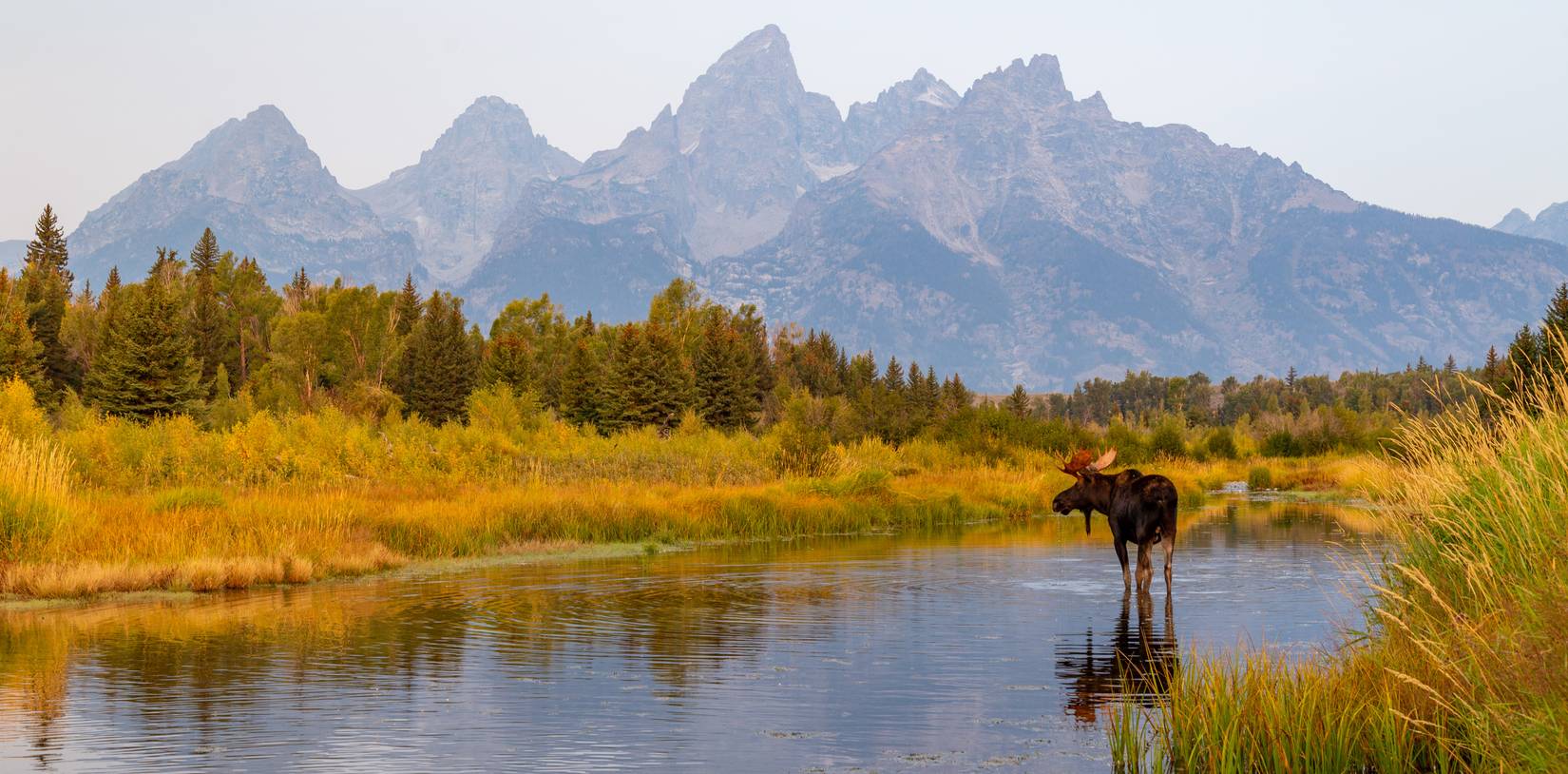
Wild bull moose in Snake River in Grand Teton National ParkCredit: Shutterstock
Though not as obvious as wildfires, flash floods, or extreme heat, climate change can also impact wildlife in many popular national parks.
Animals, after all, are more dependent on climate conditions than humans are. Hotter conditions may force popular species to migrate away from viewable areas to higher elevation regions. At the same time, climate change can significantly impact migration patterns of migratory species, which may no longer pass through popular national park sites in the future.
The aforementioned climate-driven natural disasters, like floods, wildfires, and droughts, can also destroy vital national park habitats that countless species depend on. Conversely, changes in climate patterns may also attract invasive species that can do further damage to a national park’s ecosystem.
To give just one of many examples, the National Park Service’s moose populations are vulnerable to climate change in several ways. National parks like Michigan’s pristine Isle Royale have previously served as safe havens for the U.S.’s increasingly threatened moose numbers. However, warming climate conditions on Isle Royale will make it much harder for moose to survive in the island’s delicate ecosystem.
At the same time, warmer conditions mean a surge in tick populations, which infamously spread diseases, parasites, and other health issues to an area’s resident moose. While it’s far from the main issue with climate-related threats to wildlife, the fact remains that alterations in a national park’s wildlife populations will mean fewer and fewer opportunities for visitors to observe said wildlife.
For many, seeing one of these incredible animals in their natural habitats is one of the main reasons to visit a national park in the first place. And though the exact ways in which a particular species will respond to changes in climate are hard to predict, national park visitors may face less reliable wildlife viewing opportunities in the future.
What This Means for Your National Park Bucket List
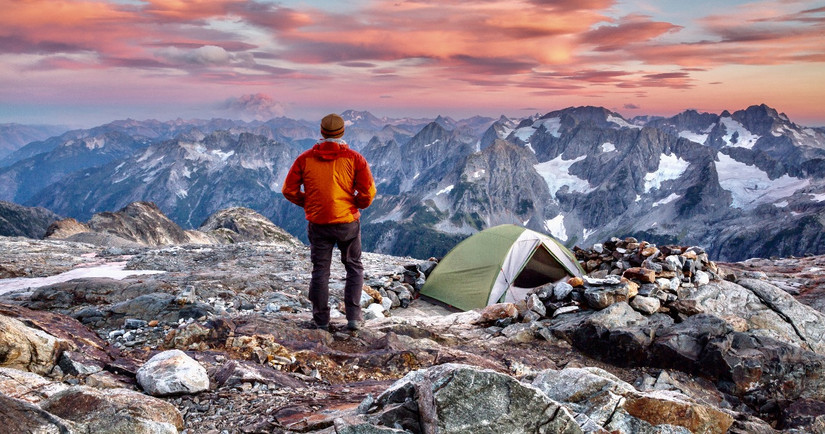
Hiker at sunset in North Cascades National Park, WashingtonCredit: Shutterstock
All of these factors mean that the national park visitor experience may be changing in the coming years. Camping, wildlife viewing, and sightseeing are all activities that usually rank high on national park bucket lists. Unfortunately, these are also activities that are highly vulnerable to the effects of climate change.
Of course, all of America’s national parks and their myriad of once-in-a-lifetime experiences are still there, and will most likely still be there in the coming years. And yet, as the effects of climate change become clearer and clearer, consider a few key points before compiling your national park bucket list.
Firstly, climate change or not, all the country’s national parks are living landscapes, with complexes of interconnected ecological and biological conditions that are in a slow but constant state of evolution.
Even if the planet were not facing a climate change crisis, the notion that a national park and its famed vacation experiences are static, unchanging things would be a fallacy. To this end, it may be helpful for prospective national park visitors to reconsider the idea that a national park visit is a “once-in-a-lifetime” experience.
If you’re planning on visiting a national park in the near future, you may want to get away from the belief that you must do this or see that. Rather, you may instead refocus your mindset towards experiencing a unique, ever-changing masterpiece of nature, a fact that will be true regardless of how your specific visit plays out. At the same time, you may also want to prioritize certain national park experiences sooner rather than later.
For many national park visitors, a park’s weather conditions are one of the most important elements that differentiate a “good” trip from a “bad” trip. As the Earth warms and climate-related events reduce a park’s air quality, you may find fewer and fewer days with “ideal” national park weather conditions as the years go by. Smoke produced by wildfires, water quality diminished by flooding, and other climate-related impacts can also threaten the health and safety of guests.
Finally, responding to climate change is an active, not a passive, activity. Though you may seem relatively insignificant in the large-scale picture of the Earth’s climate, you can take several practical steps to mitigate climate change on your end and make your national park visit more green. A few small but important steps you can take are:
- Take advantage of a park’s public transportation instead of driving your car
- If you do drive into the park, bring your most fuel-efficient vehicle
- Turn your car off instead of letting it idle with the engine on
- Bring a reusable water bottle or travel mug
- Use a park’s designated recycling bins
- Calculate your carbon footprint and offset the carbon emissions from your trip (if you can)
Ultimately, both casual national park fans and dedicated nature warriors should find a healthy balance between recognizing the reality of climate change and succumbing to apathetic fatalism. After all, we love national parks because they are such rare and extraordinary examples of what nature can produce.
Our appreciation of national parks should always include their propensity towards change, while simultaneously doing our part to ensure that such change occurs on nature’s, not humanity’s, terms.