
On the one hand, progress, on the other, stagnation. This is how Donika Emini, a researcher at the Balkan Policy Advisory Group in Europe (BiEPAG), sees the European Union’s conclusions on enlargement when it comes to Kosovo.
She tells Radio Free Europe that the conclusions were expected, considering the continuity of EU policy over the past five years.
But it also highlights some positive progress, such as the lifting of punitive measures, which were imposed on Kosovo in the summer of 2023, due to tensions in the Serb-majority north.
Kosovo’s President, Vjosa Osmani, announced on December 18 that the EU will lift all these measures by January 2026, giving Kosovo access to additional funds.
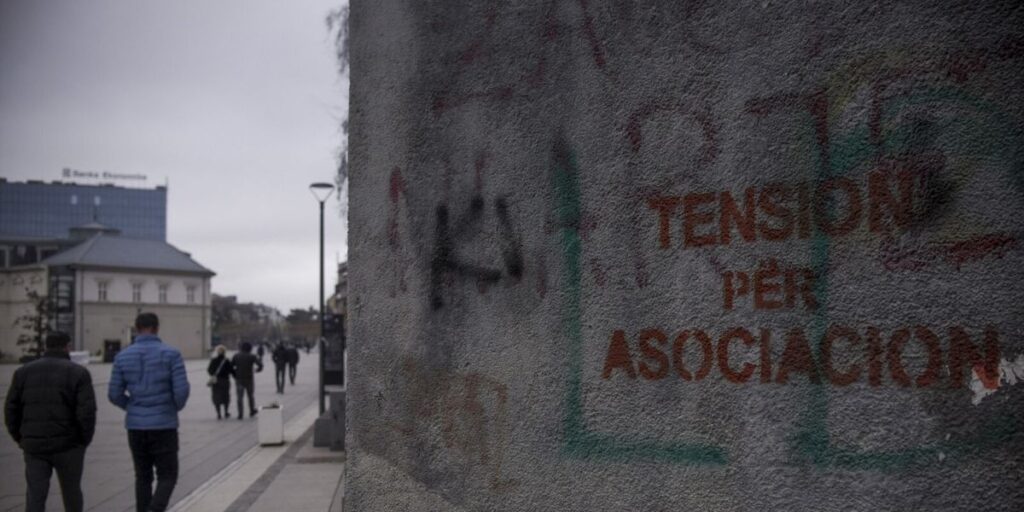
However, Emini emphasizes that the main issue for Kosovo’s progress towards the EU remains the Association of Serb-majority Municipalities.
Kosovo and Serbia agreed on its establishment in 2013, within the framework of the dialogue for the normalization of relations.
Belgzim Kamberi, from the Musine Kokalari Institute for Social Policy in Pristina, also notes that the EU’s conclusions on enlargement show that the approach to Kosovo is closely linked to the implementation of the Agreement on the Normalization of Relations and the Agreement on the Roadmap to Normalization of Relations, which Kosovo and Serbia accepted in principle in 2023.
According to him, these also include the Association of Serb-majority Municipalities, which Kosovo refuses to establish, arguing that some elements of the agreement are not in accordance with the Constitution or laws of Kosovo.
In October 2023, representatives of the EU, the US, France, Germany and Italy presented a draft statute for this association, which Kosovo’s Prime Minister, Albin Kurti – now in office – accepted in principle, but then refused to send it to the Constitutional Court for review.
Kamberi believes that now, following the democratic transfer of power to Serb-majority municipalities in northern Kosovo and the partial lifting of measures by the EU, “certain positive signals” are emerging on this issue.
What do the EU conclusions say about Kosovo?
The General Affairs Council of the European Union adopted conclusions this week regarding the European bloc’s enlargement process.
The section on Kosovo calls for faster reforms.
Among other things, the implementation of the Agreement on the Normalization of Relations with Serbia is required, including the establishment of the Association of Serb-majority Municipalities.
Kosovo is the only country in the Western Balkans that does not have the status of a candidate country for EU membership, although the application was made in December 2022.
The conclusions also mention the need for reforms in the areas of public administration, the rule of law, the fight against corruption, and the protection of fundamental freedoms.
It states that progress has been made in the fight against organized crime, while praising the organization of the electoral processes in February and October, as well as the participation of all communities.
Association – a key step for Kosovo’s progress towards the EU
Emini says that the formation of the Association of Serb-majority Municipalities remains a political obstacle for Kosovo on the path to EU membership.
She adds that the EU’s expectations for the implementation of this agreement come at a time when the European Union “is making almost no effort to revitalize the Kosovo-Serbia dialogue.”
Political dialogue between the two sides has been blocked since September 2023, after an armed Serbian group, led by former deputy leader of the Serbian List, Milan Radoićić, attacked Banjska in northern Kosovo and killed a policeman.
To resume the dialogue, Kosovo’s acting Prime Minister, Albin Kurti, is demanding Radoicic’s extradition – which Serbia refuses.
“In essence, the EU conditions Kosovo’s European path not with a broad dialogue with Serbia, but only with the formation of the Association of Serb-majority municipalities, expecting Kosovo to act in a kind of vacuum,” says Emini.
She adds that the EU has focused on technical issues, while broader policies have been postponed.
According to her, the issue of forming the Association cannot be resolved by itself.
Even for Kamberi, the start of the true implementation of the Association Agreement remains a key issue.
“Now that there are legitimate local authorities in the northern municipalities, it is important that Kosovo, after the early elections on December 28, has a new government in Pristina. But even then, there is a risk of a new political deadlock, due to disagreements on how to implement the agreement. One of the main dilemmas remains whether it is possible to make progress without first agreeing on the order of points to be implemented,” Kamberi tells Radio Free Europe.
How much can Kosovo avoid forming the Association?
Kamberi says that the European Union’s enlargement process is increasingly taking on a geopolitical character.
“In the case of Kosovo, progress is no longer measured solely by internal reforms, but primarily by the readiness to implement the agreements reached in the dialogue with Serbia. Both Kosovo and Serbia will have difficulty advancing towards the EU without sustainably implementing the Agreement on the Normalization of Relations,” he says.
Emini estimates that Kosovo can indefinitely postpone this international obligation, without immediate political or institutional consequences, but adds that the situation remains complex.
“The obligation to establish the Association is linked to the expectations of the EU. However, the EU has not created a favorable environment for the implementation of the agreement. There are no guarantees, both from Serbia and from the EU, about the concrete benefits that Kosovo would have – whether on the path to European integration or recognition by the five [EU] countries that do not recognize it,” she says.
According to Emini, Kosovo is at a “dead end” because, if it tries to delay the process of forming the Association, it will face criticism from the EU and its integration will be slowed down; likewise, “unilateral actions are equally dangerous.”
She emphasizes that after signing the Agreement on Normalization of Relations, Kosovo could have managed the situation better – including public debate and preparation of the Association Statute with support from strategic allies, such as the EU and the US.
Today, Emini adds, there is an expectation that the new Kosovo Government can gradually start the debate, change the narrative and approach towards the Association, and gradually shape it in a way that would not cause internal dysfunction.
The goal would be to improve the life of the Serbian community in Kosovo, while simultaneously strengthening Kosovo’s position in the European integration process and at the international level.
Early parliamentary elections in Kosovo will be held on December 28, after Albin Kurti’s Vetevendosje Movement failed to secure support for the formation of a government after the February elections.