
Ukrainians have been defending their sovereignty against Russia since 2014; the European Union and its neighbours, including most Western Balkans states, largely advocate for a just and durable peace in Ukraine as their final aim.
Now, with 2025 drawing to a close, efforts are mounting to reach a US-facilitated peace deal. But Ukrainian president Volodymyr Zelensky is resisting pressure to give away further Ukrainian territory to Russia and Vladimir Putin is resisting any compromise on Ukraine’s occupied regions. Any settlement that legitimises Russia’s use of force to alter its borders would further destabilise Ukraine and have negative repercussions in the Western Balkans, where the EU and America have spent over 25 years trying to maintain peace and keep stability intact.
If Russia “wins” in Ukraine, the Western Balkans will be in trouble. If Russia gains additional territory, Serbia may be emboldened to urge members of the international community that recognise northern Kosovo as part of Kosovo to instead view it as part of Serbia. Its strongman leader Aleksander Vucic might also push for Bosnia’s Republika Srpska region to become part of Serbia.
But if the EU is adamant that such shabby deals are not permitted on their continent, then those advocating for lasting peace in the Western Balkans can hope for best.
In the eastern neighbourhood
Zelensky is firm: Ukraine will not cede any more territory to Russia. The US is mounting pressure on Ukraine’s president to concede, but his stance aligns with international law: borders cannot be changed by force. As the world order continues to crumble, however, so too do democratic norms. The Russia-Ukraine negotiations have hardly mentioned multilateralism, or the rules and regulations which govern international order. Instead, the US special envoys spearheading efforts to bring peace to Ukraine are focused largely on handing Russia the territorial changes it has achieved by force—as well as areas, like Donbas, that it does not yet control militarily.
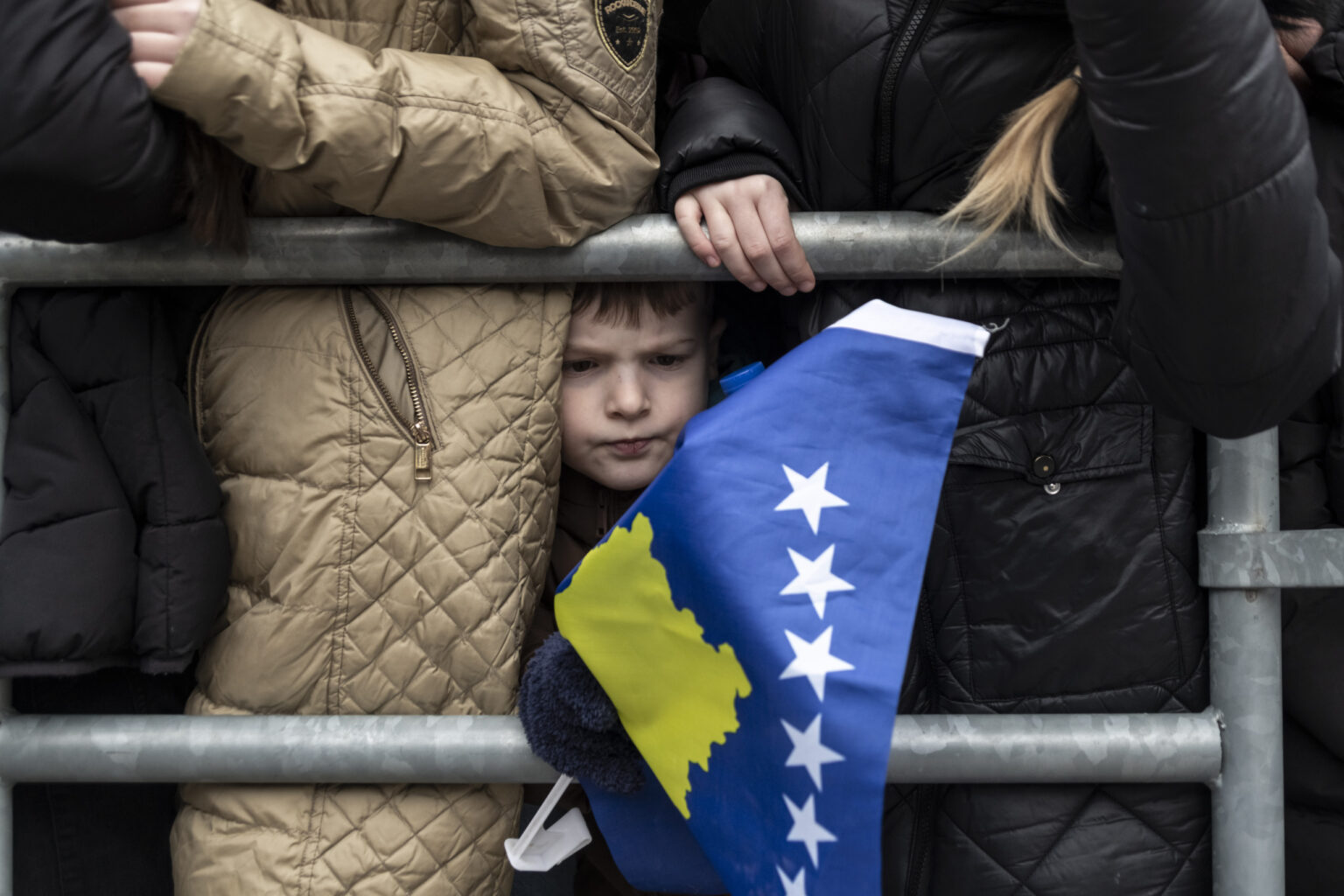
But America’s dismissal of international and customary law could trigger myriad unwanted repercussions for Europe’s eastern neighbourhood—in fragile states such as Georgia and Moldova, and in places where open political disputes still exist such as the Western Balkans. Indeed, regional bilateral relations could easily deteriorate if not dealt with properly. One example is between Kosovo and Serbia, and the disputed north of Kosovo which is inhabited mainly by the Serbian community.
The EU is facilitating a normalisation process between the two countries; ensuring this is a success will have profound repercussions for regional stability, EU enlargement credibility and broader European security. However, if the US allows a peace deal that gives Russia more Ukrainian territory, or if the EU fails to stop US president Donald Trump from inflaming regional tensions, Vucic might be emboldened to pursue a land grab in Kosovo’s north. The EU needs to step in and facilitate the normalising of relations between Kosovo and Serbia in a lasting and sustainable manner.
America’s changing role
America has traditionally been involved in enabling peace in the Western Balkans. It was especially present during the 1990s through military intervention and via NATO, and diplomatically through its brokering of peace agreements. However, the US administration has changed tack; the second Trump administration is focused on projecting power for its own economic interests, as stipulated in the latest National Security Strategy (NSS): “the United States will prioritise commercial diplomacy”. America is clearly prioritising economic gains over geopolitical stability. Its approach to Russia-Ukraine negotiations shows that Trump wants to cement his international reputation as a “peacekeeper” while seeking a US reset with Russia.
Trump is also scoring much lower in polls than he previously has. This could make him more erratic, authoritarian and short-term in his decision-making. He has already mentioned that he “managed to stop the war between Kosovo and Serbia”, with the NSS listing the regional dispute as among seven other conflicts that he allegedly solved—some of which never existed. In this regard, Trump’s focus on the dispute between Kosovo and Serbia could be for him to score an easy win. He even tried this idea during his first presidency, whereby his special envoy for Serbia and Kosovo supported a “land-swap” idea. This would have seen Serbia receive Serb-majority areas in the north of Kosovo, while Kosovo would have received Albanian-majority areas in southern Serbia.
Fortuitously, this did not happen. However, the fact remains that the north of Kosovo particularly remains in limbo. Serbia wants to retain some control over the territory and its majority Serb community, while Kosovan authorities insist that the north should be governed under Kosovo’s rules and regulations. The area remains a volatile place, hindering the normalisation of relations between Kosovo and Serbia and blocking Kosovo’s efforts to strengthen its statehood.
Overall, solving the conflict requires a continual and robust international security presence, with the EU and the US both committed to retaining NATO forces in Kosovo. But if America succumbs to Trump’s whims and pushes for s a Russia-Ukraine peace deal with Russia gaining territory—or if the EU does not prevent Trump from stoking the tensions between Kosovo and Serbia through border adjustments—then a Serbian land-grab could be next on Vucic’s agenda. And this move, which would undermine NATO and weaken the EU, is likely to have Putin’s support.
Strength in numbers
Even as it is distracted by the war in Ukraine, the EU remains indispensable in normalising relations between Kosovo and Serbia. However, its fragmented approach to peacekeeping has weakened sustained engagement and opened space for a volatile situation to prevail. For example, in September 2023, a Serb paramilitary attack in the northern Kosovo village of Banjska left one Kosovo policeman dead.
Achieving robust engagement and tangible change depends on renewed political backing by both Kosovo and Serbia. The prospect of enlargement remains the EU’s main leverage in such countries, yet its effectiveness is diminished where progress stalls. Loss of public faith in the EU is persistent: without delivering tangible benefits, the prospect of further European integration will lose its remaining credibility among candidate countries. This could mean that they are more likely to look to the US or Russia for geopolitical support and influence.
Amid regional uncertainty caused by Russia-Ukraine peace deal talks, EU member states also need to decide whether they are willing to retain ownership of Balkan geopolitics, or simply standby as Washington steps in. Their decisions over the course of 2026 will be decisive in determining the geopolitical trajectory of Kosovo and Serbia—and that of the wider Western Balkans.
Keep it in the family
Should the EU choose to protect its democratic processes from an America seemingly more willing to cede to authoritarian leaders, the actions of its member states will be central to restoring the bloc’s wider credibility. Countries like Germany and France need to sustain pressure on Kosovo and Serbia to normalise their relations while also supporting the EU-facilitated process and the implementation of the “Agreement on the path to normalisation between Kosovo and Serbia”.
If the peace negotiations end with Ukraine ceding territory to Russia, this will directly effect the geopolitical trajectory of Kosovo, especially its northern territory, and the wider Western Balkans. EU leadership is critical in offering a suitable and democratic alternative to countries in the region which are unstable; Europeans need to demonstrate their sustained political support for Ukraine and the Western Balkans through backing the EU enlargement process and increasing their investments in security.
If Zelensky crumbles under pressure from Trump and Putin, Ukraine’s territorial loss could undermine the EU’s democratic progress in the wider eastern neighbourhood and directly threaten its overall security.
The European Council on Foreign Relations does not take collective positions. ECFR publications only represent the views of their individual authors.