
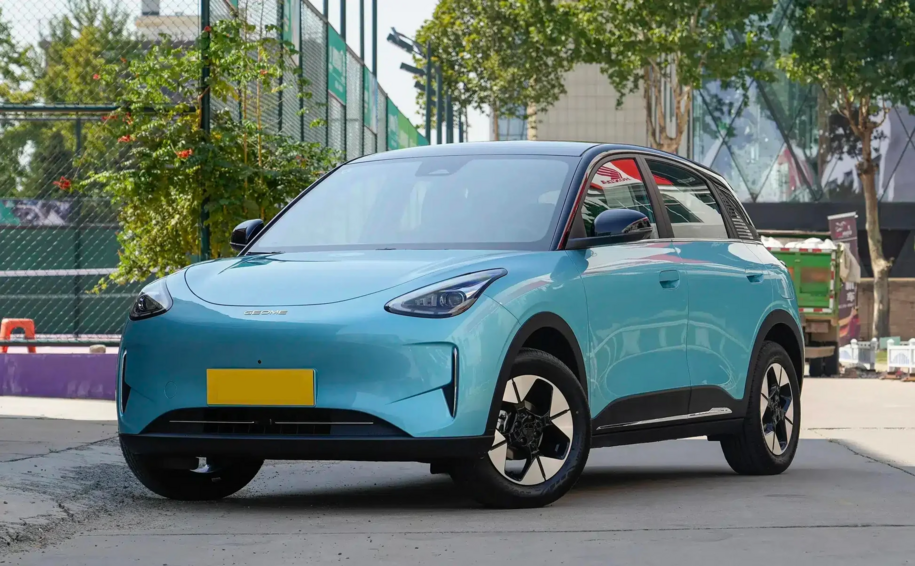
A quarter of new car sales are now EVs or hybrids. We need two more doublings, plus expansion into all of the rapidly growing economies still racing to match the living standards and production capabilities of the countries that grew up in the Industrial Revolution. That’s a lot of tipping points to topple. Then we have to wait while the remaining ICE cars and trucks and all age out of the market until only the diehard fanatics and the collectors are left.
The Spanish and English captions here say exactly the same thing.
Global Warming Catastrophes
Warming U.S. climate linked to rising deaths from heat
Severe cold remains a leading mortality risk, but heat-related deaths surged more than 50% since 2000
The Good News
IISD: Global Environment Facility (GEF) Council Meeting
The Council of the Least Developed Countries Fund and Special Climate Change Fund approved a Work Program that will channel USD 52.26 million and leverage USD 116.84 million in co-financing to support climate change adaptation priorities in five countries.
As the Global Environment Facility (GEF) ramps up preparations for its ninth replenishment cycle, the GEF Council will, at its 70th meeting, consider the findings of the Eighth Comprehensive Evaluation of the GEF (OPS8), an independent assessment of the GEF’s progress and performance during the current replenishment period that commenced in July 2022. OPS8 is expected to provide evidence on performance, enablers of change, and partnership effectiveness, to inform the ninth replenishment cycle, which is scheduled to begin in July 2026. The final report of OP8 will be presented to the Council at its 70th meeting.
The GEF’s primary function is to provide funding to developing countries and countries with economies in transition for projects that address global environmental challenges.
UNEA-7 Advances Sustainable Solutions for a Resilient Planet
Delegates “worked tirelessly to build consensus” to tackle the triple planetary crisis of climate change, biodiversity loss, and pollution – amid the “triple political crisis” of mistrust, misinformation, and populism.
They also addressed new and emerging issues such as the links between the environment – and technology, health, and the global economy.
The Assembly’s Ministerial Declaration, reflecting the theme of the conference, ‘Advancing Sustainable Solutions for a Resilient Planet,’ commits to advance global environmental governance in a coherent and collaborative manner through four sets of actions.
Heatmap e-mail: Whitepaper: Tapping Into the Power of Bring-Your-Own-Battery Programs
As residential battery storage adoption accelerates, utilities are seeking strategies to harness the full potential of residential batteries as DERs [Distributed Energy Resources for Resilience]. This whitepaper from EnergyHub provides actionable insights for building effective battery flexibility programs that balance customer needs with grid reliability and decarbonization goals, making it highly relevant for both utilities and regulators.
‘We’re in a better place’: Has the time for a unified global carbon market finally arrived?
In a Q&A, Yale economist Rohini Pande explains why a voluntary carbon market initiative adopted during the COP30 climate conference in Belém can help make emissions reduction cost effective — and promote innovation in the world’s developing nations.
Draft Proposal for a Unified Carbon Market
On Friday November 7 2025, as COP30 launched, host country Brazil announced a new Open Coalition on Compliance Carbon Markets, with the potential to unify multiple carbon compliance markets. To date, Brazil, China, the European Union, United Kingdom, Canada, Chile, Germany, Mexico, Armenia, Zambia, France, Rwanda, Andorra, Guinea, New Zealand, Monaco, Singapore, and Norway have joined the Coalition.
Bloomberg Green e-mail: Walking away from coal
Global coal use has hit a ceiling and is set to begin a slow decline over the next five years as renewables and liquefied natural gas gain ground, the International Energy Agency said.
Demand is expected to edge up 0.5% this year to a record 8,845 million tons before slipping 3% by 2030, according to the IEA’s annual coal report published earlier today.
Coal hit a peak in 2013, but later resumed growth, led by China and India.
Yale Climate Connection e-mail: The urban designers making the suburbs more walkable
As Sarah Wesseler pointed out earlier this year, “Many people in the U.S. want to live in walkable areas, but only a small fraction of the nation’s developed land fits this description. Around 90% of all housing in the nation’s largest metro areas is located in car-centric suburbs. The low supply of real estate in walkable neighborhoods drives prices upward, making it unaffordable for most people.”
But the good news, as Sarah reports for us today, is that more communities – even those in the suburbs – are looking for ways to help residents leave their cars behind.
No New Nukes
Let’s Make It Easier To Plug Data Centers Into Power Plants, FERC Says
Federal energy regulators don’t want utilities and electricity market rules getting in the way of data centers connecting directly to power plants.
That was the consensus message from both Republican and Democratic commissioners on the Federal Energy Regulatory Commission Thursday, when it issued its long-awaited order on co-location in PJM Interconnection, the country’s largest electricity market, covering the Mid-Atlantic and Midwest.
The question is a holdover from last year, when Amazon struck a deal with independent power producer Talen Energy to co-locate an Amazon Web Services data center with the Susquehanna nuclear plant in Pennsylvania. Amazon eventually amended the deal to a more traditional power purchase agreement after failing to win regulatory approval for a behind-the-meter arrangement. Constellation, which owns a number of nuclear power plants in the PJM territory, had asked FERC to force PJM to adopt co-location rules and prevent what it saw as utilities obstructing co-location projects.
Denial and Obstruction vs. Resistance and $Real Money$$™
The Party of ‘All of the Above’ Is Now ‘Anything But’
The tension between the two GOP energy philosophies — one admitting renewables, the other firmly rejecting — could tank a permitting reform deal.
Bloomberg Green Daily e-mail: How to dismantle climate science
It’s been labeled “scientific vandalism” and “a national security risk.” The Trump administration’s plan to dismantle the National Center for Atmospheric Research has outraged scientists and policymakers.
Today’s newsletter looks at the implications of shutting down a climate research facility that’s key to providing data and analysis on everything from the ozone hole to hurricanes. A warning from Europe: the impact could be felt across the planet.
Paywalled: Trump Administration Aims to Dismantle Key Climate Research Hub
EU scraps combustion engine ban
The European Union is planning to ditch a controversial ban on combustion engine cars starting in 2035 after months of debate and pressure from the automotive industry.
Today’s newsletter brings you exclusive information from our reporters in Brussels, who were told by people familiar with the plan that the EU will today propose softening emissions rules for new cars. Meanwhile, Ford plans a $19.5 billion overhaul of its EV business that will include ending production of the F-150 Lightning.
A Different Level of Idiocy
Heatmap Daily e-mail: What the FEOC?
Paywalled: Trump’s Missing Tax Rules
When I was covering Trump’s One Big Beautiful Bill this summer, there was one part of the legislation that was especially tough for me to understand, let alone to figure out how it would impact real-life decision-making. I’m talking about new “foreign entities of concern” restrictions that will apply to clean energy tax credits starting in 2026. Trump missed his own deadline to clarify the rules in August, and with the new year is rapidly approaching, I looked at how the industry is coping with the uncertainty.
The president set an August deadline to deliver guidance for companies trying to qualifying for clean energy tax credits. Four months later — and two weeks before new rules are set to kick in — they’re still waiting.