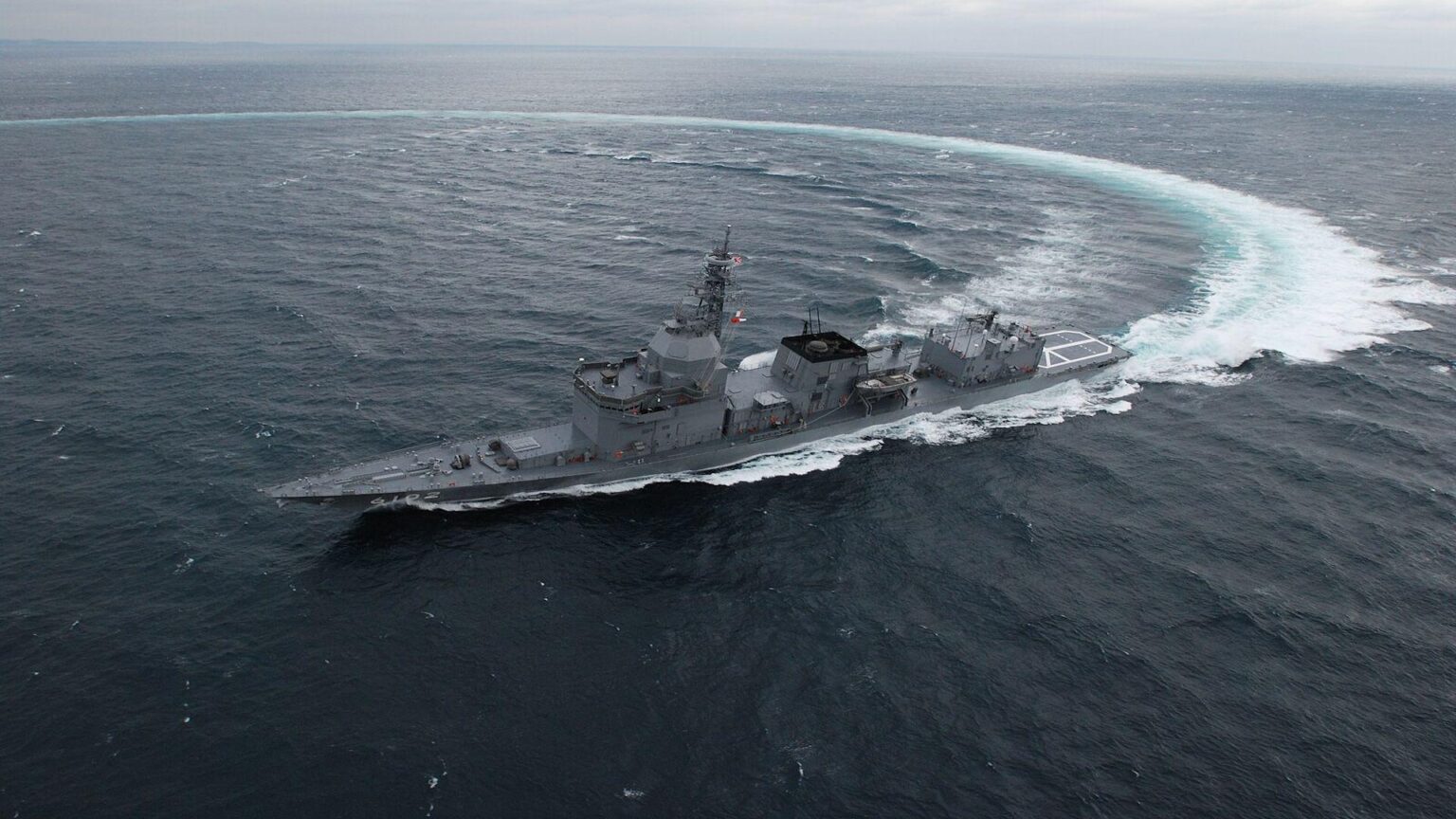
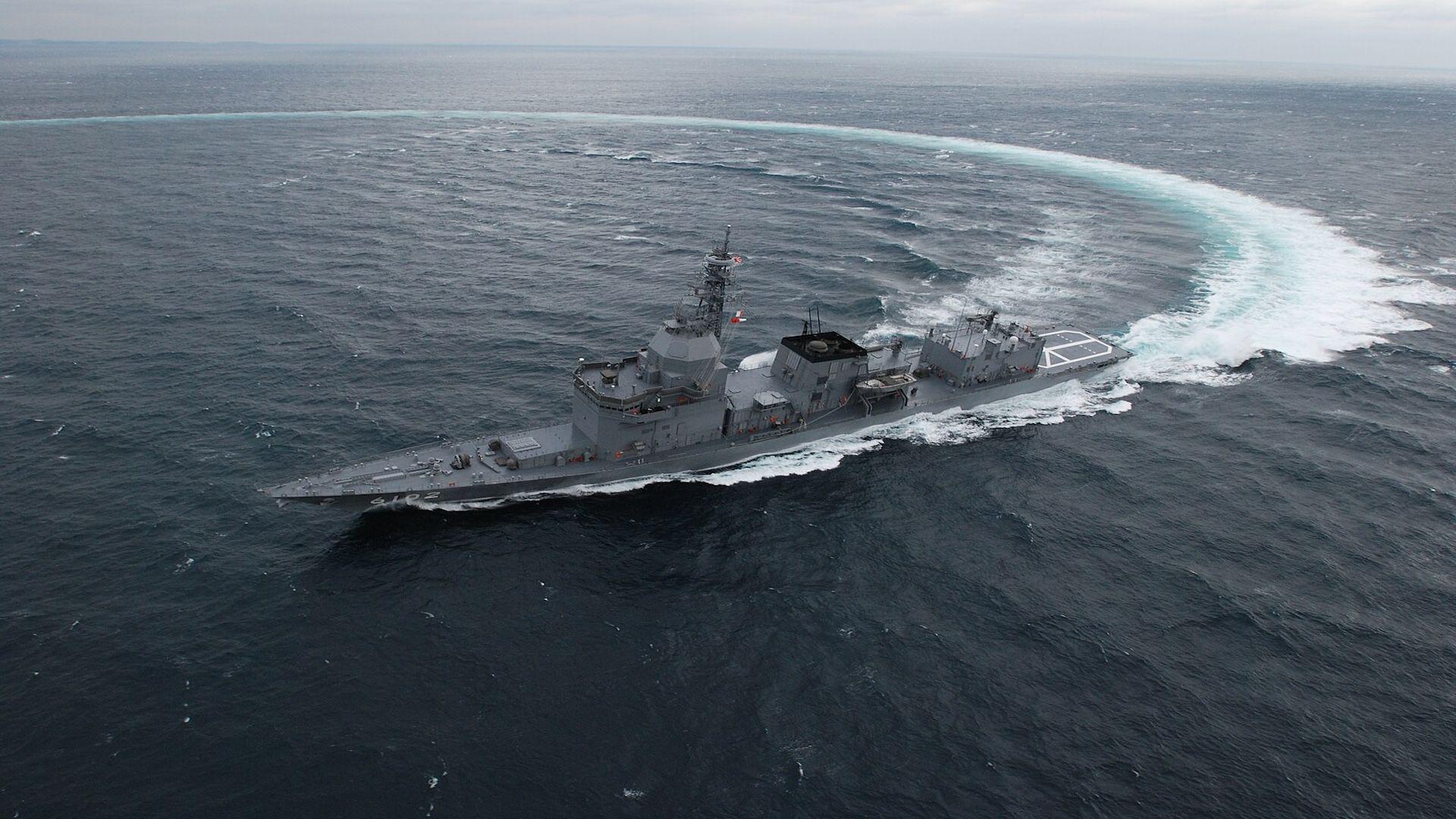
Japan has deployed a system that fires laser beams with 100 kilowatts of energy — powerful enough to disable small drones. It was installed on board a 6,200-ton (6.3 million kg) warship.
The weapon combines 10 lasers (each 10 kW in power) into a single 100 kW beam, giving it enough focused power to burn through metal surfaces. It is a fiber laser, meaning the beam is generated by light being amplified and focused as it travels through a solid-state optical fiber doped with rare earth elements. Engineers designed this system specifically to shoot down drones, mortar rounds and other lightweight airborne threats.
On Dec. 2, Japan’s Acquisition, Technology and Logistics Agency (ATLA) confirmed in a statement that the laser system was installed on the JS Asuka test ship after arriving at one of Japan Marine United’s shipyards. It was seen packed into two 40-foot (12-meter) domed modules.
ReportEcstatic155 on
Cool tech but I’m curious what happens when you try to use this in heavy fog or rain. That’s usually what kills laser weapon effectiveness.
Say_no_to_doritos on
I can make a drone for $500 and can put an attenuated gps receiver on it narrowed to 10deg for another $200. A $200 raspberry pi gets you computer vision.
These solutions are not “real” solutions when 100’s of drones can be fielded.
FruitySalads on
So what if drones were mirrored? Would the laser bounce off?
brownianhacker on
I’m curious how it wouldn’t give everyone in the area permanent eye damage
EZontheH on
I’m reminded of the Battle of Geonosis, with the Republic LAAT firing the “mini-death star” composite laser from the side ball turret.
We’re one step closer.
Seriously though, laser weaponry seems to be the only practical solution to drone swarms, they just need a power scaling. 5-7 seconds on target for a kill is still too long for small DJI Phantom sized drones, let alone larger anti-ship drones. Need to get that down well into the milliseconds for anti-swarm protection.
We’ve seen Ukraine deploy 4-6 naval drones against warships and ports with pretty good success. Even when taken under small arms fire, this type of laser would likely be a great counter for a small number of such drones.
wwarnout on
“…can burn through metal surfaces.”.
Important questions: How thick can the metal be? How long must the laser be trained on the metal do burn through?
pataglop on
I saw the documentary a few years ago, it is called *Akira*
smartsass99 on
This sounds impressive, but I am curious how it performs outside of tests
Rippedyanu1 on
Sounds like Japan is catching up to the US and the HELIOS project. Nice. Glad to see anti-air laser armament being seen as viable compared to the typical gatling shotgun approach ala CWIS
Affectionate_Ice_744 on
I dread to imagine the side & back-lobes that this beast will create

11 Comments
From the article
Japan has deployed a system that fires laser beams with 100 kilowatts of energy — powerful enough to disable small drones. It was installed on board a 6,200-ton (6.3 million kg) warship.
The weapon combines 10 lasers (each 10 kW in power) into a single 100 kW beam, giving it enough focused power to burn through metal surfaces. It is a fiber laser, meaning the beam is generated by light being amplified and focused as it travels through a solid-state optical fiber doped with rare earth elements. Engineers designed this system specifically to shoot down drones, mortar rounds and other lightweight airborne threats.
On Dec. 2, Japan’s Acquisition, Technology and Logistics Agency (ATLA) confirmed in a statement that the laser system was installed on the JS Asuka test ship after arriving at one of Japan Marine United’s shipyards. It was seen packed into two 40-foot (12-meter) domed modules.
Cool tech but I’m curious what happens when you try to use this in heavy fog or rain. That’s usually what kills laser weapon effectiveness.
I can make a drone for $500 and can put an attenuated gps receiver on it narrowed to 10deg for another $200. A $200 raspberry pi gets you computer vision.
These solutions are not “real” solutions when 100’s of drones can be fielded.
So what if drones were mirrored? Would the laser bounce off?
I’m curious how it wouldn’t give everyone in the area permanent eye damage
I’m reminded of the Battle of Geonosis, with the Republic LAAT firing the “mini-death star” composite laser from the side ball turret.
We’re one step closer.
Seriously though, laser weaponry seems to be the only practical solution to drone swarms, they just need a power scaling. 5-7 seconds on target for a kill is still too long for small DJI Phantom sized drones, let alone larger anti-ship drones. Need to get that down well into the milliseconds for anti-swarm protection.
We’ve seen Ukraine deploy 4-6 naval drones against warships and ports with pretty good success. Even when taken under small arms fire, this type of laser would likely be a great counter for a small number of such drones.
“…can burn through metal surfaces.”.
Important questions: How thick can the metal be? How long must the laser be trained on the metal do burn through?
I saw the documentary a few years ago, it is called *Akira*
This sounds impressive, but I am curious how it performs outside of tests
Sounds like Japan is catching up to the US and the HELIOS project. Nice. Glad to see anti-air laser armament being seen as viable compared to the typical gatling shotgun approach ala CWIS
I dread to imagine the side & back-lobes that this beast will create