
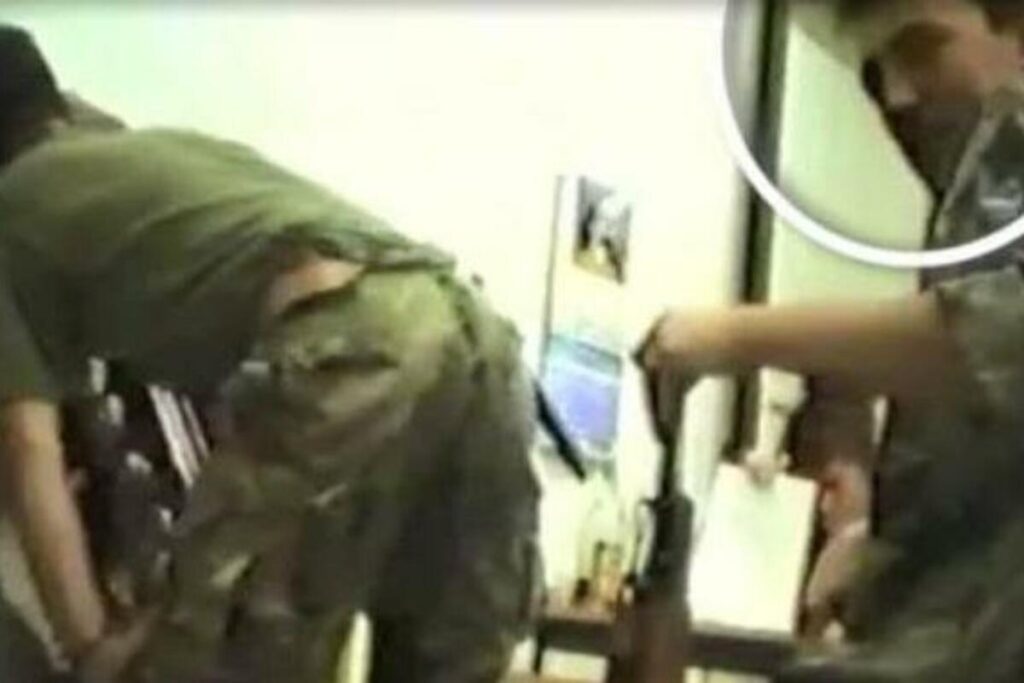

Photo released by US Immigration and Customs Enforcement, showing Kemal Mrndžić (right) on November 2, 1992, Photo: US Immigration and Customs Enforcement
The US Department of Justice has filed a civil lawsuit against a man accused of being a Bosnian war criminal to have his citizenship revoked.
During the immigration process and visa application to the US, Kemal Mrndžić did not disclose that he was a guard at the notorious Bosnian Čelebići camp, where crimes against Serbs were committed, the Ministry announced.
The UN war crimes tribunal has determined that people detained in the camp during the war in Bosnia and Herzegovina (BiH) were killed, tortured, sexually abused, beaten and subjected to cruel and inhumane treatment.
The administration of US President Donald Trump does not allow people who “persecute others” to “enjoy the benefits of sanctuary in the United States,” said Justice Department official Brett Shumate.
The assistant attorney general added that the court case demonstrated the value the US government places on “the integrity of the naturalization process.”
In October 2024, a jury found Mrndžić guilty on several counts of criminal fraud and misrepresentation in connection with his application for a U.S. passport and certificate of naturalization.
He did not disclose to immigration authorities the nature and timing of his military service, nor that he “persecuted Bosnian Serb prisoners as a prison guard,” the Justice Department said.
Mrndžić in January 2025. sentenced to more than five years in prison.
Kemal Mrndžić ‘Kemo’ arrived in America as a refugee from Bosnia and Herzegovina.
For a quarter of a century, he lived in seclusion in the suburbs of Boston, until he was arrested in 2023 on suspicion of being a guard at the infamous Čelebići camp during the war, where captured Serbs were tortured.
A US court in Boston then found him guilty of 25 years of concealing and making false statements to authorities in order to obtain refugee status and later United States citizenship, the US Department of Justice announced.
The Čelebići camp near Konjic existed for eight months in 1992, during which Bosnian Croat and Muslim forces committed the most serious crimes against Serb detainees, such as murder, torture, and rape.
International Criminal Court in The Hague In 1998, the court sentenced three defendants – two Muslims and one Croat – to several years in prison for these crimes.
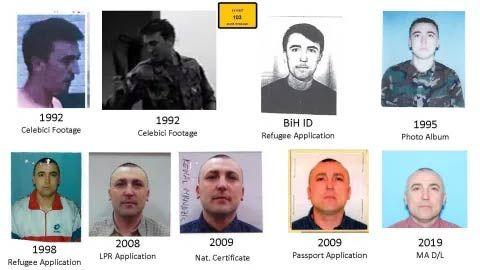
US Immigration and Customs Enforcement
The bloody war in the former Yugoslavia followed the country’s breakup in the early 1990s.
The Čelebići camp was run by forces of the Army of Bosnia and Herzegovina and Bosnian Croats, also responsible for widespread killings in the areas they controlled.
One of the first indictments of the International Criminal Tribunal for the former Yugoslavia and the second trial for crimes in the former Yugoslavia was precisely for the suffering of Serbian victims.
The camp commander Zdravko Mucić, his deputy and later camp commander Hazim Delić, guard Esad Landžo, and Bosnian Army commander Zejnil Delalić, who was the coordinator of Bosnian Muslim and Bosnian Croat forces in the Konjic area, were responsible for the crimes in the Čelebići camp in the Konjic municipality in central Bosnia, it writes. on the website court.
The judges of the International Tribunal have established beyond any doubt that the Serb victims were beaten, tortured, raped and killed in the Čelebići camp.
The International Red Cross has registered more than 400 people who died in this camp.
The war in Bosnia and Herzegovina ended with the signing of the Dayton Peace Agreement, reached with the mediation of the USA, on December 14, 1995.
BBC is in Serbian from now on and on YouTube, follow us HERE.
Follow us on Facebook, Twitter, Instagram i Viber. If you have a topic suggestion for us, please contact bbcnasrpskom@bbc.co.uk


News