
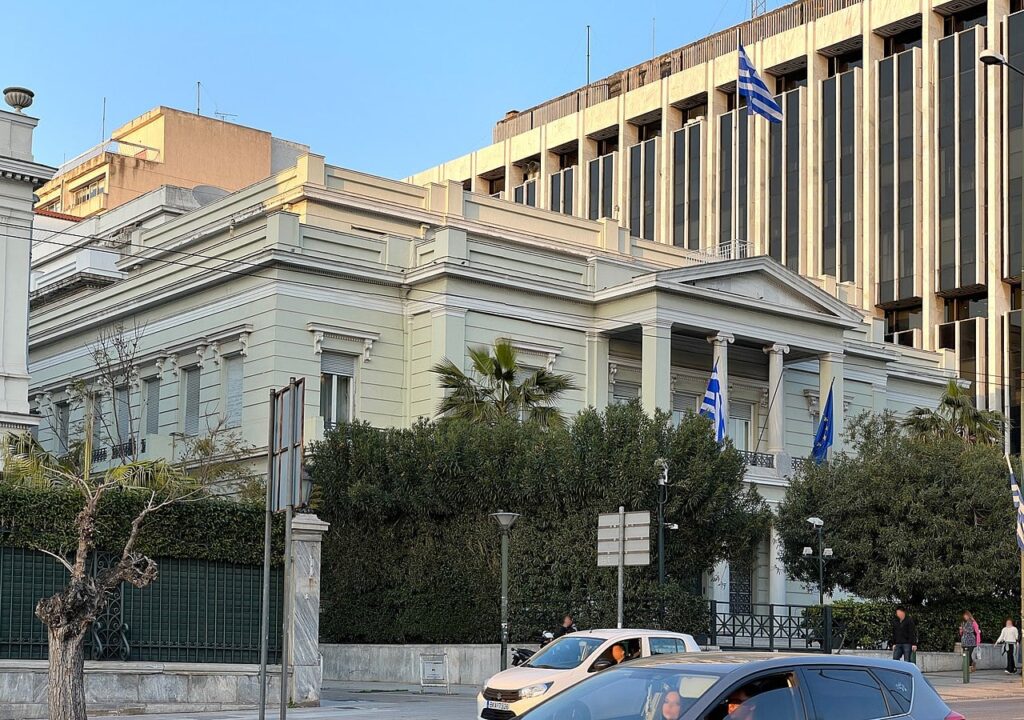
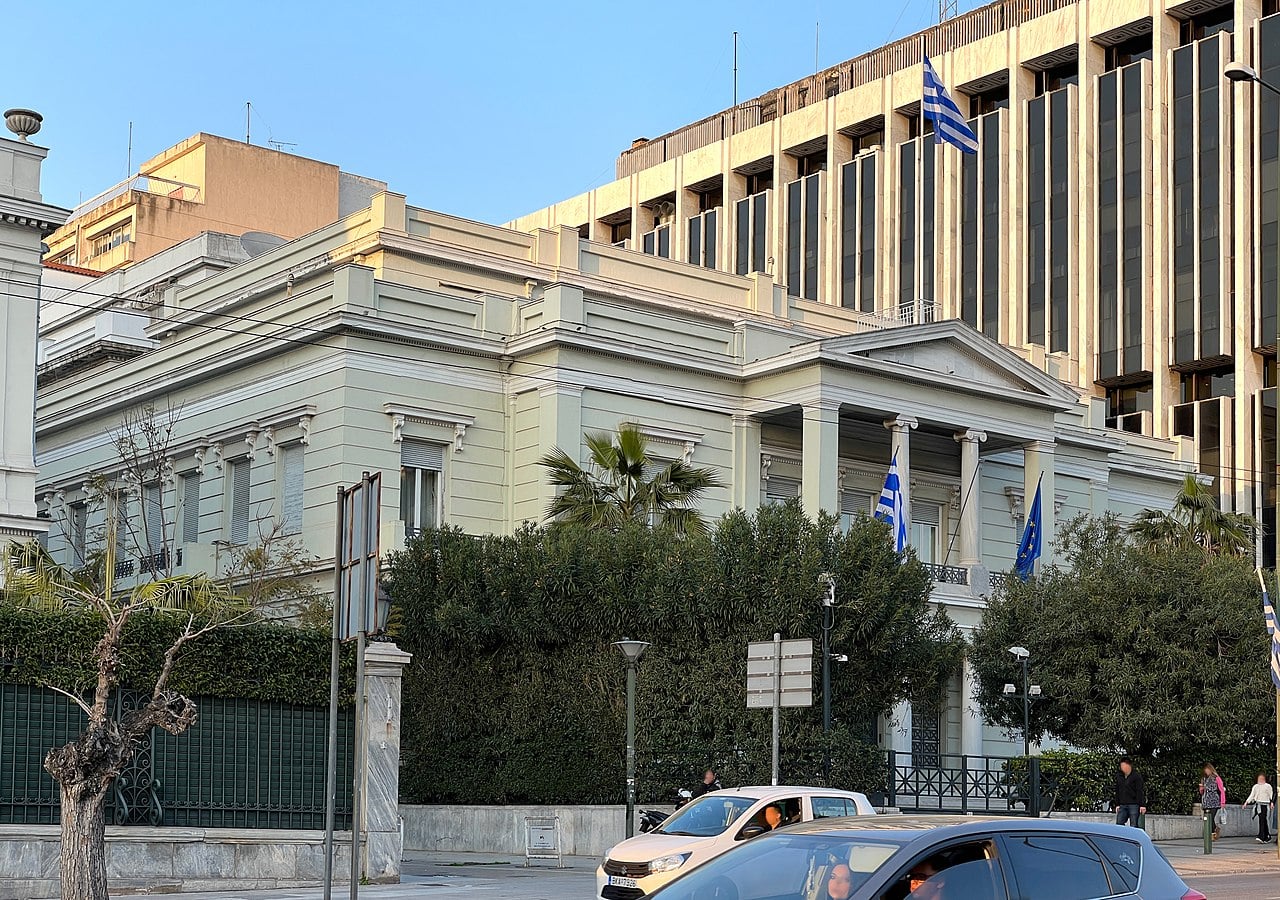
Greece has cautioned North Macedonia that bilateral relations and progress toward EU membership depend on full and consistent respect for the Prespa Agreement. Credit: Wikimedia Commons / Chabe 01 / CC BY SA 4.0
Greece delivered a firm message to North Macedonia following recent statements by Prime Minister Hristijan Mickoski regarding potential constitutional amendments and the status of the country’s language in the context of future EU membership, stressing that such issues are governed by the binding terms of the 2018 Prespa Agreement.
The Prespa Agreement, signed in 2018 by Greece’s SYRIZA government, resolved the name dispute with North Macedonia—formerly the Former Yugoslav Republic of Macedonia (FYROM)—leading to the country’s renaming, NATO and EU access, and a clearer national identity.
Greek officials have emphasized that its neighboring country’s internationally recognized name remains “Republic of North Macedonia,” as defined explicitly in Article 1 of the agreement. Athens emphasized that this provision is binding on both parties and allows no room for unilateral reinterpretation.
Greece cites Prespa Agreement in response to North Macedonia
In its public announcement, the Greek Ministry of Foreign Affairs underscored that the Prespa Agreement forms an integral part of North Macedonia’s constitution and imposes obligations at both the domestic and international levels. Greece stated that any attempt to distort, diminish, or alter the meaning of the agreed terms will not be accepted.
According to the statement, the agreement is part of international law, meaning that its provisions must be implemented uniformly and universally. Greece reiterated that international treaties do not permit de facto deviations, selective interpretation, or partial compliance.
📌Ανακοίνωση Υπουργείου Εξωτερικών σχετικά με δηλώσεις του Πρωθυπουργού της Βόρειας Μακεδονίας
🔗https://t.co/4LafSc17F0 pic.twitter.com/OXqO7XcTfi
— Υπουργείο Εξωτερικών (@GreeceMFA) December 17, 2025
New Democracy’s shift on Prespa
Although New Democracy and its leader Kyriakos Mitsotakis opposed the Prespa Agreement while in opposition and most of the party voted against its ratification in parliament, the Greek legislature narrowly approved the deal in January 2019. After winning the July 2019 election, the Mitsotakis government accepted the agreement as a binding international treaty, shifting its position from political opposition to strict enforcement. Since then, Athens has consistently emphasized full and faithful implementation of the Prespa Agreement, linking Greece’s support for North Macedonia’s EU accession to compliance with its terms.
Prespa Agreement compliance central to Greece – North Macedonia relations
The ministry drew a clear connection between full implementation of the Prespa Agreement and the continuation of North Macedonia’s European Union accession process. Athens indicated that bilateral relations, regional cooperation, and the principle of good-neighborly relations depend on adherence to the commitments undertaken.
Future diplomatic engagement between the two countries, including cooperation in security, trade, and regional initiatives, will be evaluated in light of compliance with the agreement. Any departure from the existing framework, Greece warned, could undermine trust and affect North Macedonia’s European trajectory.
Key provisions of Prespa Agreement
The Prespa Agreement, signed in 2018, formally resolved the long-standing dispute between Greece and the Former Yugoslav Republic Of Macedonia over its name by establishing the official designation “Republic of North Macedonia.” It required constitutional amendments reflecting the new name and mandated consistent usage in domestic institutions, international organizations, and bilateral relations. The agreement regulates terminology related to citizenship and language, prohibits irredentist claims, and affirms respect for territorial integrity and national symbols of both Greece and North Macedonia.
The agreement also establishes mechanisms for implementation, monitoring, and dispute resolution, linking North Macedonia’s progress toward Euro-Atlantic integration to full compliance. It codifies obligations for cooperation in trade, infrastructure, cultural initiatives, and cross-border projects involving Greece. By embedding good-neighborly relations as a binding legal principle, the agreement continues to serve as a foundation for regional stability and sustained diplomatic normalization in the Western Balkans.