
Published on
December 21, 2025
 Winter in Azerbaijan: A Travel Journalist’s Journey Beyond the Obvious When the Country Lowers Its Voice
Winter changes how a country speaks. In Azerbaijan, it softens the edges, slows the rhythm, and reveals details often hidden during busier seasons. This is not a destination defined by Christmas markets or alpine resorts alone, but one where winter becomes a lens—sharpening culture, amplifying silence, and rewarding travelers who arrive without expectations of spectacle.
For a travel journalist, winter in Azerbaijan is less about ticking highlights and more about listening: to empty streets, distant mountains, and conversations unhurried by crowds.
Why Winter Is Azerbaijan’s Most Honest Season
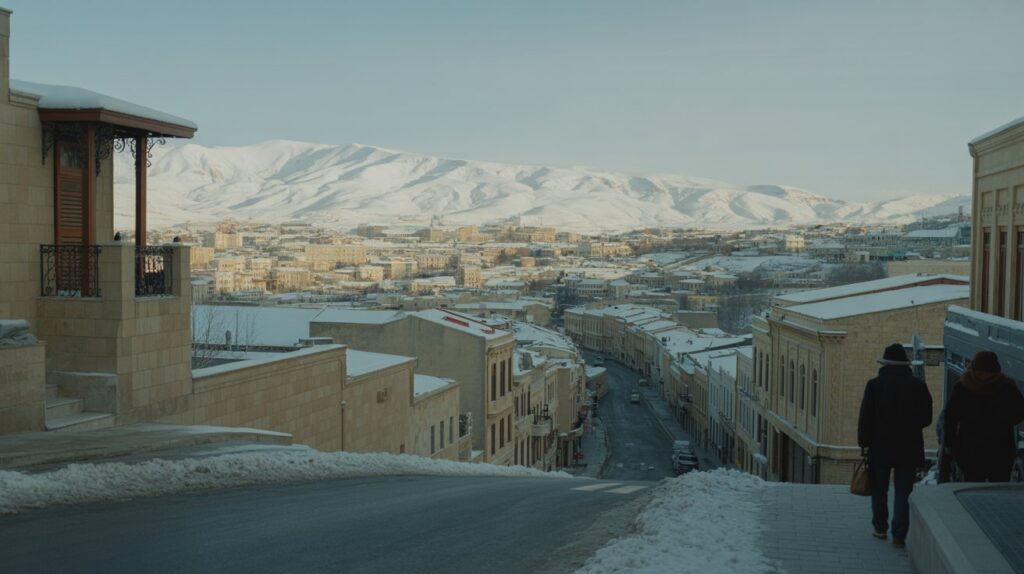
From December through February, Azerbaijan enters an off-season that strips tourism back to its essentials. Without peak-season noise, places feel closer to their original purpose. Cities become walkable, mountain villages introspective, and landscapes more dominant than infrastructure.
Winter is when Azerbaijan feels lived-in rather than displayed. This is especially valuable for travelers interested in story, context, and atmosphere rather than events.
Baku in Winter: Urban Life Without the Rush
In Baku, winter reveals the capital’s layered identity. The Caspian wind sharpens, sidewalks quieten, and cafes become the city’s social backbone. Locals linger over tea, conversations stretch, and the city feels more conversational than performative.
Winter evenings in Baku are defined by restraint—soft lights, understated decorations tied more to New Year than Christmas, and a sense that public space belongs to residents rather than visitors. For journalists, this is when stories surface naturally, without staging.
The Cultural Weight of the New Year Season
Winter in Azerbaijan revolves around the New Year rather than Christmas. This distinction shapes the travel experience. Decorations, gatherings, and public energy build toward December 31, creating a national moment that feels inclusive rather than religious.
For travelers, this offers a rare chance to observe how celebration can exist without uniformity. The season belongs to everyone, regardless of belief, reinforcing Azerbaijan’s secular cultural framework.
Snow and the Greater Caucasus: Landscape Takes Control
Away from the capital, winter asserts itself more forcefully. Snow transforms the Greater Caucasus into a dominant presence—closing passes, reshaping routes, and redefining distance.
Mountain villages become more inward-looking. Travel slows. Silence increases. This is not a hardship, but an invitation to observe how geography dictates life. For journalists, winter highlands provide narrative clarity: humans adapting, not conquering.
Rural Azerbaijan in the Cold Months
Winter travel through rural Azerbaijan is about patience and presence. Roads may be empty, guesthouses quieter, and schedules flexible. Yet hospitality remains constant. Visitors are often met with curiosity rather than transaction.
These encounters—tea shared indoors, stories told beside heaters, meals eaten slowly—become the core of the journey. Winter strips travel down to human exchange.
Winter Cuisine: Comfort Over Ceremony
Seasonal food reflects winter’s priorities. Meals are warming, filling, and communal. There is no distinct “winter menu” marketed to travelers, which in itself is revealing. Food is prepared for survival and comfort, not performance.
For travel writers, this reinforces a key theme of winter Azerbaijan: authenticity exists because nothing is trying to impress.
Faith, Tolerance, and the Quiet Holidays
Winter also brings religious observances into focus. Christmas is marked quietly by Christian communities, while Muslim life continues uninterrupted. There is no tension between calendars—only coexistence.
For visitors, this subtle overlap of traditions offers insight into how pluralism functions in daily life, not policy statements.
Practical Advantages for the Winter Traveler
From a logistical perspective, winter offers tangible benefits. Accommodation availability improves, popular sites are less crowded, and transportation within cities is more convenient. Museums, historical sites, and cultural venues remain open and accessible.
For journalists on assignment, winter simplifies access. For travelers, it creates space.
The Emotional Geography of Winter Azerbaijan
What sets winter Azerbaijan apart is emotional geography. Places feel closer together, not because of distance, but because of mood. Silence connects landscapes. Cold sharpens awareness. Without distractions, travelers notice patterns—architecture, gestures, habits—that summer conceals.
Winter makes Azerbaijan legible.
Who Winter Azerbaijan Is For
This is not a season for checklist travelers or those seeking constant entertainment. Winter Azerbaijan rewards:
Slow travelers
Cultural observers
Writers and photographers
Travelers are comfortable with quiet
It is ideal for those who believe that understanding a place sometimes requires waiting rather than moving.
Why Winter Tells the Truest Story
Winter in Azerbaijan is not dramatic by design, but it is deeply revealing. It shows how the country functions without performance, how communities gather without spectacle, and how landscapes reclaim attention when tourism recedes.
For travel journalists and thoughtful explorers, winter is when Azerbaijan speaks most clearly. It does not ask to be admired—it asks to be understood. And in that understanding, winter becomes not an obstacle, but the season that brings the country closest.
