

When the great shrinking began, few people talked about it. Celebrities declined to clarify the reason they were shedding the pounds and, in the real world, word spread only underground. Friends in tight-knit WhatsApp groups whispered, “I’ve lost more than a stone. It’s great. You should try it. Don’t tell anyone.”
Then, two or three years ago, some of the celebrities began to fess up. It wasn’t because of some trendy new diet or some brutal new exercise regime. It was because they were on the fat jab.
Those candid Americans went first, of course. Elon Musk was on it. So were lots of Real Housewives. Whoopi Goldberg said she resorted to medication after someone assumed she’d been wearing a fat suit in her 2022 film Till. In 2023 Oprah Winfrey also admitted she had taken Ozempic: having been criticised for being too fat and then for taking the pharmaceutical shortcut, she made her thoughts clear in an interview with People magazine. “The fact that there’s a medically approved prescription for managing weight and staying healthier in my lifetime feels like relief, like redemption, like a gift, and not something to hide behind and once again be ridiculed for,” she said. “I’m absolutely done with the shaming from other people and particularly myself.”
When it eventually came to the Brits, Stephen Fry was an early adopter. So was “the fat dancer from Take That”, Robbie Williams, who described it as “like a Christmas miracle” in 2023 but has since claimed that it damaged his eyesight. Sharon Osbourne said that she had been on it. And the model Lottie Moss. And a procession of newspaper columnists, both tabloid and broadsheet.
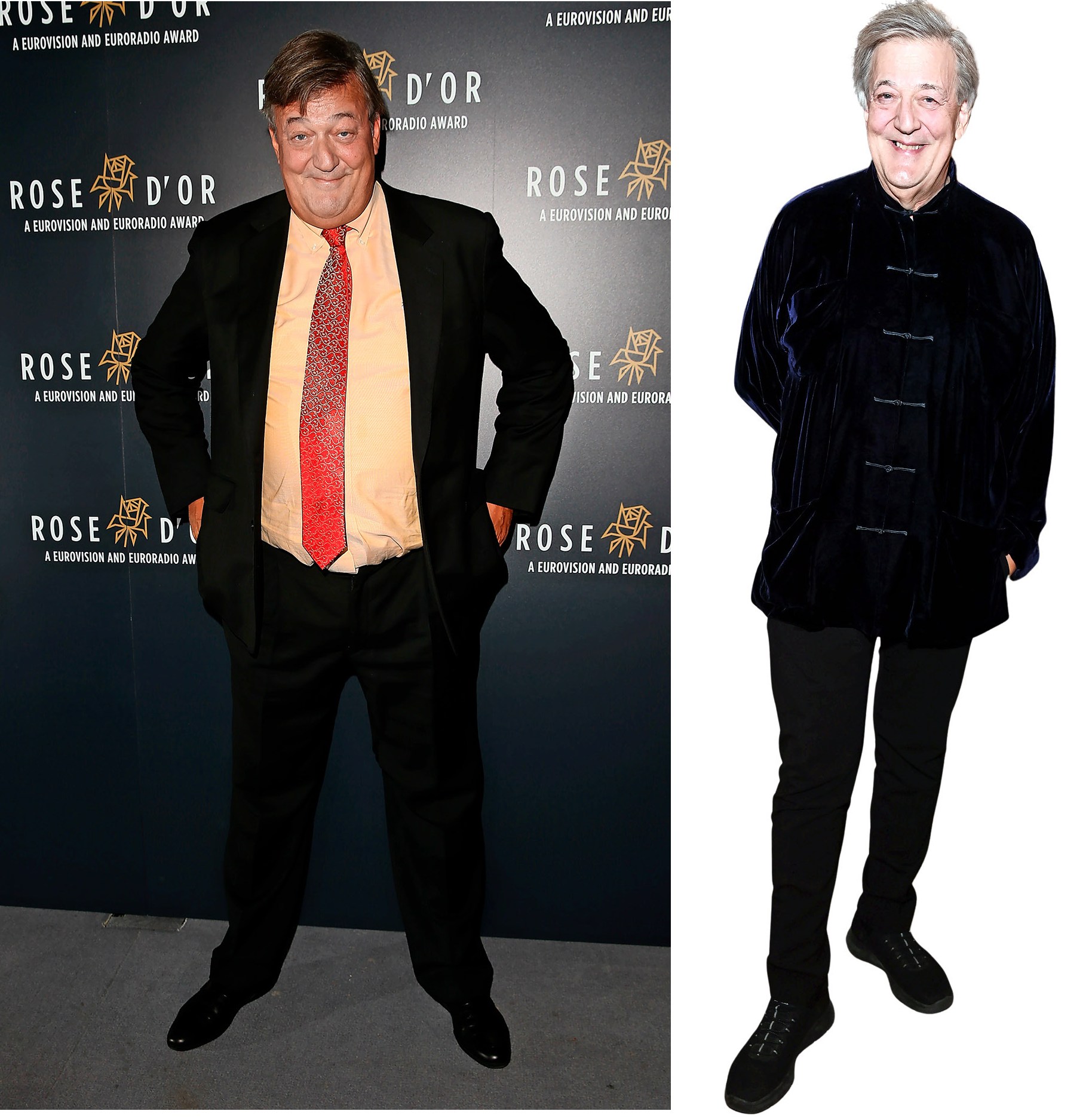
Stephen Fry stopped taking Ozempic after it made him feel nauseous
Uncharacteristically, the politicians started to come clean as well. Weeks after leaving public office, Boris Johnson revealed that he had taken Ozempic on the commendation of a shrinking cabinet colleague. “If an otherwise healthy middle-aged man displays sudden weight loss, I reasoned, there are only two possible explanations,” he wrote. “Either he has fallen hopelessly in love, or else he is about to mount a Tory leadership bid.” Last year Robert Jenrick didn’t just lose his leadership bid — he also lost 4st in 12 months, after taking Ozempic for six weeks to get a head start.
After everyone started talking about it, everyone started taking it. Even before the NHS began a mass rollout programme in June, it was estimated that 1.5 million people were already using weight-loss drugs in the UK. By the end of July that number had rocketed to 2.5 million — the vast majority via private prescriptions. After a price hike in September, that means coughing up more than £300 a month if you want or need the higher doses. To the question of our time on Mumsnet — “Mounjaro: is it worth it?” — the many hundreds of responses all seem to be in complete agreement (which must be a first for the website) — yes, it absolutely is. Whoever asked the question will be left in no doubt: “Best decision I ever made”, “It changed my life” and “I’d sell my kids to afford it” are some of the more measured answers.
Clinical trials show there is a significant proportion of people for whom the drugs don’t work, but you’ll struggle to find their accounts amid all the enthusiasm. Jeremy Clarkson is one of the few people to document a less than satisfying experience — “Ozempic turned me into a bulimic version of Henry VIII,” he wrote in these pages. “There was a time when weight loss required both an iron will and a steely spine, and if you could pull it off, you were applauded. Not any more. Losing weight now is like winning a marathon by going around the course in a car.”
Lives are being changed for the better, certainly, but there are caveats. Of course there are. No one knows what the long-term effects of sustained weight-loss medication are, but does that matter when you consider the huge — or shrinking — potential? If this is the year Britain embraced the fat jab, should we be worried or should we celebrate?
• Jeremy Clarkson: Ozempic left me sick. Now I’m on the snail caviar
I was utterly desperate
Dr Jane Mott, 74, a retired teacher who now lives in Portugal, started on Mounjaro a year ago after a recommendation from a shrinking friend. “I have always been active and fairly healthy — lots of exercise and a diet largely free of processed foods — but after my fourth pregnancy, my weight increased,” she says. “I’ve dieted ever since, but hypothyroidism and an arthritic knee exacerbated the weight gain. Doctors always sympathised but had no solution except cutting calories, which never worked long-term.” Jane was apprehensive about resorting to drugs — “Big Pharma has a vested interest in our ill health,” she says — but the excess weight she couldn’t shift was impacting her life.
“I was struggling to walk, everything was an effort, I had constant backache. Even though the doctor warned me that I might have to be on these drugs for life, I was utterly desperate.”
When I ask exactly how they helped, she says, “Immediately the food noise — constantly thinking about the next meal — stopped and it was just liberating. It transformed my life.”
For Jane, Mounjaro broke the vicious cycle of weight gain, leading to loss of mobility, leading to more weight gain, and repeat. In the 12 months since she began taking it she has been able to walk long distances again, swim in the ocean again and take fitness classes again. In January she and her husband are taking a trip to South Africa: “I intend to take a zipwire across an ancient forest.”
Of Jane’s less enjoyable side-effects — awful constipation, nausea, bloating and stomach upset — the most persistent was the loss of enjoyment of food and cooking. That is, of course, more of a goal than a side-effect, but Jane and her husband retired to Portugal to enjoy the good gastronomic life, not least as members of local food and wine societies. It took six months but she can now eat out happily again.

JAY BROOKS FOR THE SUNDAY TIMES MAGAZINE. STYLING: ABENA OFEI HAIR AND MAKE-UP: AMANDA CLARKE AT JOY GOODMAN. MODEL: ADAM REGESTER AT UGLY.ORG. TOP BY VUORI
“One of the absolute joys of Mounjaro is that I can still enjoy myself,” she says. “I can eat and drink but in moderation, so I don’t feel deprived in any way.” Although Jane talks of scaling back dosages and perhaps even microdosing at some point, she accepts that she is likely to be on some form of medication for the rest of her life. “But at 74, that is acceptable.”
Helen is 62, lives in London and is using a pseudonym. She also accepts that she is in it for the long term and possibly for life. Her decision to try Ozempic came after she noticed a friend had lost weight and was keeping it off. In August 2022 she began weekly injections. Friends and family she told were puzzled. “This was before these drugs became widely known,” she says.
Helen describes her life as active and her diet as “what most people would consider healthy — lean proteins, plenty of vegetables and very little processed food”. Looking back, though, “the portions were probably too large”.
“From my mid-forties onwards, my metabolism slowed dramatically,” she says. “I steadily gained weight and could only lose it by consuming less than 1,000 calories a day. In practice that meant yoghurt or eggs for breakfast, salad with protein for lunch, a very small dinner and no snacks. It wasn’t sustainable for more than short periods and it felt miserable.”
For two years Helen lost weight gradually and her blood pressure and cholesterol levels improved, but in 2024 the Ozempic stopped working and she began to put the weight back on again. She switched to Mounjaro — “with no side-effects” — and is now on the maximum weekly dose. Today she weighs 10st — which is 3st 7lb less than she did at her heaviest.
“I’m at a stable, healthy weight and my body seems to have found its natural set point,” she says happily. “I’m realistic that effectiveness may change again over time but I expect this to be a long-term, possibly lifelong treatment, similar to managing blood pressure or cholesterol. The benefits extend far beyond weight, so I’m comfortable with that.”
• Giles Coren: This wave of semaglutide is making the Yuletide grey
Further miracles
The year is 2038. As you would expect, everything is the same but slightly worse than it is now, but for one thing — the obesity battle has been won. After patents expired in the early 2030s, the “miracle” drugs Ozempic and Mounjaro have become almost as affordable as ibuprofen. And like ibuprofen, they can now be administered in pill or powder form. No more refrigerated injections. No more huge expense. Fat jabs for everyone. No more fat people.
That’s the glass half-full, plate half-empty view of the potential road ahead — a road that ends not just in weight loss but a cure to all sorts of society’s ills. At the moment the drugs available are relatively unsophisticated. They might help you lose up to a fifth of your body weight, but they don’t discriminate between muscle and fat. Those coming down the line could be more targeted: tinkering ever more specifically with the areas of the brain involved with appetite, pleasure and addiction. They might also deal with our addictions to other naughty pleasures — a specific pill for smokers, for example, or alcoholics. There could even be a drug to make me love broccoli.

Sharon Osbourne has also quit the weight-loss drug
The extent to which such wild potential can be realised depends not only on the scientists digging around in our hypothalamus. There are other issues too, not least how the drugs are administered and how effectively society adapts to them. In short, there are big hurdles along the way to the great health utopia.
In 10 or 15 years’ time we’ll look back on the drugs that have been life-changing for Helen and Jane and see them as blunt tools, says Professor Giles Yeo, who leads a team of neuroendocrinologists at the University of Cambridge. “As we understand not only more about the gut hormones but more about the circuits in the brain that respond to these gut hormones, we could have more sophisticated drugs that mimic not only that you’re full, but that you’re full because you’ve had more protein or more fibre or more vegetables,” he says.
At the moment Ozempic and Wegovy — brand names for the drug semaglutide —mimic just one hormone (GLP-1), while Mounjaro — aka tirzepatide — mimics two (GLP-1 and GIP). But we have 20 hormones in our appetite-focused hindbrain, Yeo says, 18 of which influence how full we feel. “If I asked you to tell me how much protein, carbohydrate and fibre you ate in a pizza, you’d probably have to guess,” he says, “but your brain knows exactly — because of all these hormones.” As the science evolves, Yeo says more targeted drugs that manipulate more specific hormones could become available. I don’t ask him if he can design that pill to make me love broccoli, but let’s just assume it’s possible.
What that means for broccoli sales and the wider economy remains to be seen, but already Wes Streeting, the health secretary, has described existing drugs as “a game-changer” for national productivity. Earlier this year, a study of 2,660 participants in semaglutide trials in the UK found that taking the drugs enabled them to work, on average, five extra days and carry out 12 days of unpaid labour, such as childcare or volunteering. The study — presented at the European Congress on Obesity — valued this productivity gain at £1,127 per person. Given that about a quarter of people in the UK are obese, this equates to a £4.5 billion boost for the economy. “These drugs could have colossal clout in our fight to tackle obesity and in turn get unemployed Britons back to work,” Streeting said.
• Fat jab fashion: I’m a Mounjaro dresser — it changes your style
Can you ever stop taking it?
All good news then — let’ s crack on — but what happens if you stop taking the drugs? At the same congress in May, another study contained good news and bad news. The good news was that newer, higher-dose courses of the drugs can lead to as much as double the amount of weight lost. The bad news was that when people stop taking the drugs, the most likely outcome is that they regain all of it within 20 months. Last month yet another clinical study showed that other gains, such as reduced blood pressure and lower levels of bad cholesterol, were also lost when patients stopped taking the drugs. To borrow a useful American phrase, “there may not be an off-ramp”.
There were exceptions — some people going cold turkey seem to stay thinner. This, so far, touch wood, has been Suzanne Birch’s experience. A career army officer until her mid-thirties, she had always been fit and healthy. When she wore a dress, it was a size 8. “I should have cut the calories when I left the service,” she says, “but I didn’t give it a moment’s thought.”
Over the next two decades, despite running a service company that required shuttling between the UK and the US, despite also playing competitive tennis four or five times a week, Suzanne gained weight steadily. When she realised that she could no longer get into her favourite work clothes, party clothes or tennis gear, she took action last April. “I just woke up and made a decision to lose the weight,” she says. She found a doctor who prescribed her Mounjaro without fuss. “By mid-September I was at my goal weight of 56.5kg and I stopped. I am now back to the weight I was when I was 18.” Her dresses are now size 4.
It is clear that Suzanne has not lost her military discipline and that is the reason for her success. Her diet and exercise regime — lots of weight-lifting, lots of vitamins, lots of treadmill, lots of tennis and a relentless focus on eating healthily — makes Joe Wicks sound like Waynetta Slob. She used Mounjaro as a catalyst, but she realised that she would also have to make significant lifestyle changes. “I followed the recommendations to exercise and weight-lift five times a week and I kept a food diary so I could check I was eating less, but that it was still balanced,” she says. In the three months since she stopped using Mounjaro she has not put on weight “But there’s Christmas,” she adds a little nervously.
• What to eat when you’re taking weight-loss jabs
When the drugs don’t work
Earlier this year the NHS announced that it would start prescribing Mounjaro for the management of obesity. There were strict criteria — you had to have a body mass index over 40 (adjusted for ethnicity) and you had to have at least four of five serious, weight-related health conditions, such as high blood pressure, heart disease and obstructive sleep apnoea. The timeline for rolling out the drug to more people is not yet confirmed, but GPs are already concerned that they won’t have the resources to support patients.
“When used appropriately and with proper clinical oversight, weight-loss medication does have the potential to have real benefit,” says Adrian Hayter, medical director of clinical policy at the Royal College of General Practitioners. “Used in isolation, without proper behavioural support, we risk neglecting the fundamentals of sustainable weight change.

The Conservative MP Robert Jenrick has said he found Ozempic “helpful”
GETTY IMAGES, PA
“GPs already have intense workloads,” he continues. “This does limit the time we have with patients to offer the sort of ‘wraparound’ care needed to support them to make lifestyle changes that can lead to sustained weight loss.”
Despite the strict criteria for access to Mounjaro, Hayter says that GPs are fielding a high level of requests from patients who fall outside the parameters but who are desperate. “We need to be careful that the hype around medication doesn’t overshadow the importance of prevention and living healthy lifestyles,” he says. “These medicines are not cures — they work only for as long as they are being taken. So if a patient stops treatment without making sustained changes to their diet and lifestyle, weight regain is very likely.”
Professor Yeo also worries about the wider rollout and of people using them when they shouldn’t. “They work if you’re 300 pounds looking to lose 100, which is what they’re designed to do,” he says. “They’ll also work if you’re a 70-pound 16-year-old girl — and that’s the problem.
“We have six or seven years before these drugs come off patent and can be offered much more widely across the NHS,” he continues. “This means we have six or seven years to get our act together. The health economics are clear — we’re going to save a huge amount of money by reducing obesity, but the government of the day always wants to see outcomes before they invest the money, which is the wrong way around.”
When I ask him if it’s wise to use a Big Pharma solution for what feels like a Big Food problem, he says there are two separate issues.
“There is a problem with obesity and illness and we can use drugs to solve that. And then there is a problem with our environment — the built environment, the work environment and most significantly the food environment — and we need regulation to fix that.”

JAY BROOKS FOR THE SUNDAY TIMES MAGAZINE. STYLING: ABENA OFEI. HAIR AND MAKE-UP: AMANDA CLARKE AT JOY GOODMAN MODEL: ADAM REGESTER AT UGLY.ORG. TOP BY VUORI.
A weight-loss drug is not a silver bullet, he says more than once. Or rather, “it is a silver bullet for making you feel full, but nothing else. It doesn’t improve your diet. It doesn’t make you exercise more,” he says. “I’m hoping the government understands that these drugs can reduce obesity but they can’t prevent it — we still need to change the whole environment in which we actually live.”
Until then, the surge in weight-loss drugs will continue unabated and, to an unknown degree, unmonitored and unsupported. It will help people living with obesity, but it will also help people who just fancy being as thin as they were in their twenties.
In an over-50s yoga group in Surrey, two of the six women announced they were taking Mounjaro in the summer. Over the next three months, after downward dogs and sun salutations, they shared the highs and lows of their progress “extensively” with the rest of the class. “One woman left because she got so tired of hearing about the other women’s waist measurements,” the instructor says. “In the end I had to ban the subject completely. Neither of them were overweight — they were just normal fiftysomething ladies — but they kept going on about it and they made the other women feel like failures. Because they were just normal fiftysomething ladies as well.”