
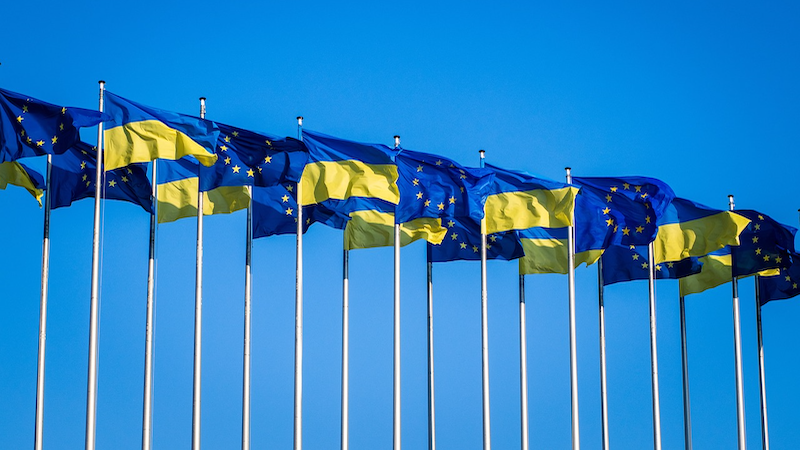
Europe is sleepwalking toward geopolitical irrelevance. While its leaders wrap policy in the language of virtue, the EU’s approach to the war in Ukraine has morphed into a selfinflicted crisis—one driven more by moral vanity than by strategic sense. The result is not deterrence but decline, not unity but fragmentation.
For years, European officials preached that sanctions, isolation, and moral clarity would break Moscow’s resolve and solidify Europe’s authority. Instead, Russia endured, the war metastasized, and Europe’s credibility eroded. What was billed as a show of strength has become a monument to strategic incoherence. Europe’s economy reels under energy shocks; its citizens revolt under costofliving stress; its political landscape fractures as populists capitalize on elite delusion. These are not aberrations—they are evidence of a doctrine that mistakes indignation for policy.
The world sees it. The EU’s inability to articulate a coherent endgame for Ukraine has punctured the illusion of European “geopolitical power.” Even within NATO, Europe’s dependence on American guarantees grows starker with every summit. “Strategic autonomy” has become a punchline—invoked by leaders who know full well they cannot defend themselves without U.S. logistics, intelligence, and munitions.
Meanwhile, Washington—whatever one thinks of its methods—has maneuvered with clarity: deescalation, when necessary, pressure when useful, and diplomacy when expedient. Europe, by contrast, clings to a failing narrative, mistaking moral posture for leverage and rhetoric for realism.
Kyiv’s leadership has complicated the equation, but the fault ultimately lies in Brussels. By tying its political identity to Ukraine’s decisions while surrendering its own strategic agency, the EU has rendered itself a spectator to the war it helped define. Europe no longer shapes events—it reacts to them.
What’s needed now is not another chorus of moral slogans or inflated promises of “lasting peace through victory.” It is a cold recalibration of priorities: Europe’s own security, energy resilience, and political stability. That means engagement based on interests, not illusions—and a recognition that permanent confrontation is not a policy but a pathology.
Europe’s current leaders are trapped in the dogmas of the past decade. Breaking free will require new leadership—leaders willing to tell uncomfortable truths, disentangle strategy from virtue signaling, and pursue realism even when it offends. The real danger is not a lost battle, but a Europe that fades from geopolitical relevance before a single shot is fired.
The world is already watching. The question is whether Europe can wake up before history moves on without it.