

21.12.2025. 13:29h
“I am unsuitable… and Moscow has very long arms.”
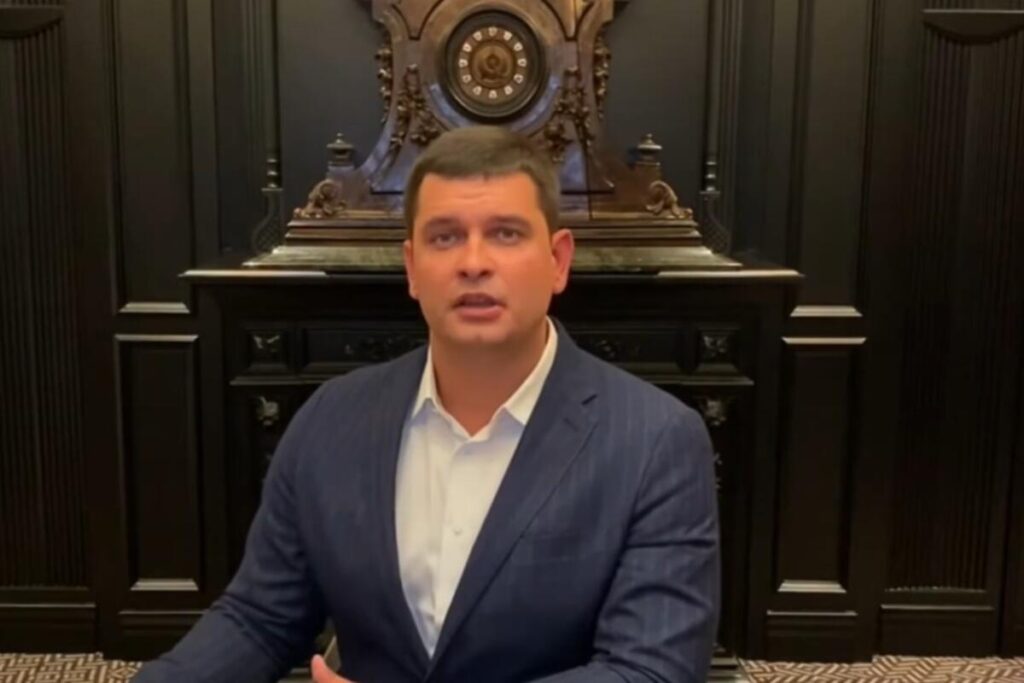
This is how Russian citizen Kirill Kachur summed up for Radio Free Europe (RFE) the reasons why he found himself the target of a spy operation in Montenegro.
British authorities determined that six Bulgarian nationals had been tracking him and other targets across Europe for years, for which they were sentenced to more than 50 years in prison in a London court in mid-year.
Kachur, a 35-year-old lawyer and former employee of Russia’s Investigative Committee, left the country in 2021 and came to Montenegro.
He believes that he was targeted by spies because of his political activities, but also because of a case that his law firm represented.
“This was a high-level espionage operation, with significant financial rewards for those involved in the espionage ring,” said British prosecutor Frank Ferguson.
Who were convicted?
The British prosecution points out that from mid-2020 to early 2023, Bulgarian citizens were responsible for collecting information about people and locations that were of interest to Russian authorities.
The trial in London ended in mid-2025.
The group’s leader Orlin Rusev was sentenced to 10 years and eight months, Bizer Dzambazov to 10 years and two months, Katrin Ivanova to nine years and eight months, Tihomir Ivančev to eight years, Vanja Gaberova to six years and nine months, and Ivan Stojanov to just over five years.
Rusev, Dzambazov and Stoyanov pleaded guilty.
The prosecution alleges that the group’s leader, Orlin Rusev, received instructions from Austrian citizen Jan Marsalek, an agent who acted as an intermediary for Russian intelligence services.
They came across messages that show that Rusev assigned tasks and then forwarded the information obtained through Marsalek to the Russian authorities.
“The investigation team worked hard to uncover a complex and widespread conspiracy, which I would describe as espionage on an industrial scale,” said Metropolitan Police spokesman Dominic Murphy.
Ko su bile mete?
The British prosecution has focused its investigation on six operations, three of which involve the activities of a Bulgarian group in Montenegro.
In addition to Kachur, the target was also Bulgarian investigative journalist Kristo Grozev, who was on the Russian Ministry of Internal Affairs’ most wanted list due to his investigative articles about the Russian authorities.
In the period from 2020 to 2023, they followed him in several countries – from Montenegro, Austria, Spain… and sent reports on his movements, contacts, vehicles…
They also followed Russian citizen Roman Dobrokhotov, owner and editor-in-chief of the investigative portal The Insider, across Europe.
“In June 2022, Ivanova took the same flight as Grozev from Vienna to Montenegro. He was under surveillance at the hotel where he was staying for a conference on journalism during the Russian aggression. Ivanova photographed Grozev and Dobrohotov by the pool,” the verdict states.
The prosecution points out that she photographed Dobrohotov on a flight and that on that occasion she noted down the code for his phone.
They also state that the spy group considered kidnapping him.
The group was arrested in February 2023, after they observed a US military base in Stuttgart, Germany, believing that Ukrainian forces were being trained there to defend against Russian aggression.
The Kačur case
One of the targets was Kirill Kachur, who in 2022, a year after leaving Russia and arriving in Montenegro, was accused by Russian authorities of multiple crimes.
Kačur points out that this is due to his professional engagement as a lawyer who represented those who were on trial with representatives of Russian oligarchs.
A plan to kidnap him was also discussed.
Agent Jan Marsalek sent a message to the group’s leader Roussev in September 2021 that Kachur must be kidnapped and extradited to Russia.
Five months later, he sent him a message saying he was trying to secure “a budget of one million euros to find and capture Kirill.”
Communication within the group shows that they were offered half a million euros as a reward for capturing Kačur and another 150.000 euros for operational costs.
On this occasion, one of the group members – Ivančev – visited Montenegro four times.
The operation included renting a villa for 5.000 euros per month, near Kacur’s home in Montenegro, surveillance with drones and “direct contact between group members and Russian intelligence officers on the ground,” the verdict states.
Besides Ivančev, other members of the group also came to Montenegro.
One of them, Dzambazov, had three addresses in his phone connected to Kachura and people close to him in Montenegro.
The prosecution noted that Dzambazov had contacts with Russian agents in Montenegro.
Why did he find himself targeted by spies?
Kačur tells RFE/RL that he was targeted by spies not only because of his political activities, but also because of a case in which he was a legal representative.
Namely, he represented the former director of one of the 50 largest Russian companies according to Forbes, who was tried for murder. The investigation resulted in the arrest of several people, including the company’s co-owners.
According to him, they left prison with tens of millions of dollars in bribes and announced that they would destroy the former director, him and other defense attorneys.
“In Russia, it’s very easy to fabricate a crime if you have money. And since these people have billions, it wasn’t difficult for them. I understood that the threats were real.”
He left Russia in 2021 – going first to the United Arab Emirates and then to Montenegro.
The Russian Ministry of Justice declared him a foreign agent in November 2023.
“They labeled me a foreign agent. I tried to appeal the decision through the courts, but in vain, because the entire judicial system of Russia is under the military counterintelligence service (FSB). And if you are an enemy of the FSB, there is no court that will help you.”
He says that during that period, he felt he was being followed, although he had no proof.
“I felt it on an intuitive level. My security told me that different people were following me… I was aware of it, I lived within certain security protocols.”
He learned from the British media that he was indeed being followed in 2024.
He tells RFE/RL that he always traveled with security in Montenegro.
“I was cautious… I had warnings that there could be various provocations.”
How is spying proven?
British prosecutors based their case against six Bulgarian nationals living in England on a wealth of evidence, including Telegram communications, travel records, financial evidence and equipment found in their homelands.
They said they found what they described as an “Aladdin’s cave” of spy equipment at the home of the Rusev group’s leader in Norfolk, on the east coast of England.
The spying equipment was hidden in fake water bottles, rocks, toys, lighters, car keys, as well as glasses that allow audio and video recording.
Fake ID cards from Interpol, the United Nations, healthcare institutions, and media outlets were also found.
The police seized, among other things, 221 mobile phones, 495 SIM cards, 88 audio or video recording devices, 11 drones, 75 passports and other identification documents, 55 of which were in the names of other people…
They used various uniforms for operations – from the DHL postal service, to delivery companies, to healthcare services.
“They carried out targeted, organised activities using a sophisticated methodology,” the British prosecutor’s office website states.
The prosecution also announced that the evidence shows that the activities were carried out in favor of Russia.
The court found that they received significant financial compensation for all their actions.
Great Britain’s support for Montenegro
That Britain was monitoring the activities of Russian services in Montenegro was clear in September 2022.
Official London has issued a statement regarding the decision of the Montenegrin authorities to declare a group of Russian diplomats as undesirable, who, as announced, acted contrary to the international convention on diplomatic relations.
“The United Kingdom stands with Montenegro in taking this action to protect its sovereignty and security from hostile Russian activities,” British Foreign Secretary James Cleverley said on September 30.
In the same week, two Montenegrin citizens were arrested and around thirty foreigners were denied residence permits on suspicion of collaborating with Russian intelligence services.
Cleverley did not respond to an emailed question: Is the expulsion of Russian diplomats in Montenegro connected to the case of the Bulgarian group?
The National Security Agency of Montenegro did not answer the same question either.
The Russian Embassy did not respond to RFE/RL’s inquiry about Bulgarian citizens who were operating in Montenegro and whether their diplomats were involved in the case.
The number of employees at the Russian Embassy in Podgorica has been significantly reduced since 2022 – from 16 at the time to the current four.

News