

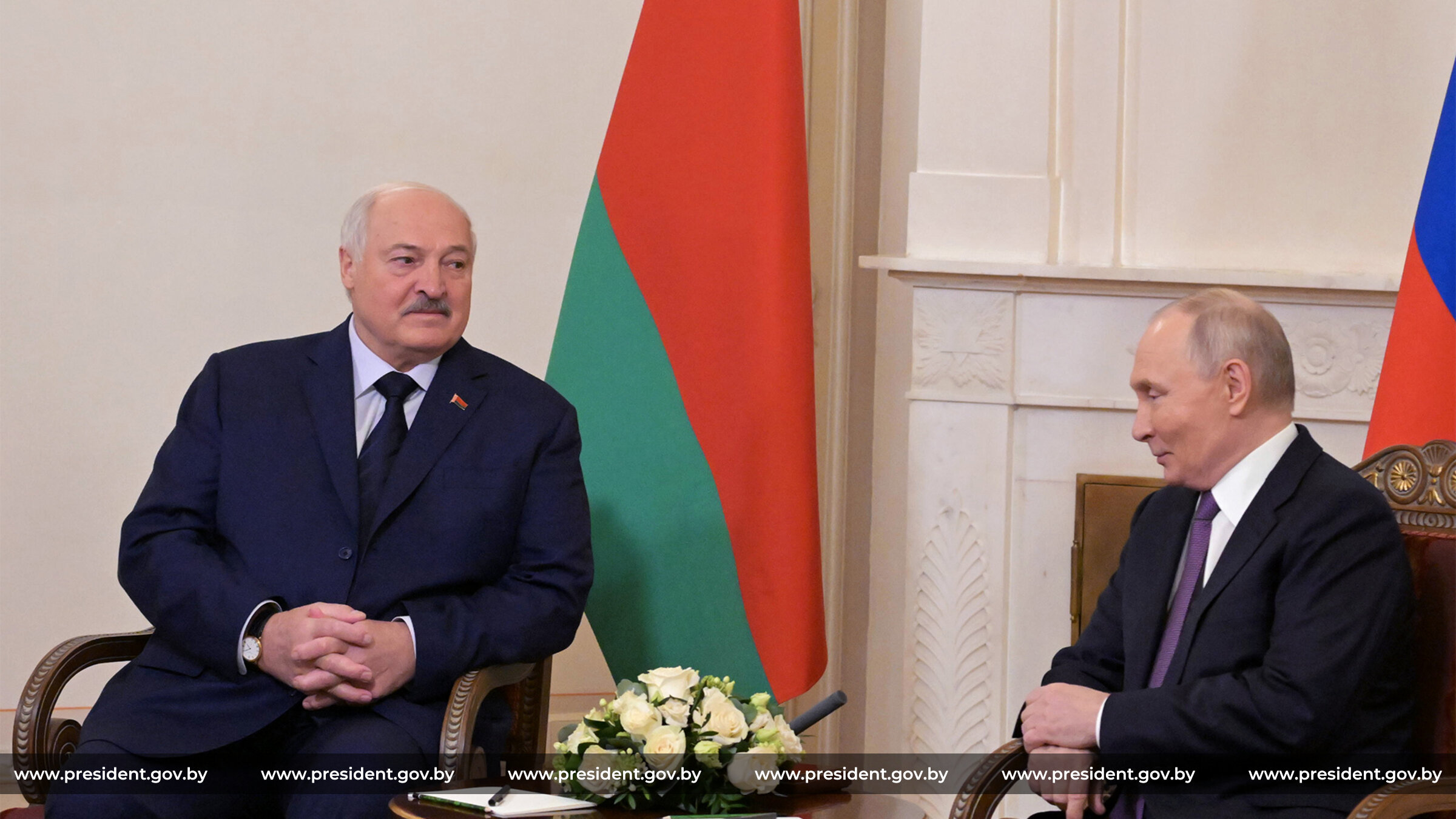
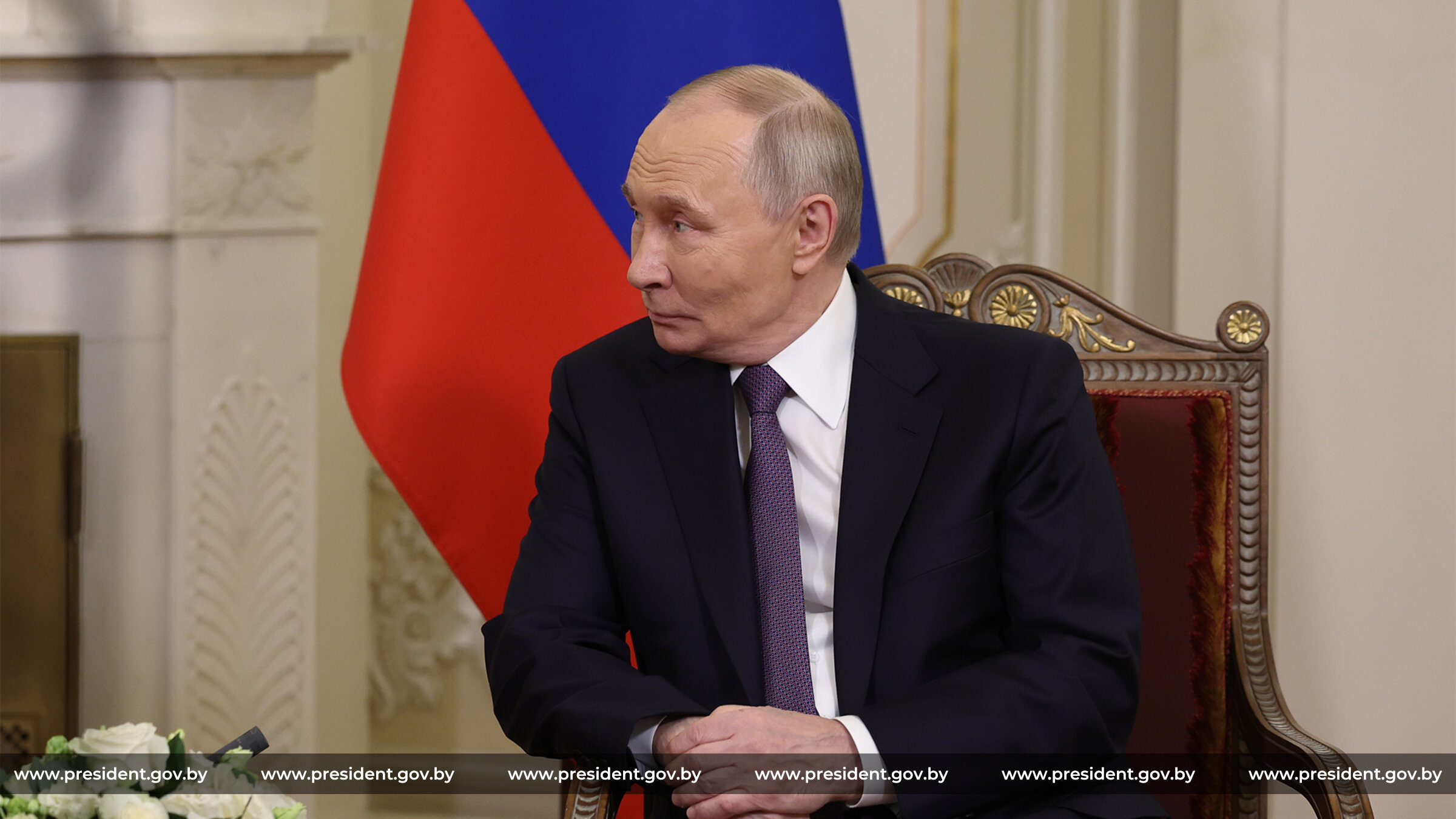
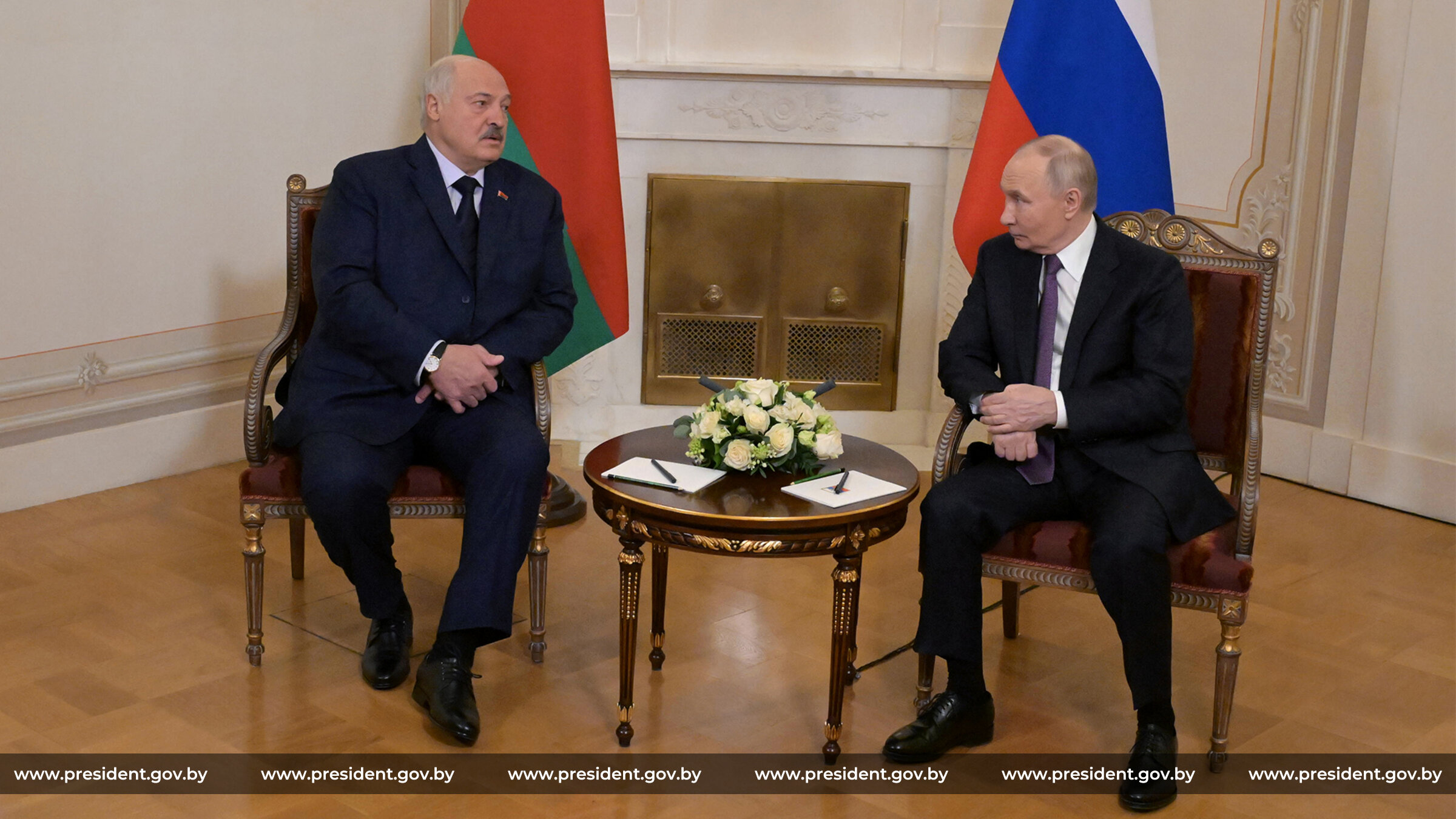
Belarus and Russia are successfully implementing all agreements in various fields – as stated by President of Belarus Aleksandr Lukashenko at a meeting with President of Russia Vladimir Putin in St. Petersburg today
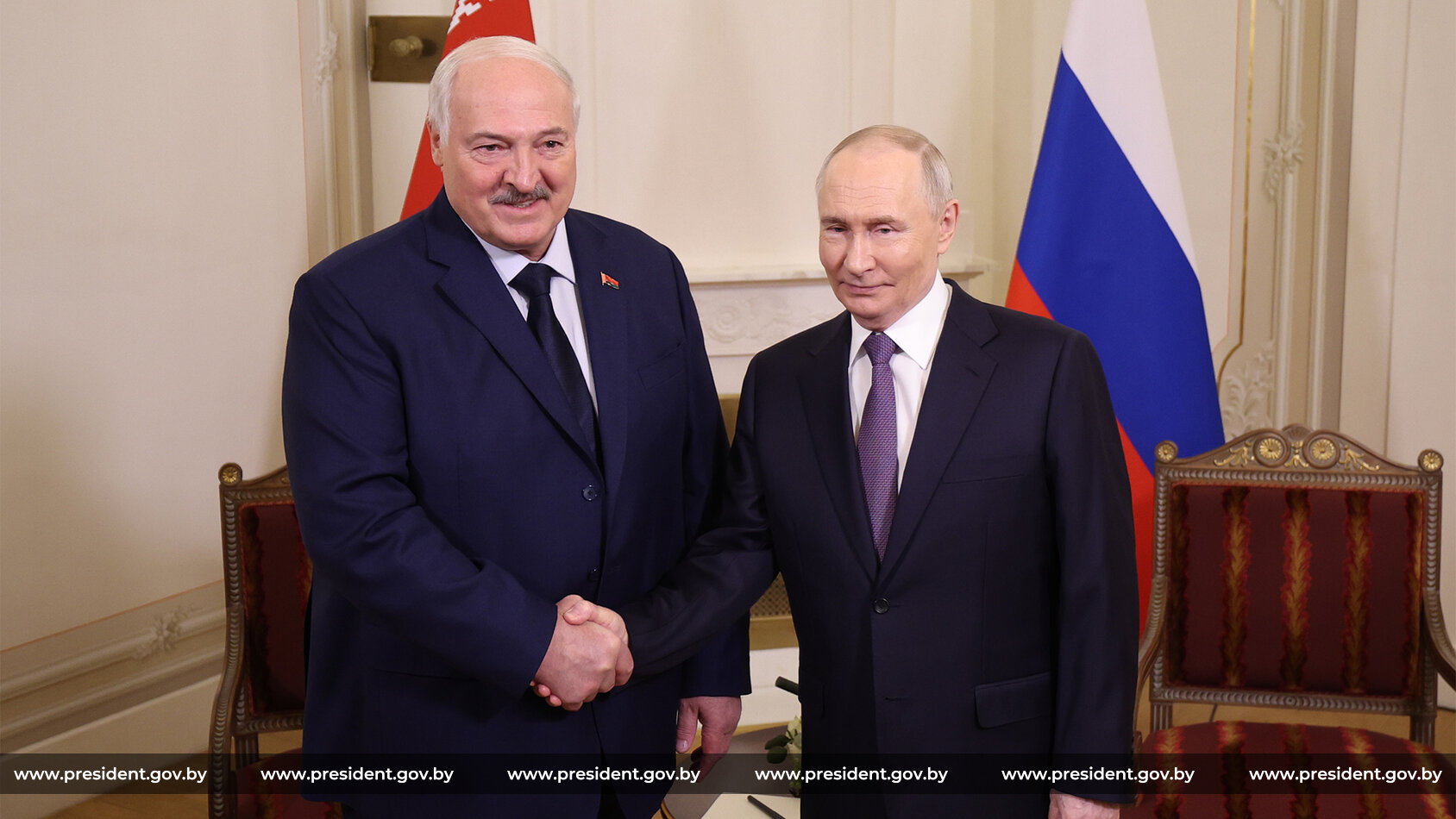
Aleksandr Lukashenko noted that the leaders of the two countries had earlier agreed in Bishkek that they would not overload themselves with practical issues of bilateral relations, “Firstly, there are very few of them. Our governments work well. As agreed, if they fail to resolve something, then they would readdress them to a higher level. There are just a couple of issues of the kind that need to be agreed upon. Generally speaking, we are implementing all agreements, and they range from military-technical and defence co-operation to the economy. There are practically no problems here.”
The President of Belarus thanked his Russian counterpart for the invitation to visit St. Petersburg to participate in the traditional EAEU and CIS summits, “While getting prepared for this trip, I had some thoughts: you held a Q&A session, and I chaired the Belarusian People’s Congress, and we were probably over with the main events, and so it’s possible to relax somehow – but nothing of the kind actually. Life does not let us relax much. Maybe it’s good that we are at the ready.”
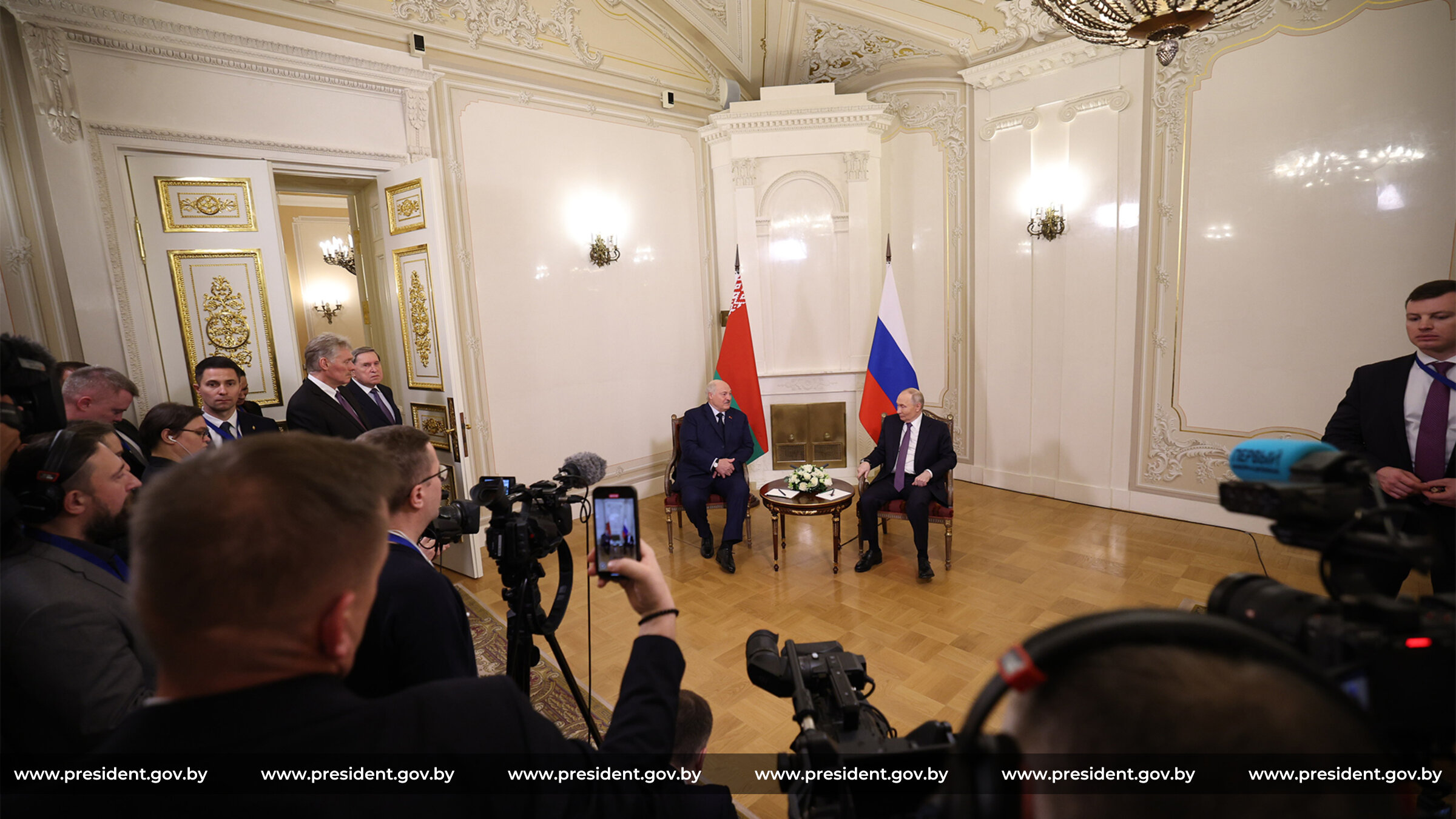
Aleksandr Lukashenko also warmly thanked Vladimir Putin for his assessment of the speech at the Belarusian People’s Congress, “We appreciated it greatly that the President of Russia had seen and heard [it]. The address made at the Belarusian People’s Congress was frank and sincere.”
The Belarusian leader congratulated Vladimir Putin on holding a live Q&A session, saying that was a landmark and bold event in the current situation. “It’s good that you did not avoid any pressing issues,” he said.
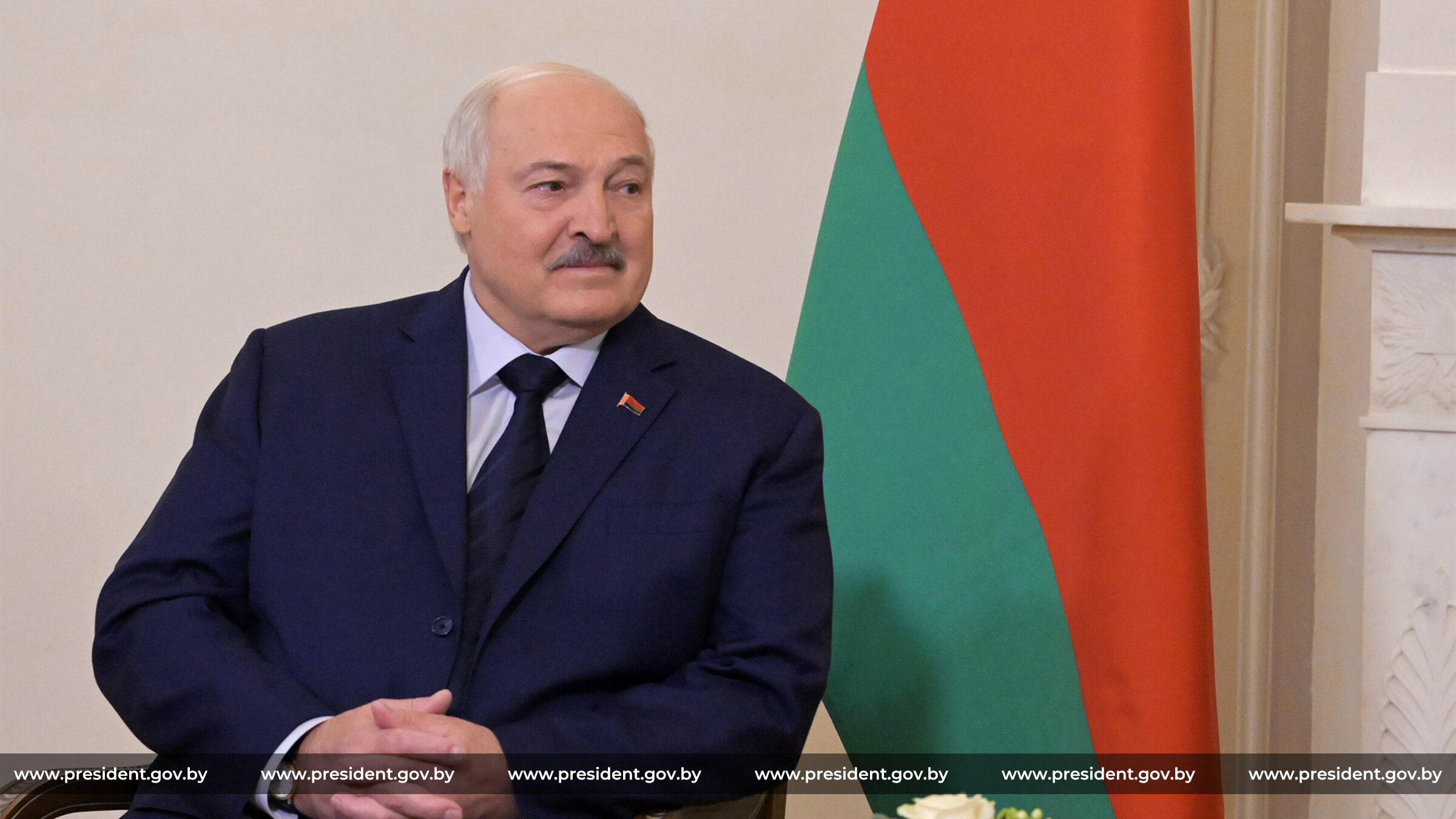
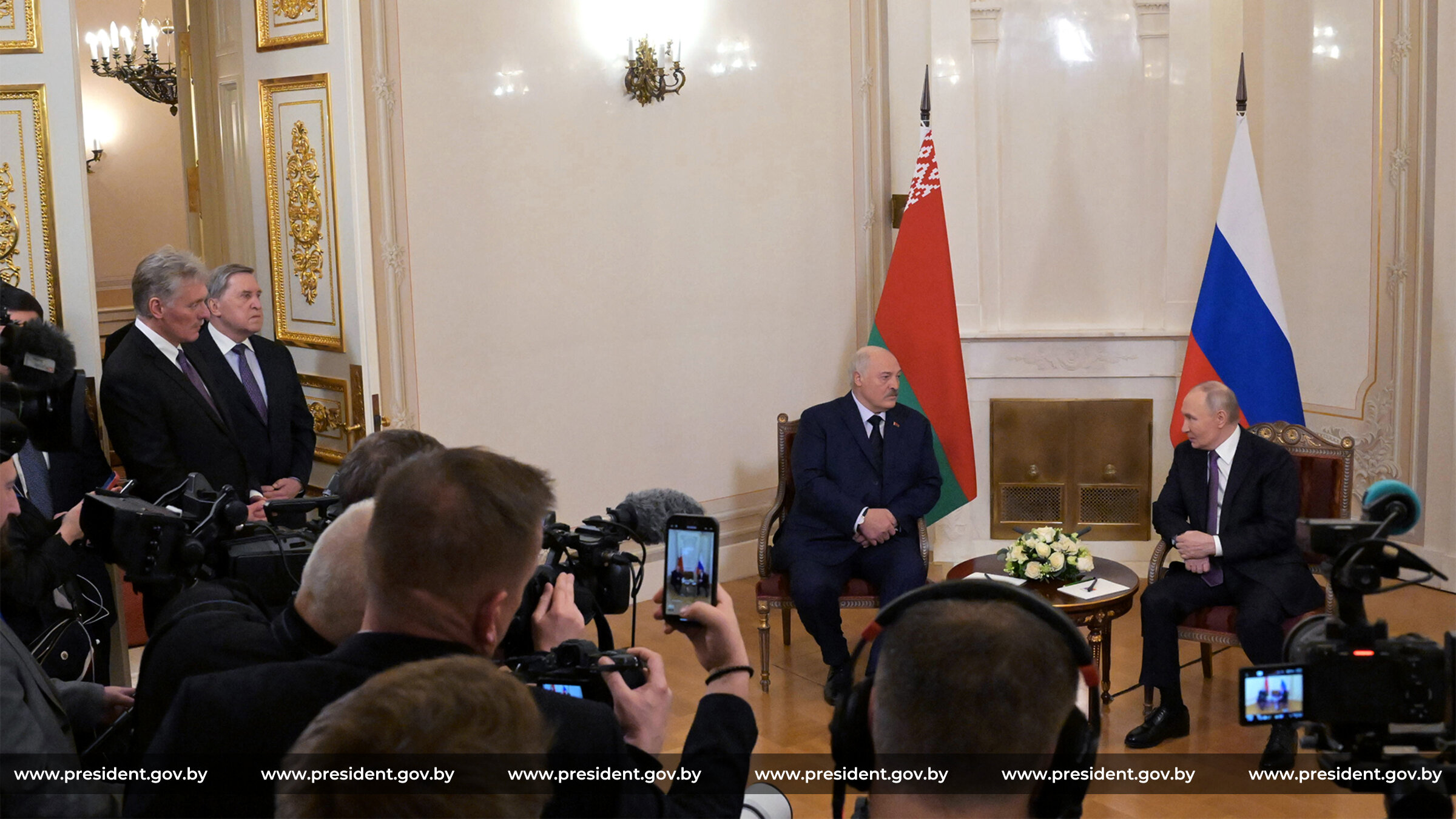
Aleksandr Lukashenko drew attention to the fact that the allied relations between Belarus and Russia remain the engine of integration processes in the post-Soviet space and an example for other states in the EAEU and the CIS, “We do not impose anything on anyone. Those who wish may take it into account in their internal policy, or not. However, it’s a good example if someone is willing to work together and integrate.”
 photos: www.president.gov.by