
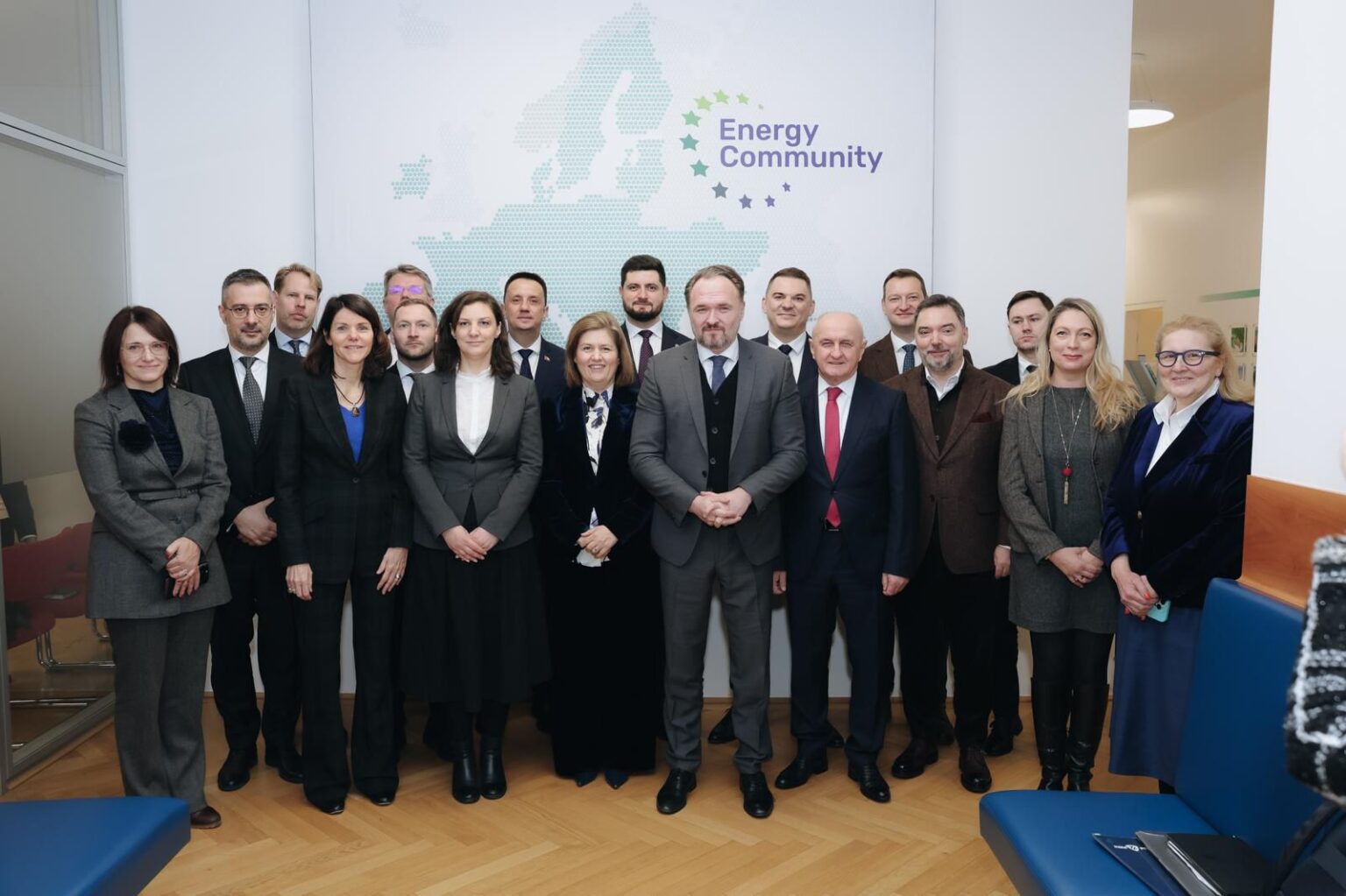
The Energy Community Secretariat published its annual Implementation Report, which tracks how Contracting Parties are advancing in implementing the EU energy and climate legislation.
According to the report, Serbia and Moldova have completed full transposition of the Electricity Integration Package, a prerequisite for electricity market coupling before accession, and for exemption from CBAM on electricity trade. The earliest market coupling can be expected in 2028.
Tangible progress in gas market reform
Europe’s gas market also now demands deeper integration. Under the Fourth Gas Package, EU member states should apply network codes at all borders from August 2026, making consistent cross-border implementation by both Member States and Contracting Parties alike critical to diversification and energy security.
The report shows tangible progress in gas market reform in Serbia, Moldova and North Macedonia. Improving how cross-border capacity is made available, particularly on routes such as the Trans-Balkan Pipeline, will be key to unlocking trade, competition and supply diversification.
Serbia’s electricity market integration
“For the third year in a row, Serbia has been a leader within the Energy Community in harmonisation with EU regulations and, so far, the only contracting party that has met the conditions for integration with the European Union electricity market,” said Minister of Mining and Energy Dubravka Đedović Handanović.
“We have completed our task, which is also part of the Reform Agenda, or rather the EU Growth Plan. This is the first time that a non-EU country has met the conditions to connect its electricity market, and now the verification process is underway, conducted by European institutions. They are encountering this for the first time, and they said that additional time is needed to establish procedures, because this is a pilot in that sense,,” said the Minister adding that as soon as it is completed, the country can connect to the EU electricity market, specifically to the Hungarian one, as its first neighbor, with whom it also has a common exchange that includes Slovenia.
She recalled that a set of new laws in the field of oil, gas and mandatory reserves was recently adopted. “Over the last two years, we have significantly increased our mandatory reserves of oil and oil derivatives, which have reached 44 days of last year’s imports, and Euro diesel stocks alone have increased by 72 per cent. Good preparedness and reserves of oil derivatives have ensured that our citizens do not experience any shortages and give us additional security in the difficult situation we are facing as a result of sanctions against NIS,” said Đedović Handanović.
Reducing CBAM costs
One of the main topics at the Energy Community Ministerial Meeting in Vienna was the implementation of the Carbon Cross-Border Adjustment Mechanism (CBAM). The European Commission has published a proposal, which, as of the beginning of 2026, still needs to go through the adoption procedure in the EU institutions.
“These changes also include some issues that Serbia has been raising in the past two years to obtain fairer rules for Serbian exporters to the EU,” said the Minister highlighting that the method of calculating the emission factor for electricity production has been changed, so that the total national production mix will be taken into account, thereby reducing CBAM costs by around 40 per cent. “This change, together with some other proposed ones, will also reduce the negative consequences of CBAM on investments in RES.”
“We are in the most favourable position for market integration, which allows a bilateral agreement with the European Commission to set CBAM exemption rules and deadlines,” the Minister emphasised.
According to her, in the past year, Serbia has increased its average compliance in all areas measured by the report from 55 to 63 per cent. This is the best result in the Western Balkans region, and the second overall, after Moldova, and is above the average of all contracting parties, which this year is 53 per cent. Serbia’s best results among the monitored areas are in the area of decarbonization, where it has further improved its score this year and is the leader among all contracting parties in the Energy Community with 83 per cent.
Moldova leads in applying EU energy rules
For the second year in a row, the country scored 74 per cent overall, making notable progress in electricity market reforms, energy security, governance, and ETS implementation, without setbacks in any area. Moldova’s scores by sector are: markets and integration 69 per cent, energy decarbonization 77 per cent, energy security 78 per cent, environment 63 per cent, and state institutions 84 per cent.
In natural gas, Moldova has advanced in separating transmission, distribution, and supply activities, while its security of supply measures helped during last winter.
After fully adopting the Energy Integration Package, Moldova should focus on day-ahead and intraday market coupling with Europe and develop the balancing market via transparent capacity auctions.
The Secretariat also urges a long-term climate-neutrality strategy, full adoption of REDII sustainability rules for biofuels, and complete implementation of energy efficiency laws, including building certification and energy labelling.