
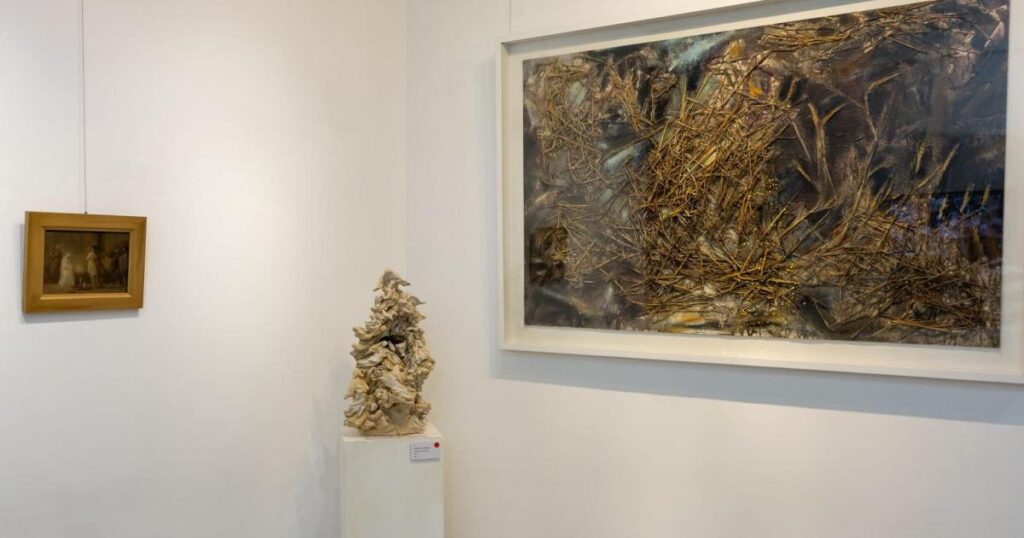
The Nativity story is one of the most depicted Biblical events throughout art history and, as Christmas approaches, the latest exhibition at Victoria’s Il-Ħaġar Museum revisits the story of Christ’s birth in organic and evocative mixed-media art by Gozitan artist Victor Agius.
In Between Earth, Light and Silence, Agius explores the theme of the Nativity as a liminal threshold, inviting viewers to dwell and contemplate the mystery of the incarnation, “where matter meets spirit and silence receives light”.
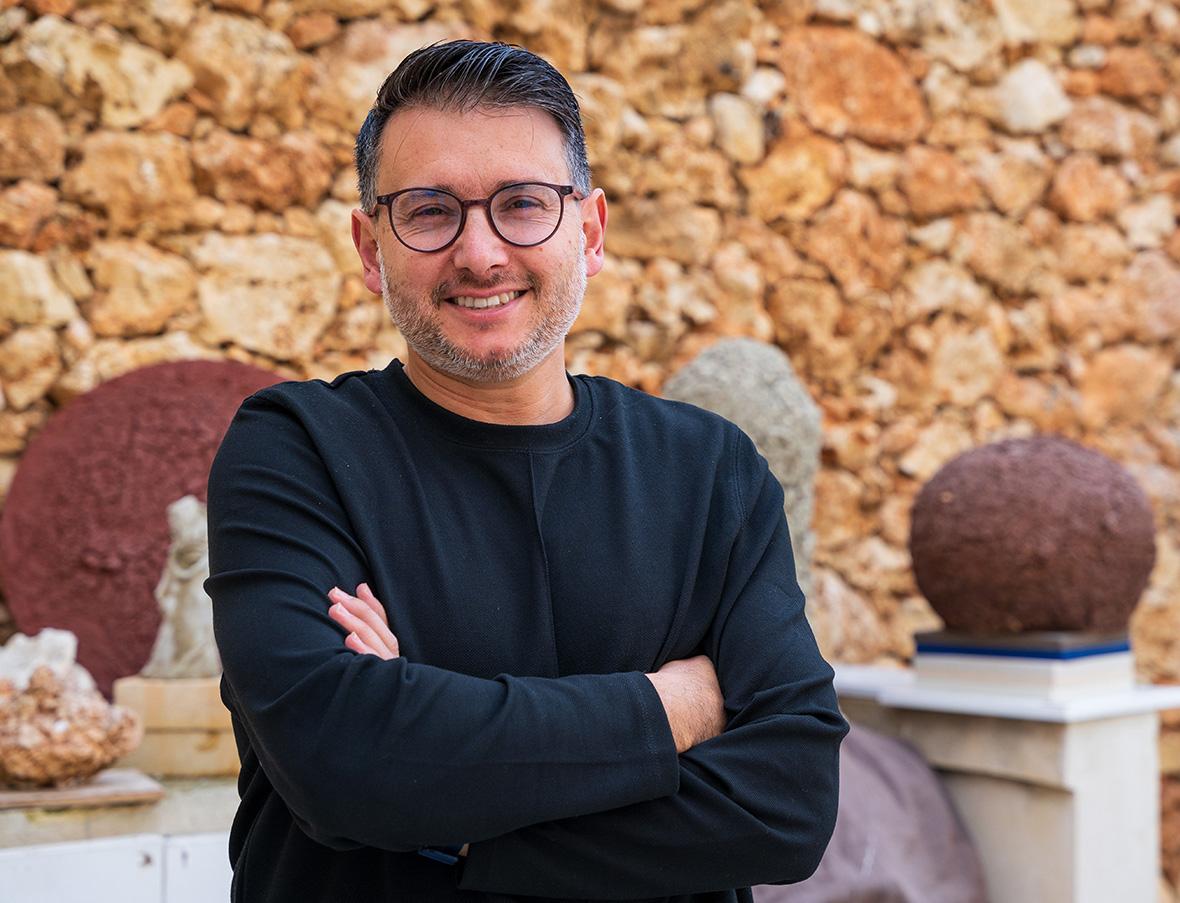 Victor Agius. Photo: Anthony Grech
From childhood, the Nativity-scene tradition of Agius’ native village, Xagħra, nurtured a lasting passion for Christmas-tide cribs in the artist. Combining this with his artistic training in Malta and abroad, Agius dedicated his dissertation at the University of Malta to the Maltese presepju, examining its educational and cultural value and tracing its iconography from paleochristian tools to contemporary forms.
Twenty years ago, Agius’ exhibition Nativitas, which focused on the traditional connotations between materials and iconography, was “a foundational moment in Maltese contemporary art’s engagement with material theology”, says art historian Louis Laganà, and it’s exciting therefore to see Agius revisit this sacred theme.
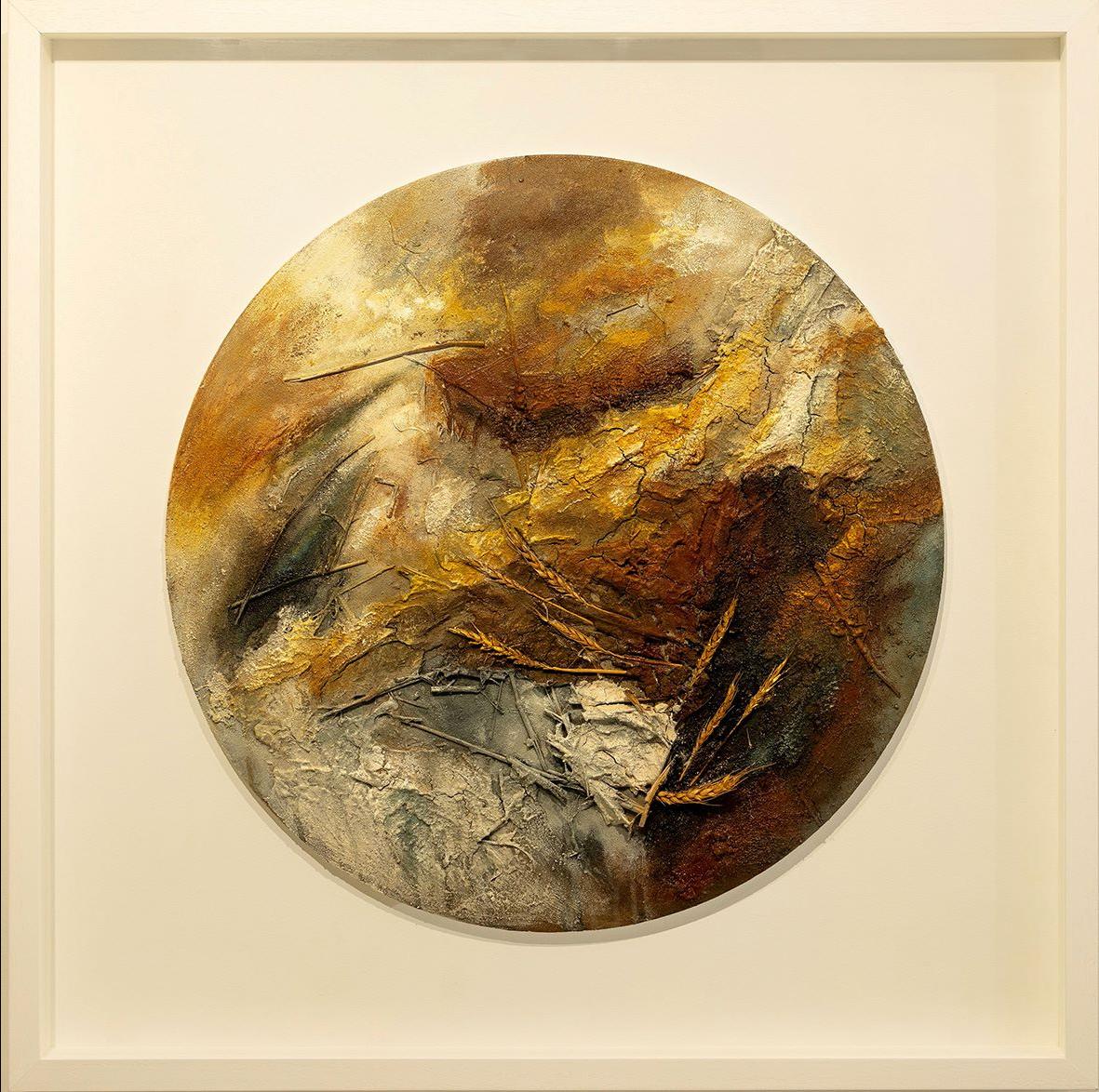 Earth, Light and Silence II
Both then and now, Agius grounded his art in natural ecology to represent the dialogue between the Earth and the people who walk, live and pray upon this land. It’s no surprise, therefore, that Between Earth, Light and Silence welcomes visitors with a large canvas of criss-crossed straw (Praesepium) which was shortlisted and exhibited at the Biennale d’Arte Contemporanea di Firenze in 2019. This empty manger is rough but ready, its story yet to start.
On again, other textured abstracts throughout the building incorporate elements of sheep’s wool and straw, often with touches of gold, hinting at the glory of the sacred miracle and the brightness of the Star of Bethlehem above.
Many of these works are circular, representing the wider universe as the manger in which the Son of God was born and lived. The vast importance of Jesus’ birth is evident too in, for example, the work Qui mundum implet in praesepio iacet (He who Fills the World Lies in a Manger).
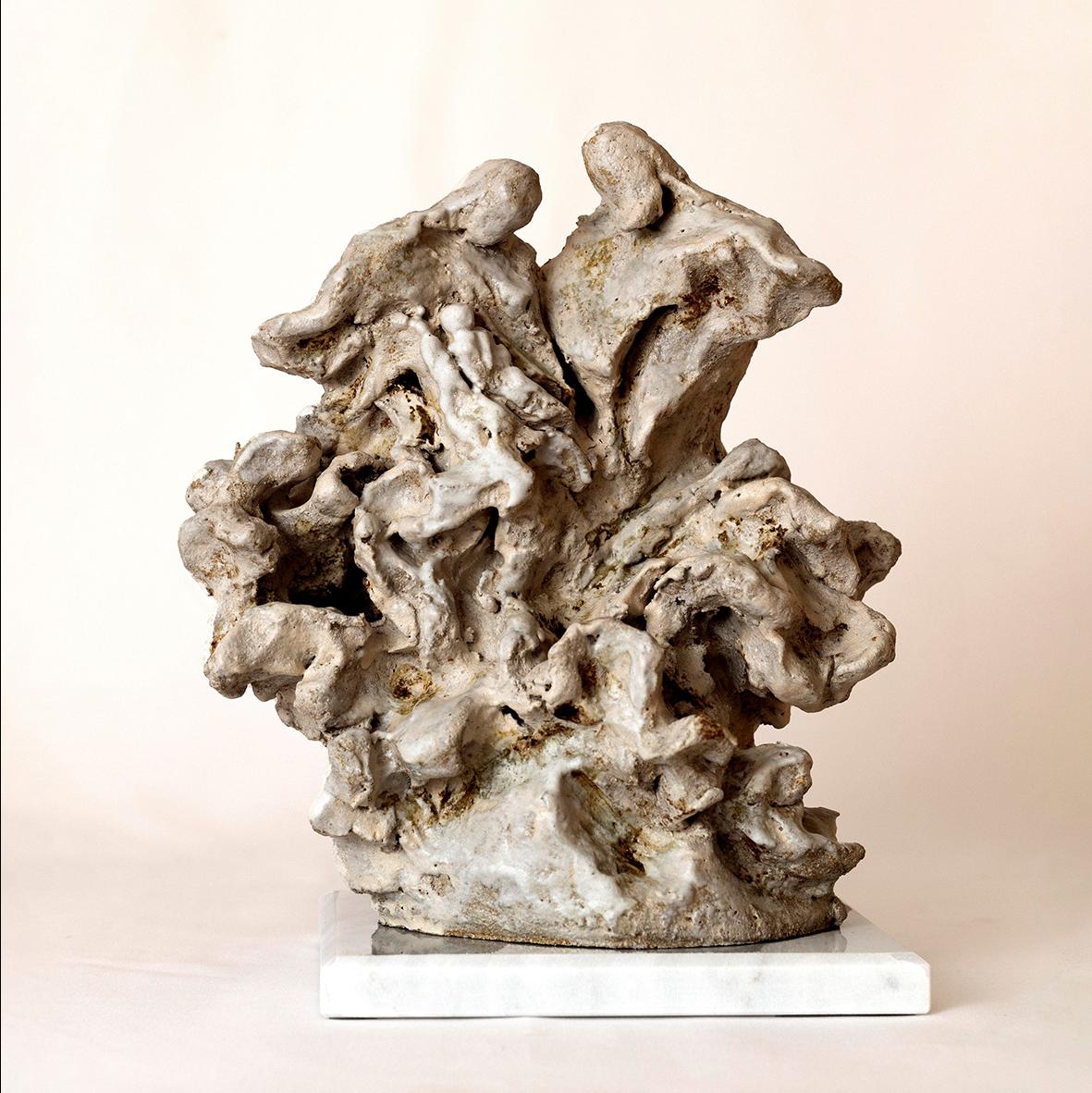 Nativity II
“[Agius’] use of raw, organic matter does not merely illustrate the Nativity theme but embodies a theological insight: that the divine is encountered in and through the materiality of the world,” Laganà continues. “Agius describes these materials as relic-like, suggesting a spirituality embedded ‘in the matter of nature itself’ and intimately connected to the land where the biblical Nativity narrative unfolded.”
The heart of the show, however, is a series of stoneware ceramic cribs, figurative yet abstracted, each of which might have been hewn from the landscape. Rugged, tactile and minimalist, these could be born of our island’s age-worn rock.
With a ‘quiet luminosity’ and a sense of mystery they stand like natural works of art: an ox and an ass nestle like rock formations beside the Holy Family and the arrival of the three kings might have been sculpted by elements throughout the centuries.
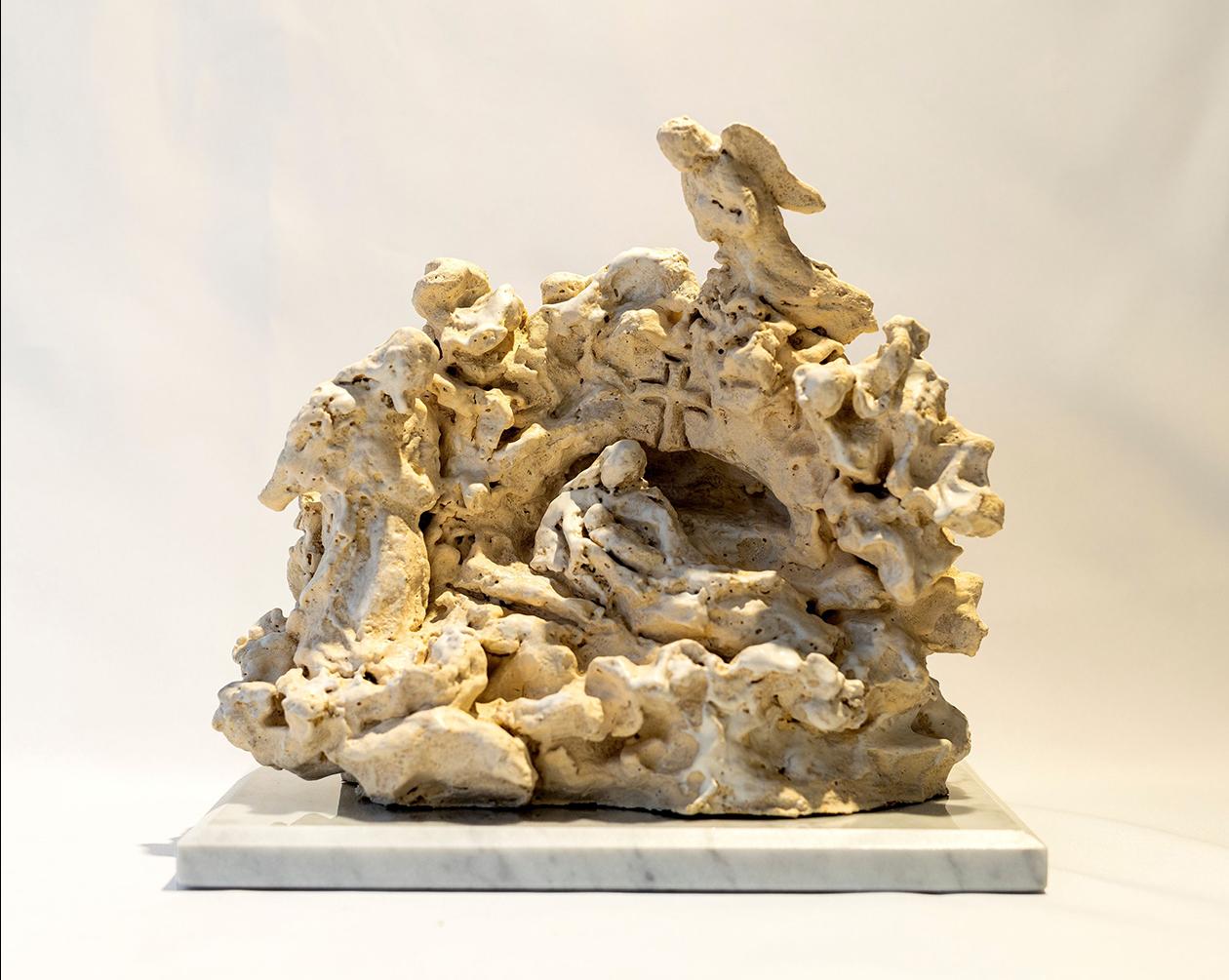 Verbum Reclinatum II (The Lord Reclines)
Other pieces have characters sculpted as if they are roots, twisted and gnarled, symbolising the strength we draw from the past and the promise of growth into the light. One work even stands among the ancient oil lamps from the land of Israel.
This exhibition affirms the Nativity as an enduring site of contemplation
Each of Agius’ ceramic works is deliberately primitive in style, a striking pushback against the traditional baroque representations, and a timely reminder that Jesus was born in a humble stable.
Although the Nativity is central to each, they appear like hazy recollections offering an oasis of sobriety among the kitsch commercial Christmas ornaments that fill the stores in the surrounding streets. Thus they beg the question whether the importance of the Nativity at Christmas is being eroded?
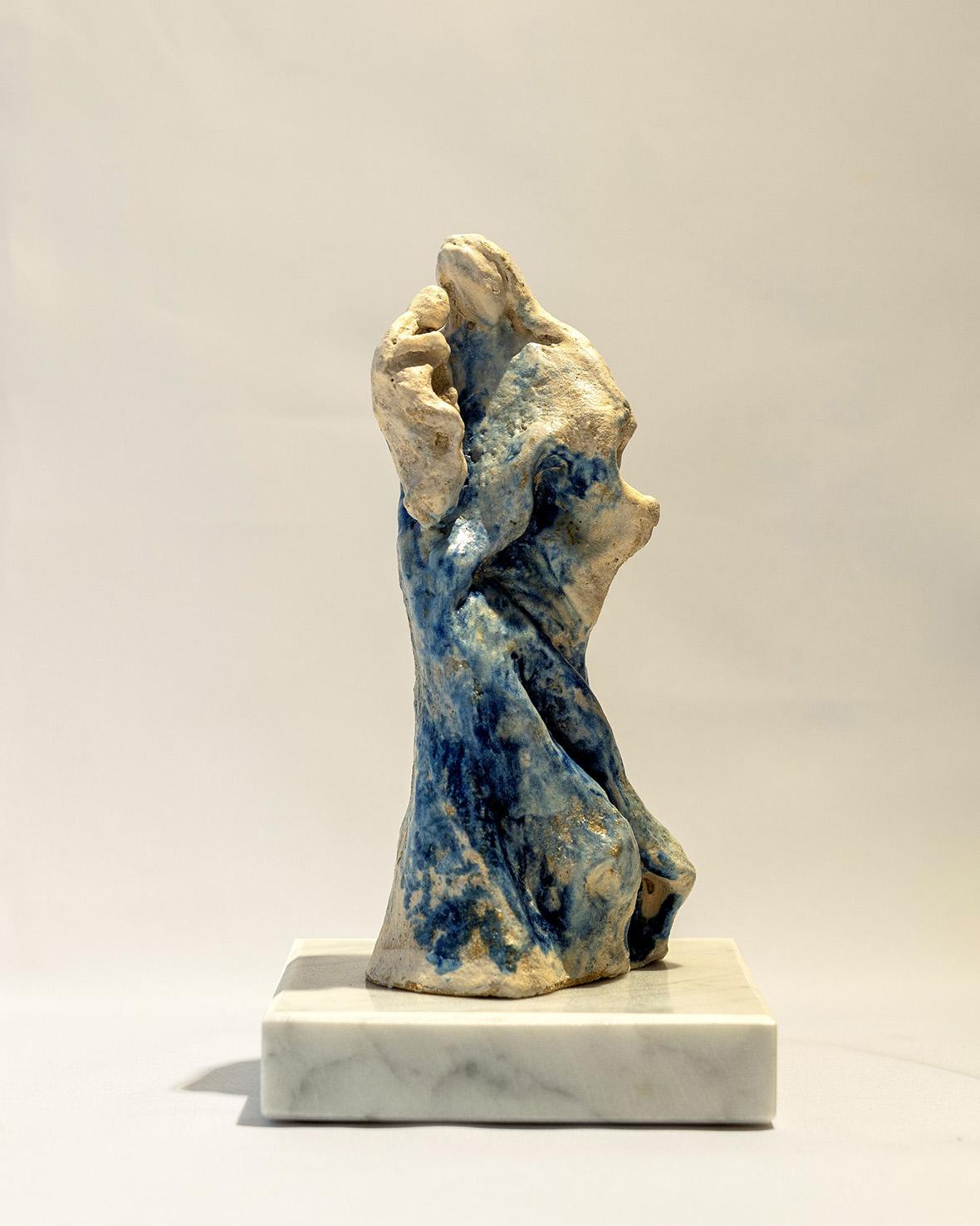 The Virgin of the Incarnate Word II
Glazed primarily in white, to signify purity and sanctity, with some natural blues, oatmeal and earth- and iron-browns, Agius’ presepji exude a sense of the sacred and draw the eye like a choir of dripping candles, for humble reflection. And although its focus is the events of Christmas night, Between Earth, Light and Silence includes representations of the annunciation and the sacred womb, and the mystery of redemption.
Agius’s new works are presented alongside number of Nativity-themed works by masters from different epochs, loaned to the museum from both public and private collections. These include a 17th-century painting of Madonna and Child with St John the Baptist by Stefano Erardi borrowed from the Ministry of Gozo; Harry Alden’s The Annunciation; Anton Inglott’s Adoration of the Shepherds, and, illustrating the continued relevance of the Nativity in Maltese art, modern interpretations including Emvin Cremona’s The Nativity on loan from Ta’ Pinu.
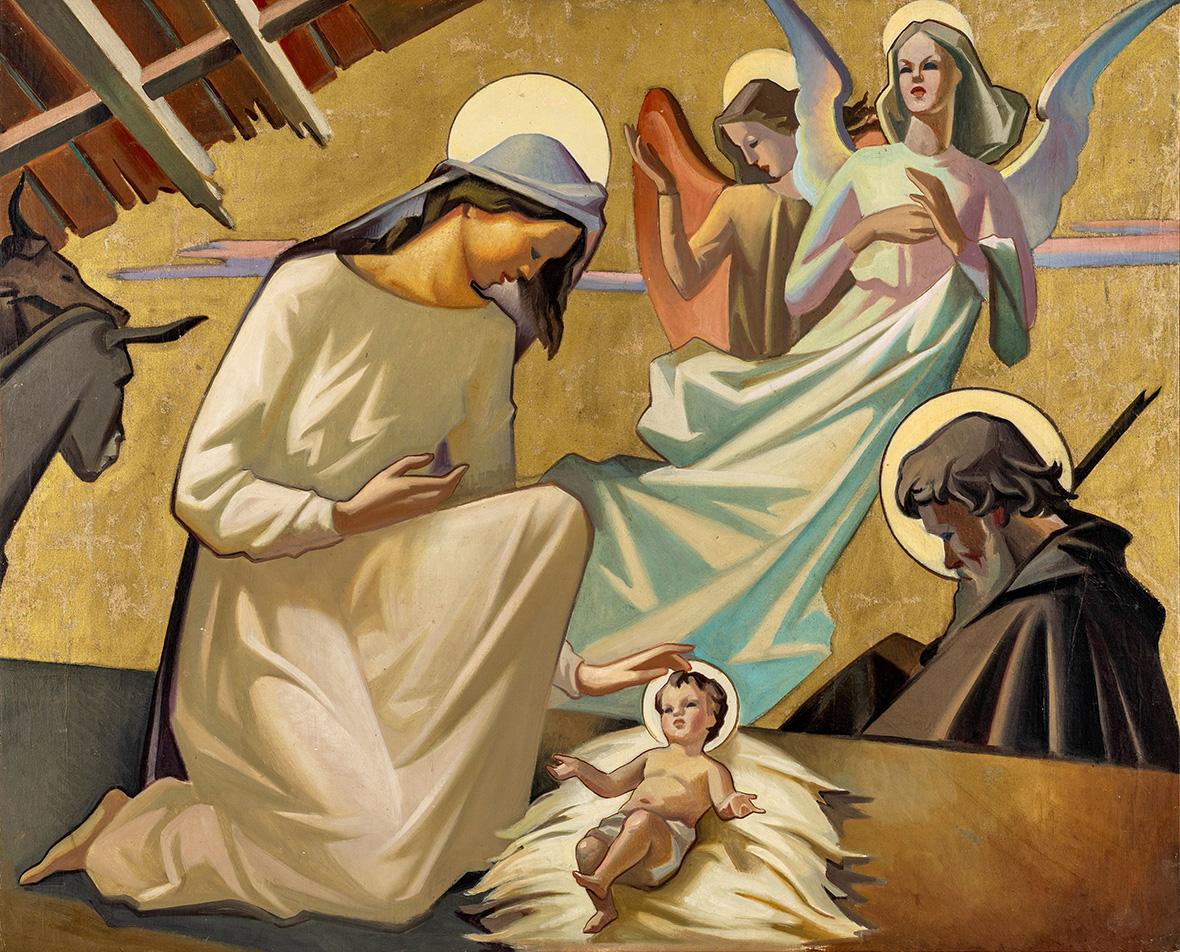 The Nativity by Emvin Cremona
“Their placement alongside Agius’s works engages what the French philosopher and art historian, Georges Didi-Huberman, (2000) terms anachronic temporality, where artworks “surpass their own time and generate new temporal configurations through encounter”, adds Laganà. “From early Christian art onward, the Nativity has served as a theological and visual locus emphasising humility, divine revelation and cosmic renewal.”
“In bringing together earth and gold, organic matter and abstract form, historical image and contemporary meditation, this exhibition affirms the Nativity not as a static iconographic subject but as an enduring site of contemplation.”
Between Earth, Light and Silence runs until January 11. The accompanying Il-Ħaġar Gem (no 36) includes an overview of the works, ‘Earth, Light and Silence: Materiality, Iconography, and the Contemporary Sacred’ by Louis Laganà. It is now available for €20.