
In his speech last week, Donald Trump was really struggling to talk up the current US economy, at a time when most Americans don’t feel like things are going well and blame him for it. But this is hardly a new position for a US president. Indeed, Trump is on some pretty well trodden territory here. He’s almost exactly at the position Joe Biden was in less than two years ago, struggling to advertise a recovering economy that most Americans didn’t believe was recovering.
For me, a formative example of this was that of George HW Bush running for reelection in 1992. By the time he was in full reelection campaign mode, the 1990-1991 recession had ended and job growth was starting to return. But people generally didn’t believe that. Unemployment was still over 7%, people were angry about the ongoing state of the economy, and they were blaming Bush as the incumbent.
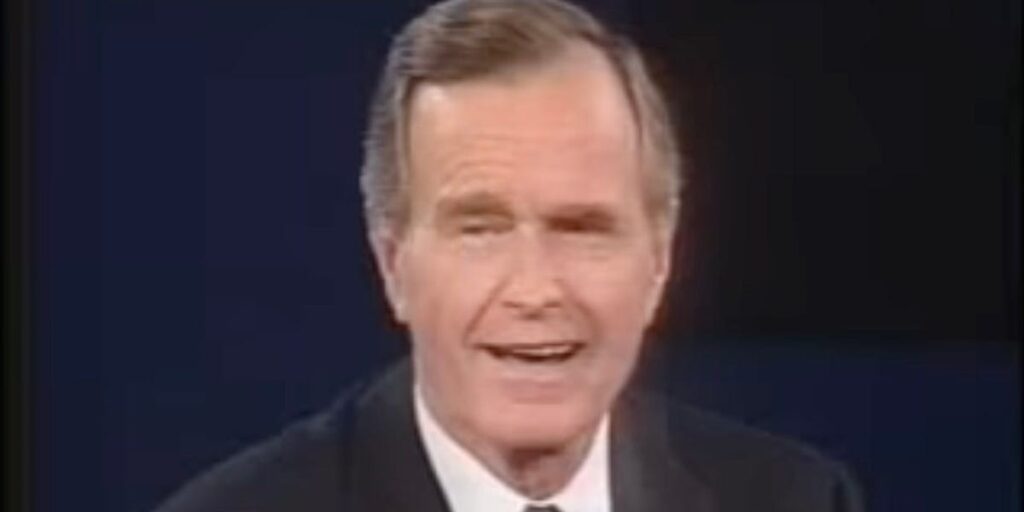
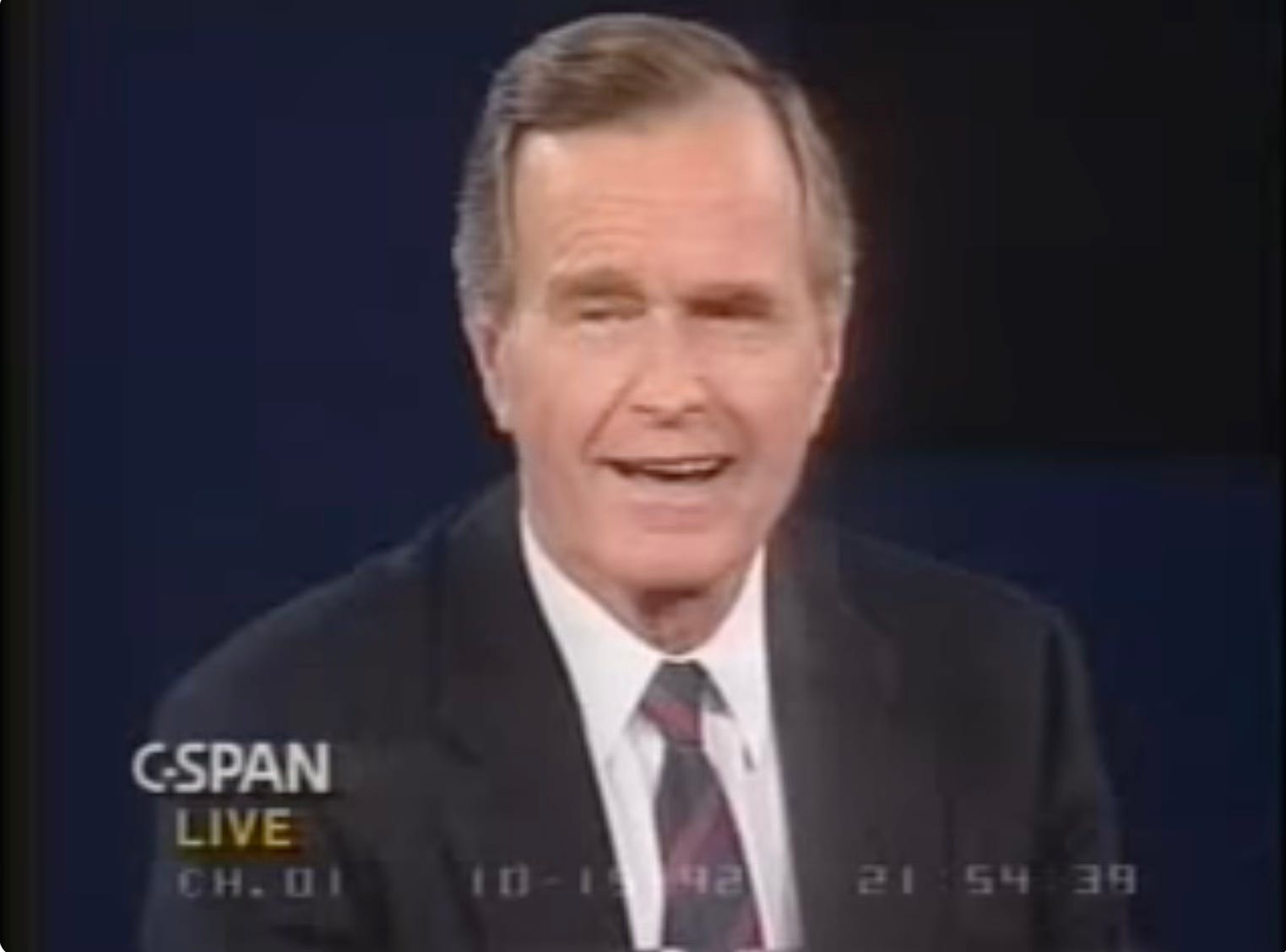
The below exchange from a September 1992 debate between Bush, Bill Clinton, and Ross Perot is telling. Bush is asked, in a somewhat oblique way, why people should trust him on the economy when he clearly has never struggled himself. He used that as a moment to try and explain that the economy was recovering, and that he was fully in command of the situation and understood what people were going through.
But he did so in an incredibly ham-handed way, doing a number of things candidate should generally avoid doing:
-
complaining that the question was unfair
-
complaining about how hard it is for him to hear about people’s economic problems
-
racially profiling the questioner
-
insisting that things were improving even when people‘s expectations suggested otherwise
And he was followed up by a very deft young Bill Clinton, who absolutely hit the question out of the park and demonstrated his particular gift for performed empathy.
But this wasn’t just about campaign style and rhetoric. Bush was the incumbent. People were unhappy. He took the blame for it. Bush wasn’t a particularly gifted orator off the cuff, but he was bright, experienced, and well-informed on these issues, and that just didn’t help him at all.
We tend to think that incumbents who get the blame for economic situations do so because they are poor campaigners and speakers, but it generally works in the other direction. They appear as bad campaigners precisely because they’re being blamed for everything that’s going on. Bill Clinton answered that question skillfully, but I doubt his rhetorical talents would have served him very well if he was the incumbent at that point and was being blamed for an economic recession. (Barack Obama, one of the most gifted orators to ever serve in the White House, suffered one of the largest midterm election losses in history in 2010 when voters blamed him for a slow economic recovery.)
Trump benefits somewhat today by having a more enthusiastic base of supporters and from the general polarization of the times, which prevent his popularity from dropping too low. But he’s not immune from a basic law of politics, which is that if people are angry about the economy, they’re eventually going to blame the incumbent for it, and you really can’t talk your way out of that.
The Carter-Reagan-Bush string of presidencies was an interesting one. Only one of those presidents was reelected, which was at that time an historical anomaly. A theory at the time was that the economy had become so frustrating for people, with decades of increasing productivity and stagnant wages, that Americans were just going to be perpetually angry and blame whomever the income was.
Things turned around somewhat for the next three presidents, Clinton-Bush II-Obama. Those were three consecutive two-term presidencies, a feat that had not happened previously since Jefferson-Madison-Monroe. Yet today we’re back in a situation where people are perpetually angry at the incumbent party. No one has been reelected to the presidency since 2012. Control of Congress has flip-flopped repeatedly. And people’s evaluation of the economy seems largely unrelated to actual economic indicators, especially in the post Covid environment.
Trump’s speech last week wasn’t very good, but even if it had been better, it wasn’t likely to be successful.