

Listen to this article
Estimated 4 minutes
The audio version of this article is generated by AI-based technology. Mispronunciations can occur. We are working with our partners to continually review and improve the results.
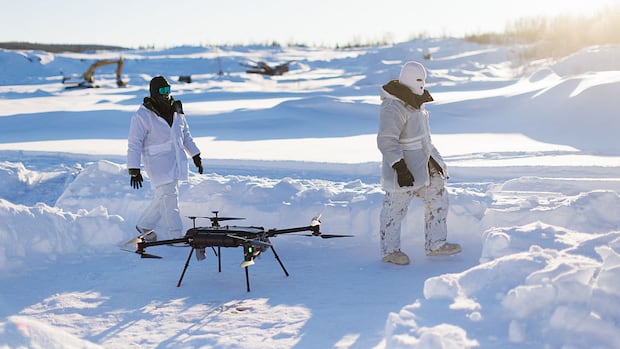
A new study by the Center for European Policy Analysis suggests Russia and China are pulling ahead of NATO nations, including Canada, in the race to develop and field drones capable of operating in harsh Arctic conditions.
The report, released this week, identified infrastructure gaps, questioned the adequacy of investment and pointed to procurement obstacles that hinder the integration of uncrewed systems into Western militaries.
“Procurement of Arctic-capable drones across NATO remains fragmented, slow and risk-averse, as most allies prioritize systems designed for temperate climates and only later adapt them for Arctic use, thus resulting in few NATO-certified Arctic-ready platforms,” said the report authored by research fellow Federico Borsari and retired U.S. major-general Gordon (Skip) Davis, who recently served as NATO’s deputy assistant secretary general for defence investment.
“Both Russia and China are investing in their own uncrewed capabilities and defensive countermeasures and are strengthening and expanding their presence in the Arctic, exploiting surveillance and security gaps,” the report said.
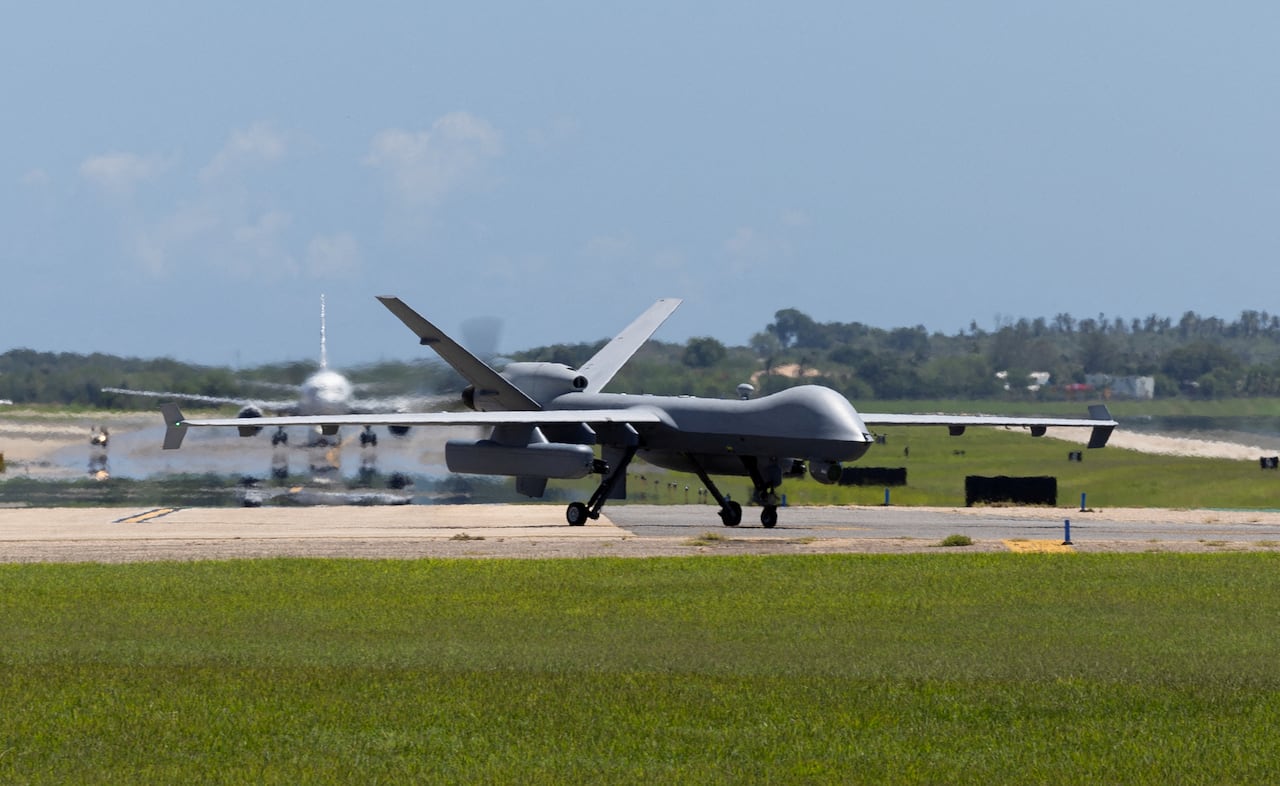
A U.S. Reaper drone is seen in September. Canada is expected to get an initial delivery of Reaper drones equipped to handle harsh Arctic conditions in 2028. (Ricardo Arduengo/Reuters)
Driven in part by the innovations of the Ukraine war, Russia is heavily investing in uncrewed and robotic systems across all domains to offset capability gaps and reinforce conventional forces.
“Annual drone production now exceeds 1.5 million units, supported by China, Iran and others, and Norwegian intelligence sources expect the number of Russian uncrewed systems to grow by an order of magnitude in the coming years,” said the CEPA study, which noted the Russian Navy recently established a new drone control centre in Kamchatka, in the country’s far east, to oversee uncrewed system development for maritime patrols and anti-submarine warfare.
Similarly, China has prioritized development of “remote-sensing, polar-shipping technology, uncrewed systems and communication networks” in the Arctic, the report said.
This week, Chinese media reported that the country’s military had successfully tested a new unmanned aerial vehicle, known as the Jiutian, which is capable of launching up to 100 smaller drones mid-flight.
Canada has no drones capable of patrolling the Arctic at the moment. The air force is in the process of acquiring 11 MQ-9B Reaper drones from General Atomics, with initial deliveries expected in 2028 and full fleet operation by 2033.
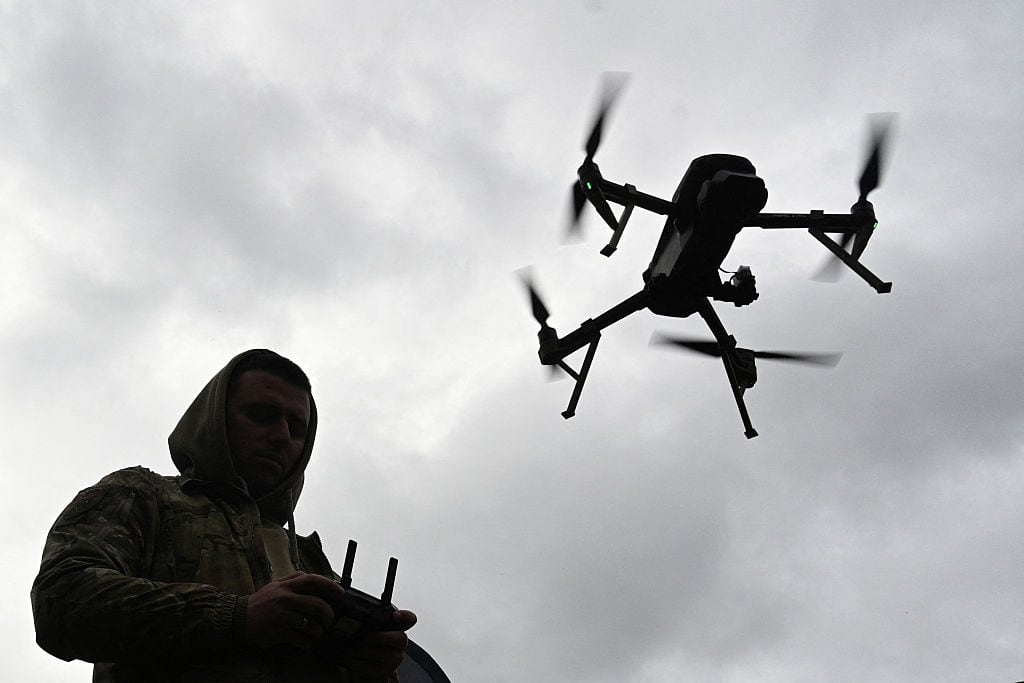
A Ukrainian serviceman is seen operating a drone. The Russian invasion has spurred advances in drone technology on both sides. (Yuriy Dyachyshyn/AFP/Getty Images)
The fleet was originally supposed to begin arriving this year, but delivery was pushed back in order to modify them “to operate at high northern latitudes, including in the Arctic,” the Department of National Defence told CBC News in 2023.
The Reaper also required additional testing and qualification work to ensure it can be operated and maintained in harsh Canadian winters.
Transport Canada recently took possession of an Israeli-made Hermes 900 Starliner drone for Arctic surveillance from Elbit Systems Ltd., but the department’s core aviation services are being merged with the Defence Department. How and when it will be deployed is unclear.
The CEPA report underlined an urgency for Canada and the United States to address the northern drone gap.
The “North American Aerospace Defense Command (NORAD)’s radar networks are aging, and their modernization program will take two decades to complete, leaving the Arctic approach to North America vulnerable to new threats at a time of unprecedented competition,” it said.
While the study does not single out any one Arctic allied nation, it does note that the recent accession of Finland and Sweden into NATO present an opportunity to knit together a common northern front.
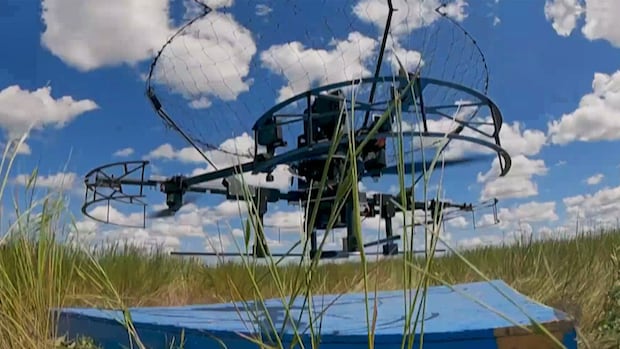
Canada’s government and military are trying to get a Canadian edge in a new arms race for drones by issuing industry challenges, and testing everything from marine drones that can attack ships to lasers that can burn drones in mid-air.
“Multiple gaps exist between current NATO drone inventories and the specific demands of Arctic operations,” said the study.
“Few vehicles are winterized or hardened for persistent use in the region’s extreme conditions.”
The report said allies need to think about developing better cold-rated batteries, thermal-management systems and prepositioning spare parts which are essential to sustain high sortie rates in extreme weather at bases throughout the North.
On a higher, strategic level, the report said, NATO needs to take the surveillance gap more seriously.
“To begin with, NATO doesn’t have a formal Arctic strategy,” the CEPA report said.
“While this is a sensitive policy matter, the lack of a dedicated strategic framework for the region risks diluting resourcing and co-operation between regional allies on various levels.”