

The digital ecosystem is undergoing a structural shift. The web is becoming a bot-first environment, where automated and non-human traffic is no longer a background issue but a dominant force shaping performance, security, and costs. According to WP Engine’s 2025 Website Traffic Trends Report, AI-driven bots now account for a rapidly growing share of total web requests, consuming up to 70% of the most expensive dynamic resources such as hosting, environments, and performance layers. This evolution marks a turning point: traffic management is no longer a technical optimization but a strategic and financial imperative for web teams preparing for 2026.
A Web Designed for Humans—and Machines
For decades, websites were built primarily for human users. Today, that assumption no longer holds. The web is becoming a bot-first environment, evolving into a dual-audience system optimized for both people and machines. Automated agents, AI crawlers, and sophisticated bots increasingly interact with content, applications, and infrastructure in ways that mirror — and sometimes exceed — human behavior.
“The shape of the web is evolving rapidly. The industry is underestimating the speed at which the internet is transitioning into a dual-audience environment, optimized for both human consumption and AI interaction,” said Ramadass Prabhakar, CTO, WP Engine.
This shift fundamentally alters how digital teams must think about performance and scalability. Bots are no longer limited to indexing content; many execute dynamic requests that strain servers, distort analytics, and inflate operational costs. Designing for humans alone is no longer sufficient in an internet increasingly shaped by automation.
Bot Traffic Is Growing—and Largely Unverified
 WP Engine
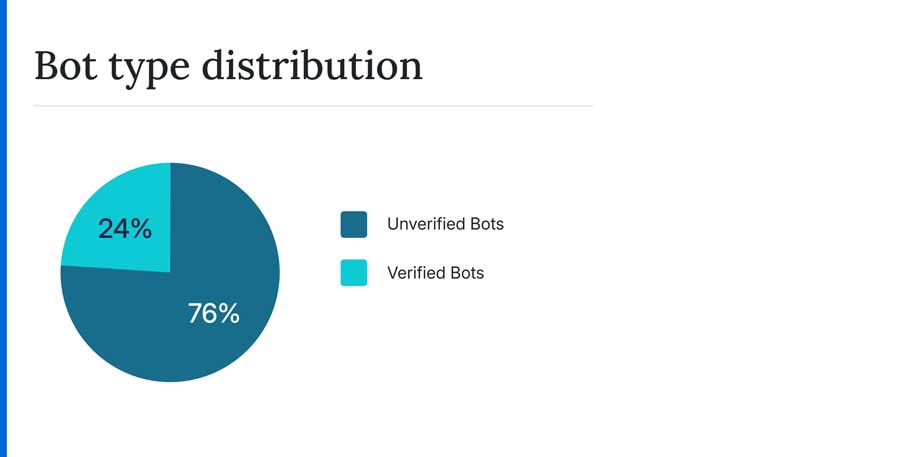
One of the most critical findings in the report is the scale of unverified automation. WP Engine found that 76% of bot traffic worldwide is unverified, creating significant risk and uncertainty for organizations. Despite this, only 38% of web teams use dedicated solutions for bot mitigation, security, and performance, leaving most sites exposed to unnecessary load and skewed data.
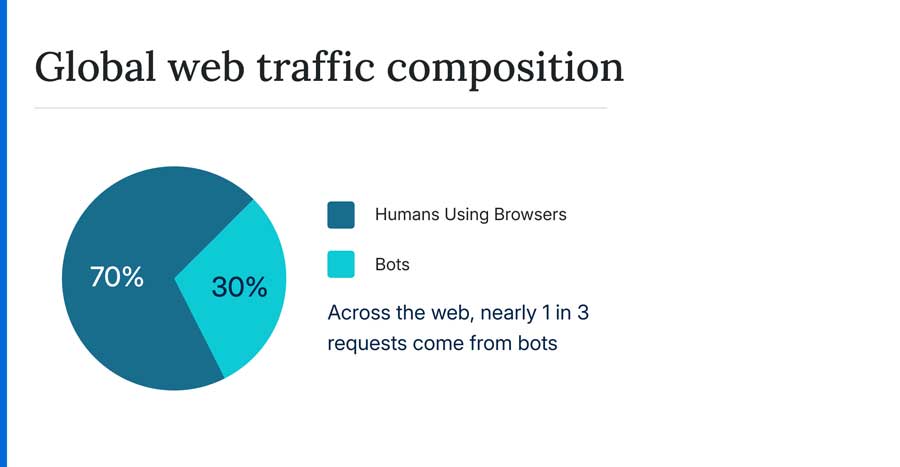
Across the web, nearly one in three requests now comes from bots, a statistic that underscores how deeply automation has penetrated everyday web activity. In a bot-first environment, unverified traffic does more than slow sites down — it compromises insights, inflates infrastructure usage, and forces teams to make decisions based on incomplete or misleading signals.
Without intelligent traffic management, organizations risk paying to serve machines while losing clarity about how real users experience their digital properties.
 WP Engine
Bot-First: From Optimization to Financial Imperative
As AI-driven bot traffic grows, traffic management has become directly tied to cost control. Automated requests consume high-cost dynamic resources, often without delivering any business value. In this context, the web becoming a bot-first environment turns filtering and prioritizing traffic into a financial necessity, not a technical preference.
“These shifts open a different kind of opportunity that prioritizes Intelligent Traffic Management to proactively control all activity visiting a site. Teams who can advance this imperative will narrow digital divides, better control costs, and deliver superior experiences on an AI-driven web,” said Ramadass Prabhakar, CTO, WP Engine.
Organizations that fail to adapt will see rising hosting and performance costs, while those that proactively manage automation can preserve speed, stability, and budget efficiency.
Security Maturity Now Drives Speed and Stability
A central insight of the report is that security and performance are now inseparable. In a bot-first environment, security maturity directly determines speed, reliability, and scalability. Sites that fully adopt HTTPS and proactive bot mitigation load faster, remain stable under automation-heavy traffic, and avoid inflated request volumes.
WP Engine data shows that customer sites serving traffic exclusively over HTTPS are one to five seconds faster in Largest Contentful Paint (LCP) than sites still relying on HTTP. This performance gap widened over the past year, highlighting how foundational security choices increasingly dictate user experience.
Larger organizations tend to lead in security adoption, with near-universal use of HTTPS and two-factor authentication, while smaller teams lag by roughly 25%. Agencies leveraging Global Edge Security also report more consistent performance and cleaner traffic than those relying on manual or reactive controls.
“The industry is underestimating the speed at which the internet is transitioning into a dual-audience environment, optimized for both human consumption and AI interaction.”
Bot-First: Geography, Mobile, and Infrastructure Gaps
Performance challenges are not evenly distributed across the globe. While North America and Europe continue to post strong LCP metrics, high-growth regions such as Asia and Latin America are slowing down, as traffic growth outpaces optimization. In a web that is becoming increasingly bot-first, these regional disparities are amplified by long-distance requests and mobile dependency.
Mobile traffic now dominates globally, yet mobile performance consistently trails desktop. This persistent optimization gap represents a growing cost for organizations that fail to prioritize mobile-first performance strategies.
Infrastructure choices further widen the divide. Approximately 50% of the top 10 million sites tracked by Google CrUX still do not use a CDN, despite evidence that CDN adoption delivers around 20% improvement in LCP. In a bot-first environment, neglecting foundational technologies compounds both performance and cost inefficiencies.
“These shifts open a different kind of opportunity that prioritizes Intelligent Traffic Management to proactively control all activity visiting a site.”
Building the Web for 2026
The findings from WP Engine’s 2025 Website Traffic Trends Report make one conclusion unavoidable: website speed alone is no longer the defining success metric. Security posture, traffic composition, geographic distribution, and automation readiness now play equally critical roles.
The most resilient digital teams heading into 2026 will treat intelligent traffic management, performance parity, and security maturity as one interconnected system. As the web becomes a bot-first environment, organizations that adapt to this reality will be best positioned to control costs, close performance gaps, and deliver reliable experiences for real users in an AI-driven future.
Source: BisinessWire
Related content:
Related Content:
What is Answer Engine Optimization (AEO)?
Creator AI Adoption Leaps by 131%, Powering a New Generation of Data-Driven Creators