
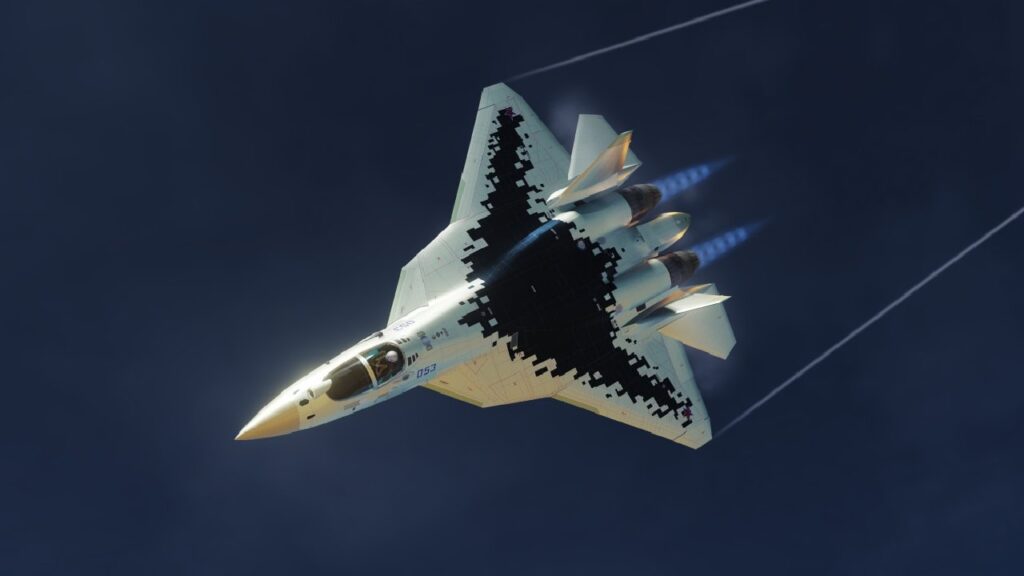
Key Points and Summary – Russia says a production-series Su-57 has completed its first flight with two “Product 177” (AL-51F) fifth-generation engines, the long-promised second-stage powerplant meant to replace the interim AL-41F1 family.
-Rostec frames the milestone as a new testing phase that should improve thrust, fuel efficiency, and supercruise potential, while strengthening export marketing.
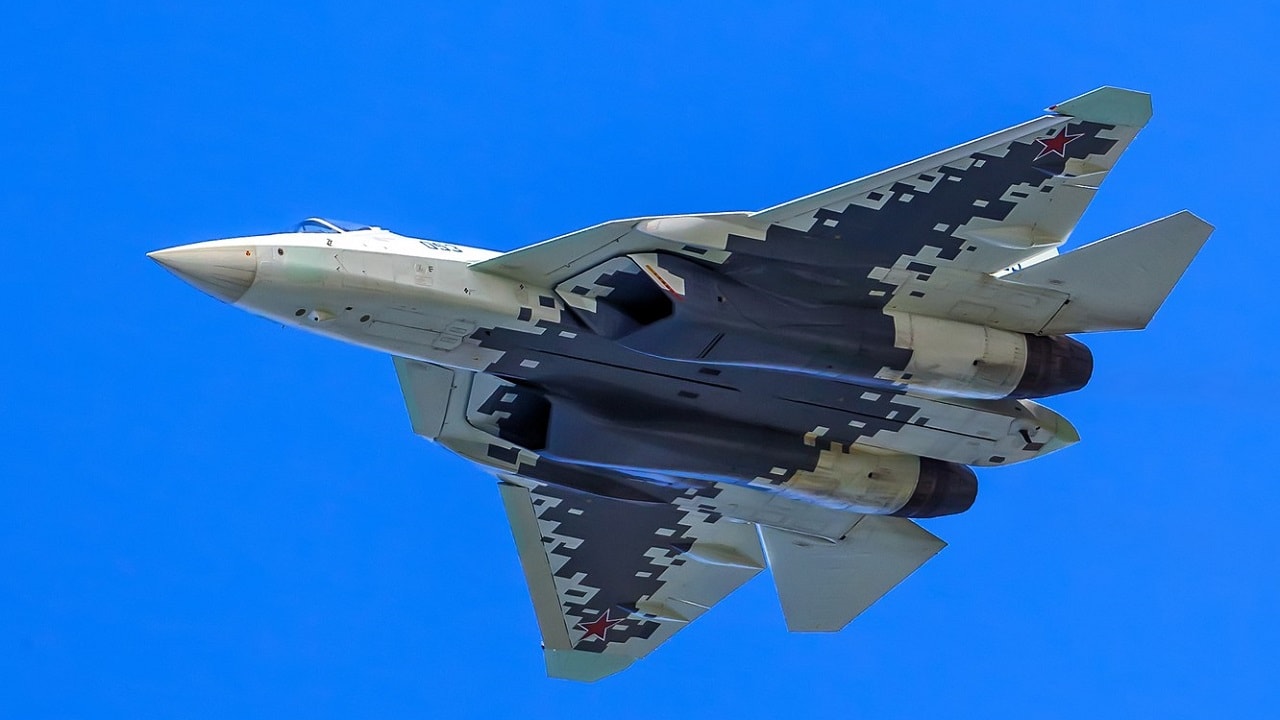
Su-57 stealth fighter. Image Credit: Creative Commons.
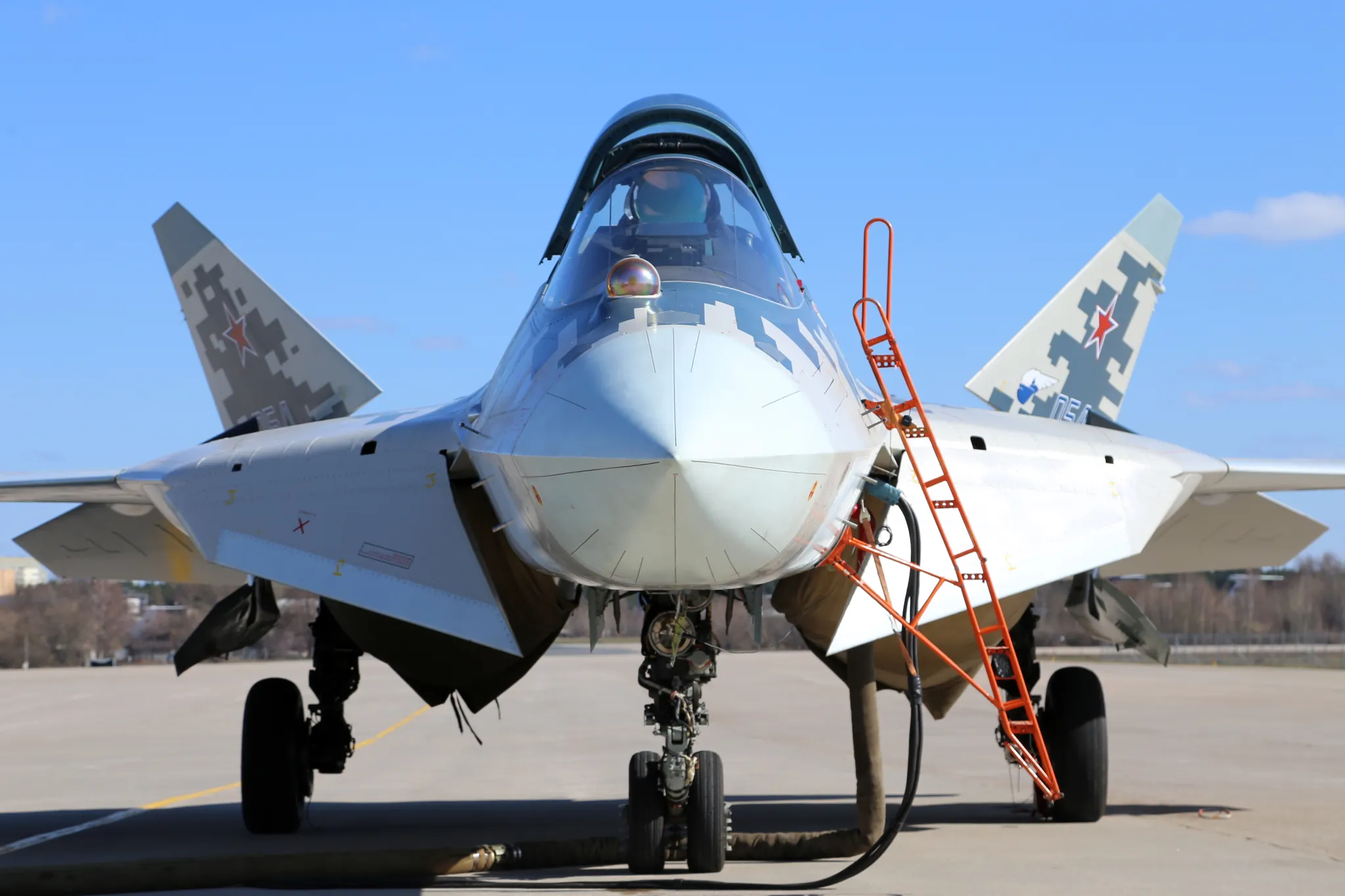
Russia’s Su-57 Stealth Fighter. Image Credit: Creative Commons.
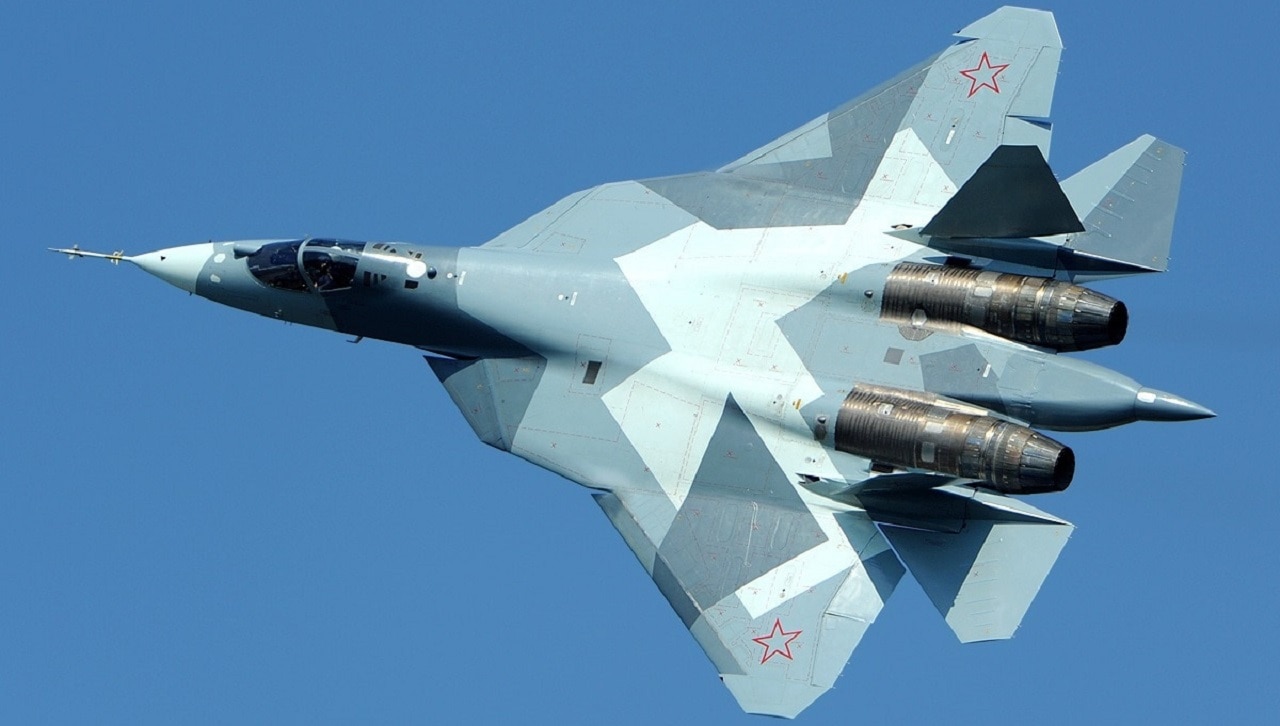
Su-57. Image Credit: Creative Commons.
-The catch is timing: the Su-57 first flew in 2010 and the earlier “Product 30” engine began flight testing in 2017, making this step arrive after years of slipped schedules.
-It narrows the gaps but also highlights Russia’s propulsion lag as the U.S. and China push ahead with sixth-generation designs now.
Russian Sukhoi Su-57 Felon Fighter Flies for First Time With Production-Version 5th-Gen Engine
The history of new Russian aircraft development and validation is replete with repeatedly delayed and long-awaited test flights that finally take place at the 11th hour. This usually means a flying machine rotating up sometime in December before the world shuts down for the year-end holiday season.
This week, December 22 to be more precise, is no exception. News reports from Russia say a production-series Sukhoi Su-57 has finally flown with two production-series 5th-generation engines mounted in its two nacelles.
A statement from Rostec, the massive state-run conglomerate that controls most of Russia’s defense-industrial sector, described the Su-57 fighter as having completed its first flight powered with what are called two “izdeliye 177” engines, which will be designated AL-51F in its production variant. It is described as a historical moment in what the company calls a new phase of testing for the aircraft.
“The Su-57 has performed well in real combat conditions and confirmed that it meets the requirements applied to 5th-generation aviation complexes, including in terms of stealth characteristics,” continued the statement. “The aircraft naturally generates high interest among foreign customers, and export deliveries are already being carried out.”
“At the same time, the Su-57 continues to be modernized taking into account experience from use in the SVO [Special Military Operation] zone: the capabilities of weapons and onboard systems are being expanded. The new engine—’izdeliye 177’—with increased thrust will further improve flight characteristics and provide a large reserve for the further development of the aircraft.”
A Long Development Process
The AL-41F-1 engine, a derivative of the AL-41F-1S that currently powers the Su-35 “4++ generation” fighter, was the original engine installed in the T-50 series prototypes of the Su-57 fighter. Known in the early stages of the Su-57 program as the “interim engine,” it was always assumed that using this engine was a temporary measure until a 5th-generation power plant under construction and testing at the Ufa Engine Production Association (part of the United Engine Corporation within Rostec) plant would emerge.
The first test of what would become the 5th-generation engine occurred on December 5, 2017 (again occurring on the glide path to the end of the year). On that date, the T-50-2 prototype for the Su-57 flew with what was then described as the izdeliye 30 (AL-51F1) engine.
The izdeliye 30 was the designation for the prototype design of the “second-stage turbojet engine” that would replace the AL-41F-1.
The plan, even at that time, was to mass-produce it at Ufa, which culminated in the first of these prototype engines being manufactured there before testing began in December 2017.
It was also reported that deliveries of fifth-generation Su-57 fighters equipped with the new engines would begin in 2023. The “second-stage engine” – as it was still referred to at the time – was projected to enable the Su-57 fighter to develop supersonic speed without the need for afterburner – or “supercruise“, as it is more commonly referred to.
From Izdeliye 30 Prototype to Izdeliye 177
The first flight of the Izdeliye 30 engine on board the Su-57 prototype T-50-2, which took place on December 5, 2017, was piloted by Sukhoi Chief Pilot Sergei Bogdan. He flew the aircraft for 17 minutes, which was a major advancement for what was then called the PAK FA program.
This final izdeliye 177, “Stage 2”, is what emerges today, 8 years later. Its performance brings the Su-57 aircraft up to full fifth-generation capabilities like supercruise.
According to the designers, this engine produces substantially more thrust at 17-18 tons and significantly better fuel efficiency than the initial AL-41F1/izdeliye 117S engines. That level of performance enables the Su-57 to meet the aircraft’s speed and range requirements as specified in the original design specifications.
Even though the Su-57 is finally flying today with the Izdeliye 177 engines—the engine it was supposed to be flying with in the first place—mounted in an actual Su-57, it is a potentially historic moment. Still, it is far less impressive when examined in a larger context.
The T-50 prototype first flew in 2010, which means it took 15 years of engine development to reach the program’s current state. That is a lengthy design cycle, especially given that much of the work that led to the izdeliye 177, or the final AL-51F-1 design, was already underway 15 years earlier.
Secondly, this engine’s performance levels are significantly lower than forecast for the Su-57’s next-generation powerplant. Its thrust is only just 157 kN, or about 36,000 lbs, compared to 156 kN (35,000 lbs) of the American F-22 fighter’s F119 engines. Those engines began serial production almost 30 years ago.
So, Russia has finally flown a fighter with an engine that’s both 5th-generation, finally. That is a quarter of a century or more behind the US timeline. In the meantime, both the Chinese and the Americans are working on 6th-generation designs.
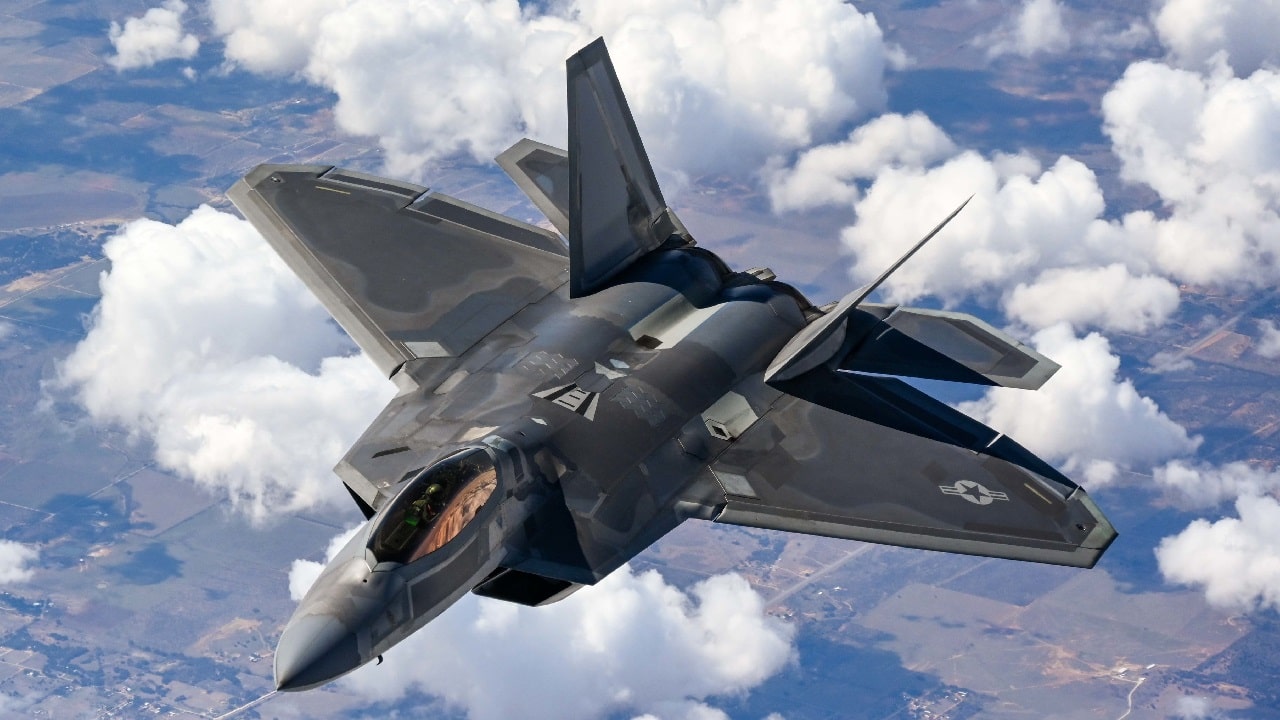
An F-22 Raptor Demonstration Team pilot flies behind a KC-135 Stratotanker from the 465th Air Refueling Squadron assigned to Tinker Air Force Base, Oklahoma, March 8. 2021. The F-22 team from Joint Base Langley–Eustis, Virginia, is assigned to Air Combat Command and received fuel from the Okies during their flight back to their home station after performing at an air show. (U.S. Air Force photo by Senior Airman Mary Begy)
Sukhoi is unlikely to have any 6th-generation concepts beyond the stage we used to call “paper designs,” before everything was drawn on a computer screen.
Which means the Russian industry has a great deal of catching up to do.
About the Author: Reuben F. Johnson
Reuben F. Johnson has thirty-six years of experience analyzing and reporting on foreign weapons systems, defense technologies, and international arms export policy. Johnson is the Director of Research at the Casimir Pulaski Foundation. He is also a survivor of the Russian invasion of Ukraine in February 2022. He worked for years in the American defense industry as a foreign technology analyst and later as a consultant for the U.S. Department of Defense, the Departments of the Navy and Air Force, and the governments of the United Kingdom and Australia. In 2022-2023, he won two awards in a row for his defense reporting. He holds a bachelor’s degree from DePauw University and a master’s degree from Miami University in Ohio, specializing in Soviet and Russian studies. He lives in Warsaw.