
By Ben Gartside and Peter Geoghegan
As we recently discussed, the UK government has launched an inquiry into foreign interference. Keir Starmer said the review was “urgently” needed in the wake of the sentencing of Reform’s onetime leader in Wales, Nathan Gill, for spreading pro-Russian propaganda.
But what if we told you that two former British ambassadors are already working in Westminster on behalf of a pro-Russian foreign government whose de facto leader is under UK sanctions?
Well, that’s exactly what’s happening in the case of Republika Srpska, the Serb-run statelet in the western Balkans created at the end of the Bosnian war.
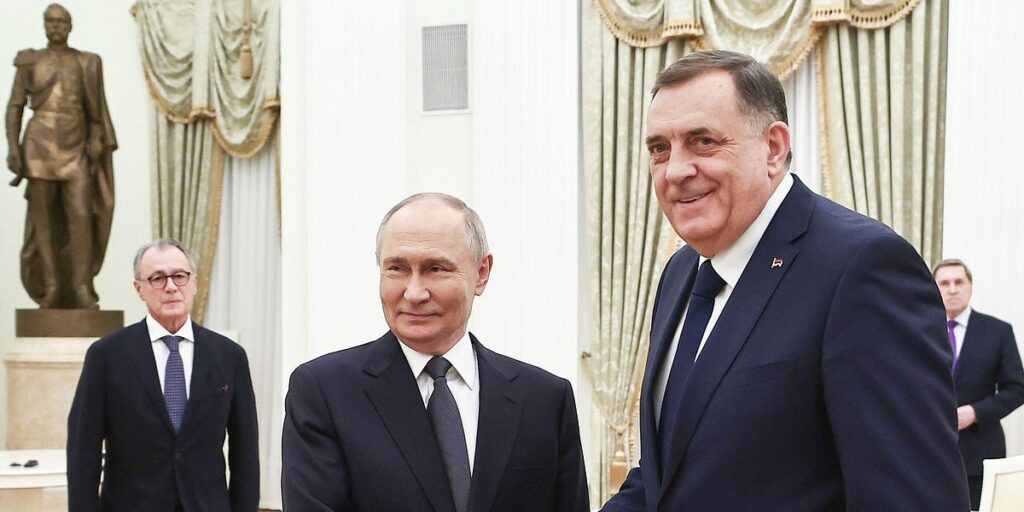
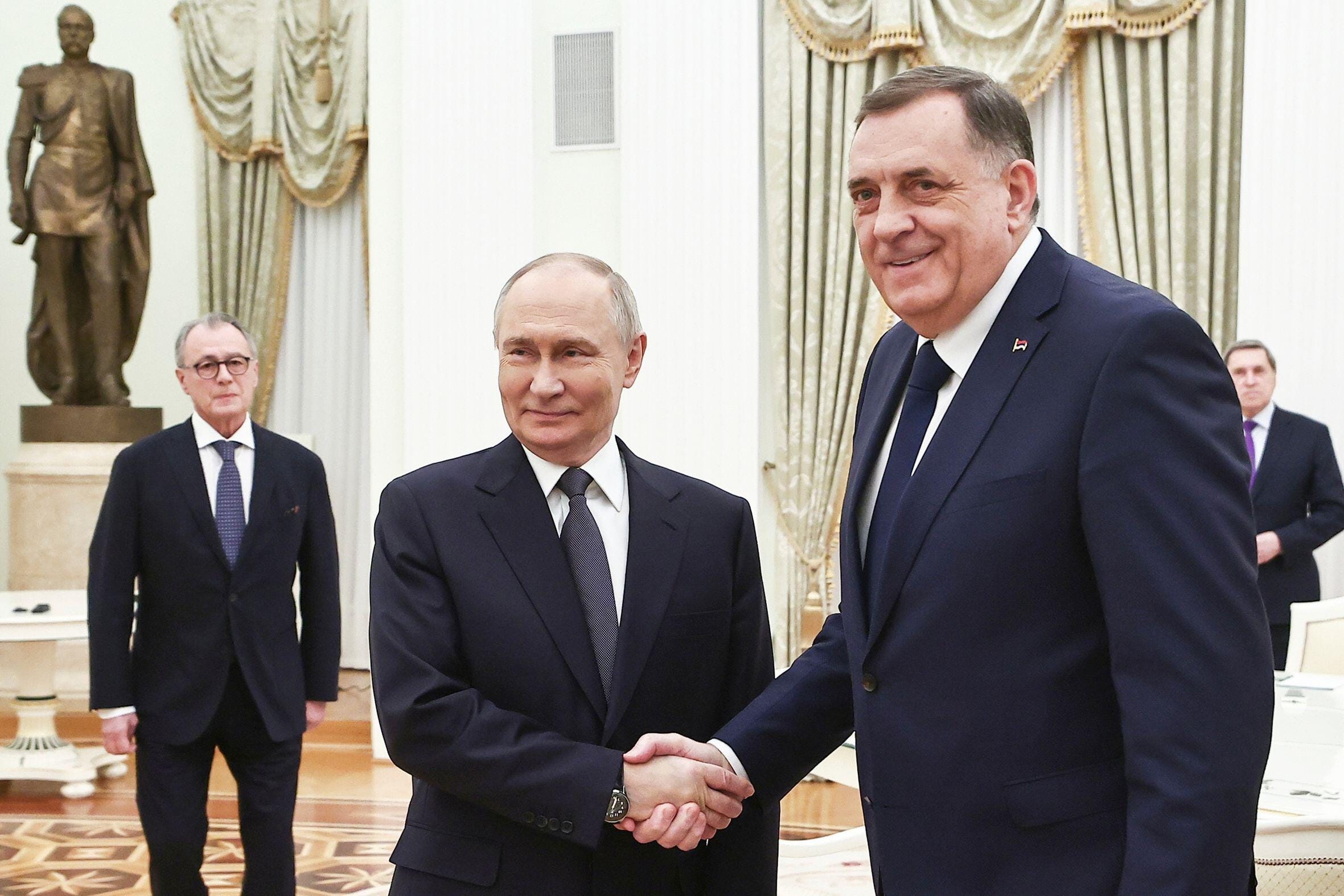
Republika Srpska’s politics has long been dominated by Milorad Dodik, a genocide-denying nationalist who is under UK sanctions for “undermining the hard-won peace in Bosnia and Herzegovina”. The Bosnian Serb strongman is close to Viktor Orbán and Vladimir Putin.
Despite this record, we can report that two former UK ambassadors are now taking money to lobby on Republika Srpska’s behalf.
Charles Crawford, Britain’s ambassador to Bosnia and Herzegovina in the mid-1990s, and Sir Dominick Chilcott, a former UK ambassador to Ireland, are registered as lobbyists for Republika Srpska on the government’s recently launched Foreign Influence Registration Scheme (FIRS).
Filings show both former diplomats, via their holding companies, are working to “open and develop a new, discreet channel of communications between the government of Republika Srpska (RS) and the UK authorities”.
While the precise scope of this work is unclear, it likely includes lobbying to lift Dodik’s 2022 British travel ban and asset freeze. Regional experts fear that, if realised, his threats to secede could spark fresh conflict in the region.
Labour MP Phil Brickell described the ex-diplomats’ lobbying as “highly inappropriate”.
“I’m shocked to find out that former UK ambassadors are now lobbying on behalf of Putin-aligned Republika Srpska,” Brickell told Democracy for Sale. “Having just returned from the region, I’ve seen first-hand how Dodik continues to destabilise the western Balkans.”
Crawford and Chilcott did not respond to multiple requests for comment on this story.
Republika Srpska was born out of violence. It was first led by Radovan Karadžić, who appointed Ratko Mladić as commander of its army. Both were later convicted at The Hague of genocide, war crimes and crimes against humanity for their roles in the Bosnian war.
Dodik, a former basketball player, was once supported by the US and EU but has ruled autocratically for more than two decades. He has dismissed the Srebrenica massacre as a “fabricated myth” and recently welcomed 300 Hungarian paramilitaries to his capital, Banja Luka.
Earlier this year, Vladimir Putin praised Dodik for “greatly [contributing] to the development of relations with Russia.”
Although Dodik – who was also previously prime minister – was formally removed as president by Bosnia’s electoral commission earlier this year, for defying the international peace envoy, he remains in effective power after a close ally won last month’s election.
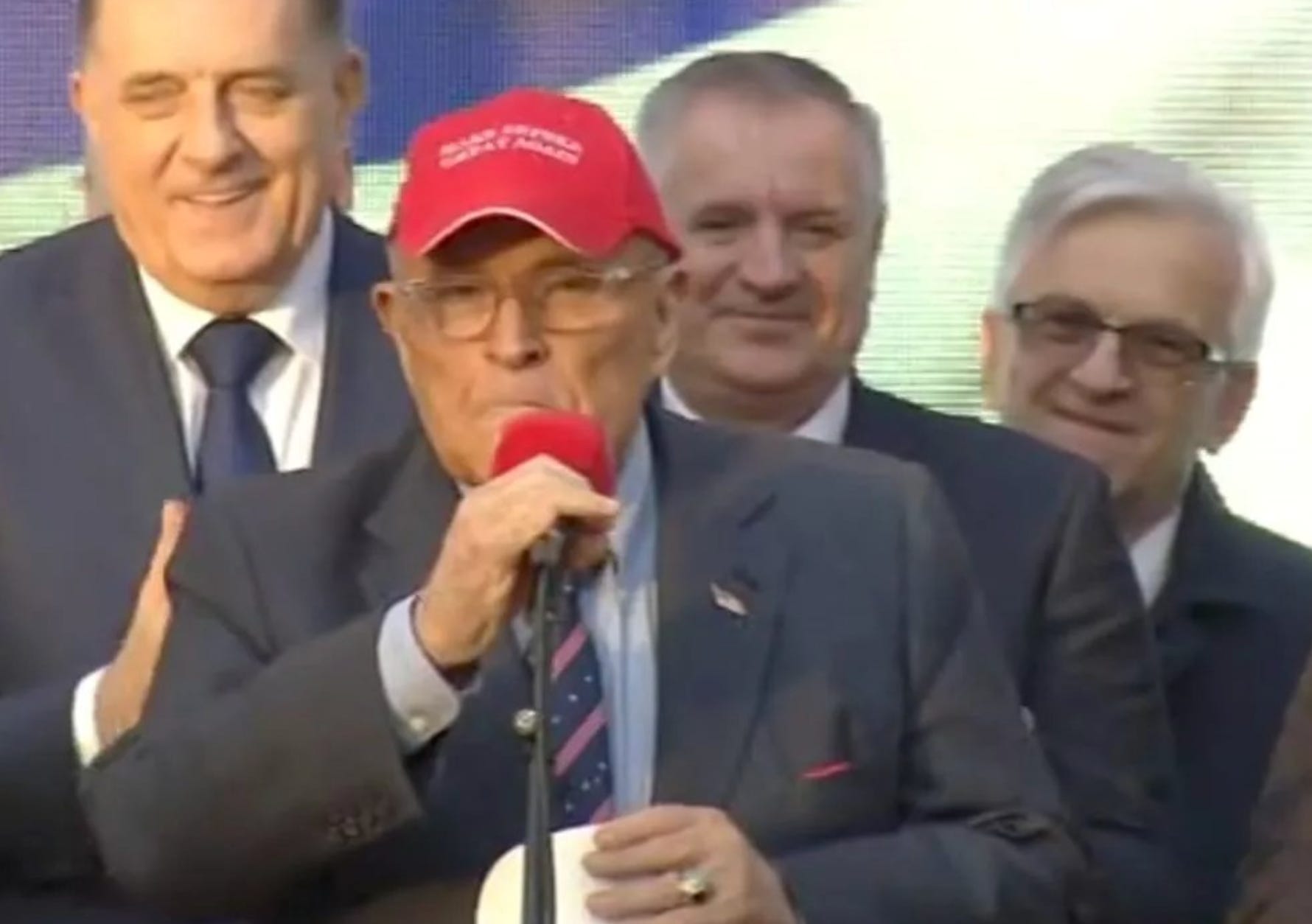
Dodik has also gained influence in the Trump White House: the US lifted sanctions on him and other Bosnian Serbs after lobbying by MAGA-linked figures including Laura Loomer, and Rudy Giuliani appeared at a rally in Banja Luka wearing a “Make Srpska Great Again” cap.
Other Trump allies have worked for Republika Srpska, including former Democratic Illinois governor Rod Blagojevich, whose corruption conviction was pardoned by Trump in February.
Jasmin Mujanović, a political scientist specialising in south-east Europe, warned that the former British ambassadors’ lobbying undermines the UK’s strategic interests.
“Everything the UK and its allies are attempting to do in Ukraine is intimately related to the situation in Bosnia,” Mujanović said.
Bosnian Serbs have fought for Russia in Ukraine, and Dodik could mobilise them if conflict returned to Bosnia. “Dodik and his regime are not just the greatest threat to Bosnia and Herzegovina’s territorial integrity and sovereignty,” Mujanović said. “They are by far the most extremist political regime in south-eastern Europe.”
Last month, the British government said that it would not be lifting sanctions against Dodik. But Mujanović says that the work of Crawford and Chilcott risks sending a signal that the UK may ease pressure on the Bosnian Serbs.
Chilcott was director of the Iraq Policy Unit in 2003, later serving as Britain’s ambassador to Ireland until 2016.
Crawford has deep ties to the Western Balkans. As well as a stint in Sarajevo, he also served as ambassador to Serbia and Montenegro. He has also caused controversy in the region: shortly after the Bosnian war he wrote that “Bosnian Serbs love us to an embarrassing degree” and suggested Britain could “exploit this” for “lucrative reconstruction projects in Republika Srpska,” according to diplomatic cables published by by Declassified.
Despite the disclosures of the two former diplomats working for Republika Srpska, very few lobbyists have registered under FIRS. Only Russia and Iran are on the “enhanced” tier, requiring greater transparency.
Anti-corruption campaigners have called on the government to expand the scheme and to force registered lobbyists for foreign regimes to disclose more details about their contact with UK ministers and civil servants.
Brickell said that there are deep flaws in UK lobbying rules. “Bad-faith actors can drive a coach and horses through the system,” he said. “There is a whole ecosystem of unrecorded lobbying that needs proper regulation and transparency if we are to restore trust in politics.”