
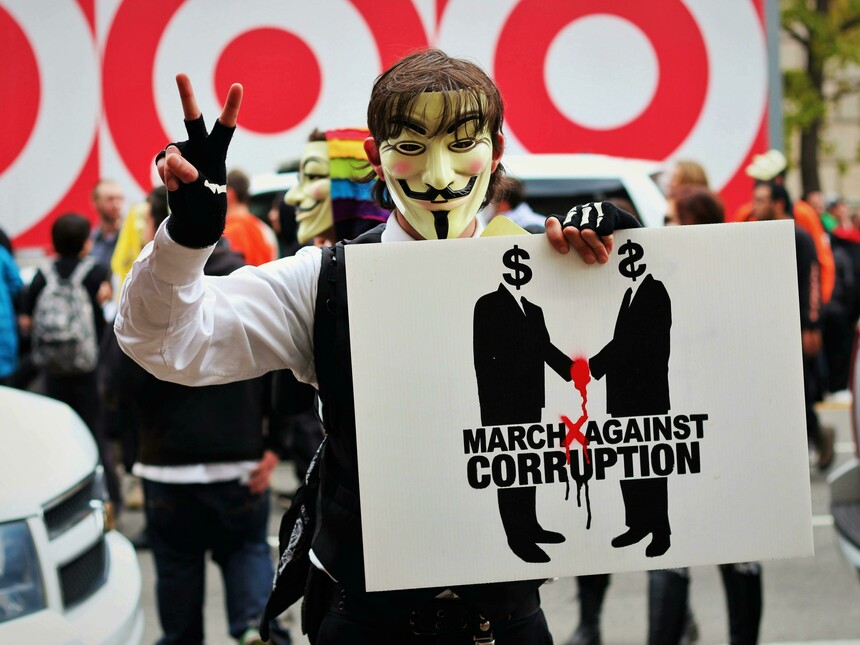
I will keep this article raw. No editing, no search for synonyms, no filter, and no attempt to sound objective, rational, or informative. My country of origin is once again standing at the crossroads of corruption, absurd money laundering, and an oligarchic fiesta shaping the realm of Bulgarian modern imperialism (without the aristocracy, of course, since most Bulgarian politicians barely reach the education level of an average 11th-grader in a public school).
Tonight, on November 27th, thousands of people took to the streets to protest the newly approved public budget for 2026.
In 2026, our nation will have to say goodbye to our elegant banknotes and accept the single European currency—the euro. Theoretically, this is always a good step toward European integration and development, and most pro-European specialists support this transition. However, transitioning to the euro requires fiscal discipline, transparency, and trust—three things our political class chronically fails to deliver. It is crucial that the government be stable enough to lead the country and withstand the economic challenges ahead during the transition years… Do the words “corruption,” “money laundering,” and “economic leadership” even belong in the same sentence?
I am not going to economically assess this issue—it’s not the subject of this piece, nor do I have the space to unpack it fully. So here is the simplified version: Major financial support will come from Brussels to help Bulgaria navigate this period, yet the “common decision” our politicians reached was to raise taxes on the general public and plan to spend almost 50% of the country’s GDP. How do you prepare a country for the euro while draining its people dry?
Anyone with even basic economic knowledge understands that raising taxes right now, without supporting citizens, will make everyday goods more expensive, force people to work twice as much just to maintain their current living standards, reduce consumption, trigger recession, and then—inevitably—inflation. The problem isn’t the euro. The problem is who will be handling it.
That being said, poverty in the country will only increase while politicians continue to govern their private businesses from the top. In a country where the elderly cannot afford cheese, and children grow up without electricity, MPs own private properties abroad, seaside hotels, and mansions in the capital guarded by thuggish titans protecting the so-called “dignity” of the state.
Yes—these are the same politicians who told young doctors to work for minimum wage, who insult and threaten journalists, and who are escorted by police during protests. Because the police are always on the good side of history, right?
I spent this evening watching videos from the protests—every segment of society reacts in its own way. Some people get angry and confront the police, fully aware they might be beaten in the vans later. Others sing revolutionary songs, invoking the spirit of our national heroes and carrying that legacy onto the streets. Some use satire and sharp words, turning their slogans into cameras’ faces and imprinting their emotions into the history of photography.
There are quiet people too—those who silently gather hope from the bottom of their souls and wait to see what the next chapter of their beloved country will look like. Journalists, influencers, and actors wander the streets searching for a story, expressing their passion and values, and believing they can create change through the channel of information.
And yet, every single one of them fears that this protest will be just another one—forgotten, dismissed, erased. That soon they will wander the supermarket aisles the same way they stood in front of parliament today: looking desperately at the bread shelf as if it were a rare luxury.
I see familiar faces—people I worked with during the last big protests in 2020, when I also naively believed that this time would be different. But if we look back, our parents believed the same in the 90s. Their reward for fighting communism was recession, endless queues for bananas, and inflation shooting to the moon and beyond. Then in 2013, the nation once again believed things would change, and the reward was an even more corrupt government, reinforced by deeper oligarchic ties and the collapse of any sense of meritocracy.
In 2020, the new generation of democracy believed we could bring back the knowledge we had gathered across Europe and use it to fight injustice—and yet the system didn’t even bend, not for a second.
All these protests are a sign of unity; they bring hope that there are still people who recognize injustice. But how do you fight the power of decades of broken systems, illiteracy, and the complete absence of social policy? For the past 40 years, Bulgaria has always been in some kind of “transition,” and with every new one, the audacity of those in power grows even more. The system is not collapsing—it’s adapting, mutating, and perfecting itself.
How can you fix a country that is constantly trapped between what it once was and what it never became?
Unfortunately, as history has shown us many times, in moments of political instability, a peaceful revolution often transforms into violence. It fractures society, deepens division, and creates a desperate, almost physical hunger for change. A hunger for justice. But what is the price a society must pay to become independent?
Even in the rare success stories—when independence is finally achieved—every resource is poured into the fight itself. And when the dust settles, there is little left to rebuild the state people once dreamt of with such passion. Power fills the vacuum again, the same types of people take over, and the cycle continues until the next uprising becomes inevitable.
What does it truly mean to be free—and is freedom ever fully possible?
The core problem is structural: revolutions may change the faces in government, but they rarely change the system that sustains them. Without strong institutions capable of limiting power, enforcing accountability, and protecting citizens from abuse, every new leadership simply inherits the same broken machinery. Political scientists call this elite reproduction—the ability of the same networks to maintain influence regardless of who formally governs. Economically, instability only reinforces this cycle. Investors withdraw, state planning collapses into short-term survival, and power becomes even easier for small interest groups to capture. In such an environment, democratization becomes symbolic rather than functional, and transitions become endless precisely because nothing fundamental ever transitions.
When you understand how deeply rooted these structural failures are, it becomes clear why every new attempt at change feels both necessary and painfully fragile. And perhaps this is why today, despite all the analysis, the theories, and the political science terminology, something heavier sits in my chest—something far more personal than institutional logic. Because at some point every citizen, even the most rational one, reaches the limit where statistics stop explaining the world, and emotion begins.
So excuse my angry tone today, but today I am not a researcher. Today I am a Bulgarian reconnecting with the version of myself from five years ago, when my dreams of becoming a journalist in this country died on those same streets during another protest. Despite the skeptical analysis, I am not saying protests are bad or pointless. They are the light of hope in a country where hope is very expensive—but hopelessness costs even more.
This brings to mind a saying by Terry Pratchett: “The pen is mightier than the sword if the sword is very short and the pen is very sharp.” I never quite understood what he meant until this very moment. Maybe it has to do with the level of optimism I had back then.
And maybe this is what remains for all of us—those who left, those who stayed, and those who keep returning in thoughts to the same streets where we once believed change was possible. Bulgaria does not lack brave people; it lacks a state that deserves them. But as long as someone is out there singing, shouting, filming, writing, or simply standing still with a silent kind of dignity, the story is not finished. Revolutions may be fragile, but memory is stubborn. And if the streets cannot bend the system today, perhaps the words we carve into history will. I cannot make the sword shorter—but I can keep my pen bloody sharp.