
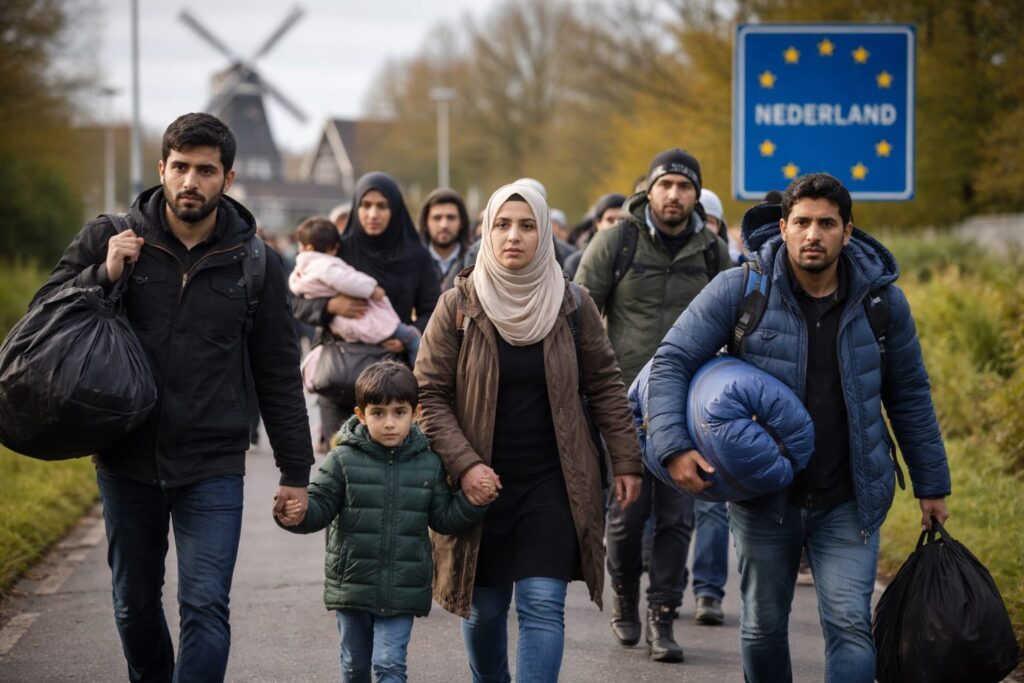
Figures published on 22 December by NOS, the Dutch public broadcaster, show the IND approved about one third of first asylum applications this year, down from 56 per cent in 2024. NOS reported that around 38,000 asylum requests were filed in 2025, with roughly 13,000 granted and about 25,000 rejected.
The reduction comes against a backdrop of falling intake. The Dutch statistics office, CBS, reported in November that 16,600 people made a first-time asylum application in the first nine months of 2025, a 33 per cent decline on the same period in 2024. Those figures measure a different time window and definition than the year-to-date totals cited by NOS, but both point to a lower volume of new claims than in 2024.
According to NOS, applications in 2025 largely came from nationals of Syria, Eritrea, Turkey, Yemen and Somalia. In the same report, an IND spokesman, Gerhard Spierenburg, said the agency still tends to grant protection “relatively easily” to people from areas affected by major conflicts, citing Eritrea and Somalia as examples, while the overall approval rate has been pushed down by changes elsewhere in the caseload.
Syrian policy shift after Assad’s fall
A central factor identified by the IND is a change in the handling of Syrian applications from mid-2025. The IND introduced a decision pause on Syrian asylum applications from 14 December 2024, following the fall of President Bashar al-Assad, and resumed decision-making from mid-June 2025 after the government reviewed country policy in light of updated country-of-origin reporting.
The IND’s “latest developments” page states that the situation in Syria was assessed as “less dangerous for many Syrians”, and that decisions resumed after the six-month stop. NOS reported that from June most Syrian applications were rejected on the basis that Syria is now considered safe for most applicants.
Developments in Syria have also influenced asylum decision-making across Europe. Earlier this month, the EU Agency for Asylum updated guidance for Syrian cases a year after Assad’s fall, suggesting that some categories of applicants may be assessed as facing reduced risk, while other groups may still qualify depending on individual circumstances.
Dublin transfers and Turkish claims
The IND also linked the falling approval rate to the application of EU rules that limit where asylum claims can be processed. Under the Dublin system, responsibility usually rests with the first EU country where an applicant was registered, meaning applicants who have already sought asylum elsewhere may be refused in the Netherlands. The applicants in that position do not receive a residence permit.
Another factor cited by NOS was the handling of applications from Turkish nationals. The IND said Turkey is not considered to be experiencing a “large conflict”, meaning applicants must demonstrate an individualised risk. As an example, the IND pointed to supporters of the Gülen movement, who may still qualify for protection if they can show they face a personal threat.
Border controls extended into 2026
The Dutch government has simultaneously pressed ahead with tightened internal border checks, arguing they help to deter irregular migration and people smuggling. The European Commission’s Schengen information page lists a Dutch temporary reintroduction of border controls from 9 June 2025 to 8 December 2025, citing pressure from asylum flows, irregular migration and secondary movements, with checks at land and air borders with Belgium and Germany.
In November, Dutch media reported the government decided to extend the intensified controls until mid-2026. The Royal Netherlands Marechaussee, which carries out border supervision, describes the measure as aimed at combating irregular migration and tackling human smuggling.
Separate track for Ukrainians after March 2027
In parallel, the Dutch government has outlined a longer-term approach for Ukrainians covered by the EU Temporary Protection Directive, which currently runs until 4 March 2027. Dutch government guidance says that, after that date, Ukrainians in the Netherlands will be able to obtain a temporary residence permit in the form of a “transition document”, valid for three years, alongside a policy focus on voluntary return when conditions allow.
For the IND, the 2025 figures underline how quickly recognition rates can shift with changes in country assessments and case mix. The agency’s year-end numbers also arrive as EU states prepare for further reforms under the Pact on Migration and Asylum, due to be phased in from 2026, which Brussels says is intended to streamline procedures and reduce backlogs across the bloc.
Post Views: 1,534