
Modern science has transformed how we study the past, allowing researchers to extract DNA from ancient bones, map buried cities through dense forests, and peer inside sealed artifacts without opening them.
Yet even with these tools, some historical mysteries remain unresolved. Not because they lack importance, but because earthquakes, climate shifts, erosion, and human activity have erased the very evidence needed to solve them, or maybe because the events themselves unfolded in ways that defy easy explanation.
From unexplained explosions and abandoned settlements to missing tombs and lost technologies, these cases sit at the boundary between what can be proven and what can only be inferred.
The seven mysteries that follow are not rooted in myth or speculation, but in real events supported by credible evidence, each offering a reminder that, despite our best efforts, history does not always yield its secrets.
The 1908 Tunguska event – Siberia, Russia
On June 30, 1908, a powerful explosion detonated over a remote region of Siberia near the Tunguska River, flattening an estimated 80 million trees across more than 2,000 square kilometers. The blast was so intense that seismic waves were recorded across Eurasia, and atmospheric disturbances were detected as far away as Western Europe. Yet no impact crater or large fragments were ever conclusively identified.
Most scientists agree the event was caused by a stony asteroid or comet fragment that exploded mid-air in what is known as an atmospheric airburst. Computer simulations and field studies support this explanation, but uncertainties remain about the object’s composition, size, and trajectory.
Competing hypotheses, including a cometary fragment rich in volatiles, persist because physical evidence is sparse. Over a century later, Tunguska remains the largest known impact event in recorded human history, and its exact mechanics are still being refined by modern planetary science.
The tomb of Cleopatra and the tomb of Alexander the Great
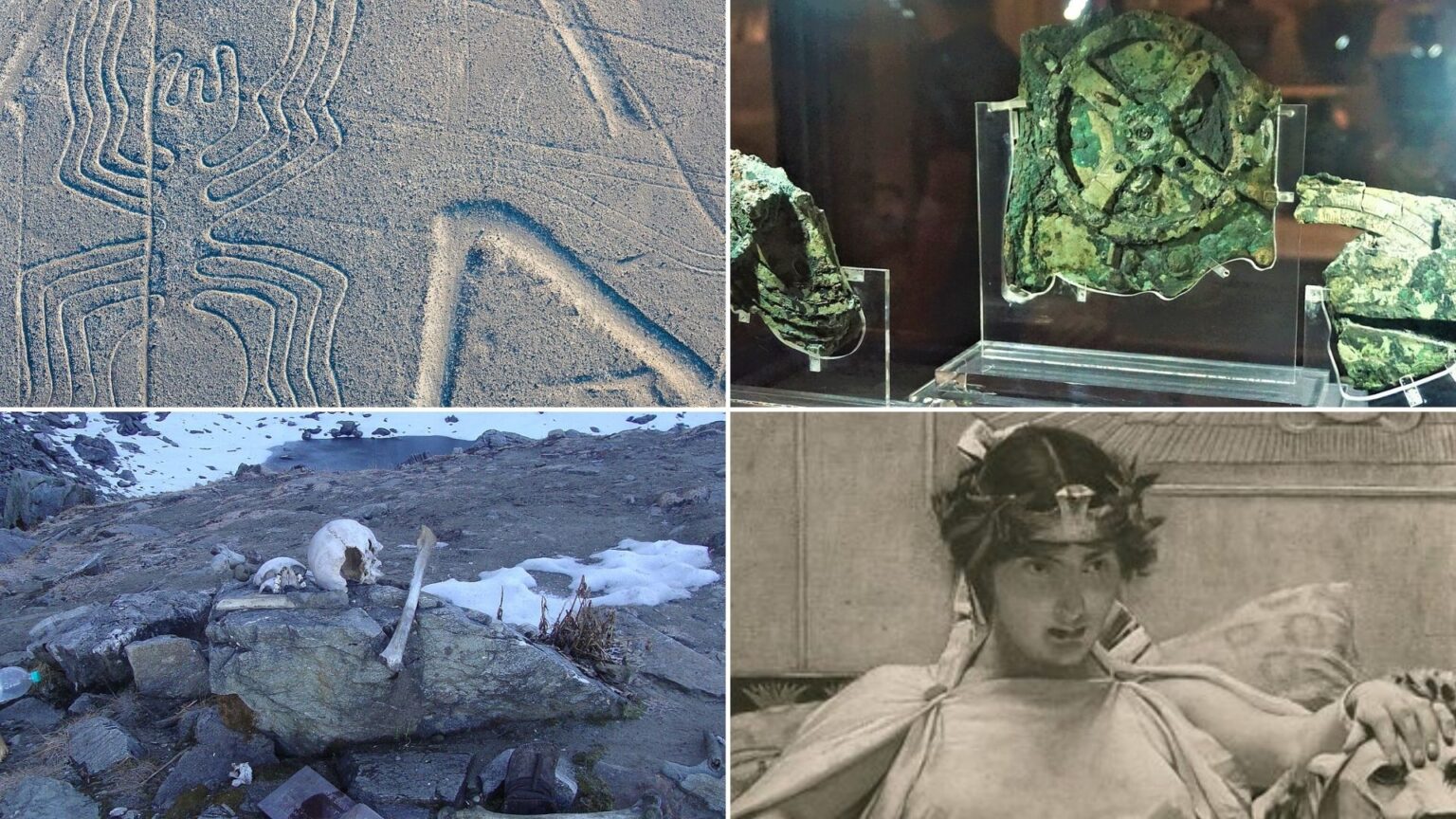
Despite centuries of exploration, the burial sites of two of antiquity’s most famous rulers, Cleopatra VII of Egypt and Alexander the Great, remain unknown. Ancient sources describe Cleopatra being buried alongside Mark Antony in a royal tomb near Alexandria, but earthquakes, subsidence, and rising Mediterranean sea levels have dramatically altered the city’s ancient landscape.
Alexander’s body was reportedly transported to Egypt after his death in 323 BCE and entombed in Alexandria, where Roman emperors later claimed to have visited it. By late antiquity, references to the tomb disappear entirely.
Archaeological searches around Alexandria and nearby sites such as Taposiris Magna have produced tantalizing clues but no definitive evidence. Urban development, looting, and environmental change have likely erased or buried the remains beyond easy recovery, leaving historians uncertain whether these tombs are still intact or lost forever.
The lost colony of Roanoke – America
Established in 1587 on Roanoke Island off the coast of present-day North Carolina, the Roanoke Colony was England’s first serious attempt at permanent settlement in North America. When Governor John White returned from a supply mission to England three years later, the settlement was completely abandoned. No bodies were found, and there were no signs of violence.
The only clue was the word “CROATOAN” carved into a post, a reference to a nearby island inhabited by Indigenous peoples. Archaeological work suggests the colonists may have dispersed and integrated into local communities due to food shortages, disease, or strained relations with neighboring groups.
However, no single explanation accounts for all the evidence, and no confirmed remains of the settlers have ever been identified. Roanoke endures as a case study in early colonial fragility and the limits of historical reconstruction.
The lost cities of the Amazon Rainforest and the collapse of the Indus Valley Civilization
For much of the 20th century, scholars believed the Amazon rainforest could not support large, complex societies. That assumption has been overturned by lidar surveys and archaeological research, which have revealed extensive networks of roads, plazas, fortified settlements, and managed landscapes hidden beneath the forest canopy.
These discoveries suggest populations in the millions may have lived there before European contact. Why these societies collapsed—whether due to disease, environmental change, or social disruption—remains unresolved.
Similarly, the Indus Valley Civilization, one of the world’s earliest urban cultures, declined around 1900 BCE. Major cities were systematically abandoned, not destroyed. Geological evidence points to shifting river systems and prolonged drought, but the civilization’s undeciphered script limits understanding of its political and social response. In both cases, advanced societies vanished without clear historical records, leaving archaeology to piece together incomplete stories.
The Nazca lines – Peru
Etched into the arid plains of southern Peru between roughly 500 BCE and 500 CE, the Nazca Lines consist of hundreds of enormous geoglyphs depicting animals, plants, geometric shapes, and straight lines stretching for kilometers. The figures are best visible from the air, raising questions about how and why they were created.
Archaeological research suggests the lines were made by removing dark surface stones to expose lighter soil beneath, a technique that has allowed them to endure for centuries in the dry climate. Leading interpretations link the geoglyphs to ritual activity, water management, or ceremonial pathways tied to seasonal cycles.
Some align with celestial events, but no single theory explains the full range of designs. Without written records from the Nazca culture, their precise purpose remains one of South America’s most enduring archaeological mysteries.
Roopkund lake skeletons – India
High in the Indian Himalayas, near a glacial lake known as Roopkund, the skeletal remains of hundreds of individuals were discovered scattered along the shore. Radiocarbon dating and genetic analysis reveal that these people did not die in a single event. Instead, they belonged to multiple groups from different regions and time periods, some separated by nearly a thousand years.
One group appears to have died around the ninth century CE, likely due to a sudden, severe weather event. Scientific studies suggest large hailstones could have caused fatal head injuries consistent with observed skull fractures.
Later groups may have been pilgrims or travelers who met different fates. While modern techniques have clarified aspects of the mystery, questions remain about why people repeatedly traveled to such a remote, high-altitude location, and why fatal events occurred there more than once.
The Antikythera Mechanism – Ancient Greece
Recovered from a Greek shipwreck dated to around 100 BCE, the Antikythera Mechanism is the most complex known mechanical device from the ancient world. Composed of interlocking bronze gears, it was used to predict eclipses, planetary movements, and astronomical cycles with remarkable precision.
Advanced imaging techniques, including X-ray tomography, have revealed inscriptions and gear systems far more sophisticated than anything previously known from that era. While researchers have reconstructed much of its function, critical questions remain: who designed it, how widespread such technology was, and why this level of mechanical knowledge disappeared for over a millennium.
The device challenges conventional timelines of technological development and stands as a rare glimpse into lost scientific traditions that were never fully transmitted to later civilizations.