
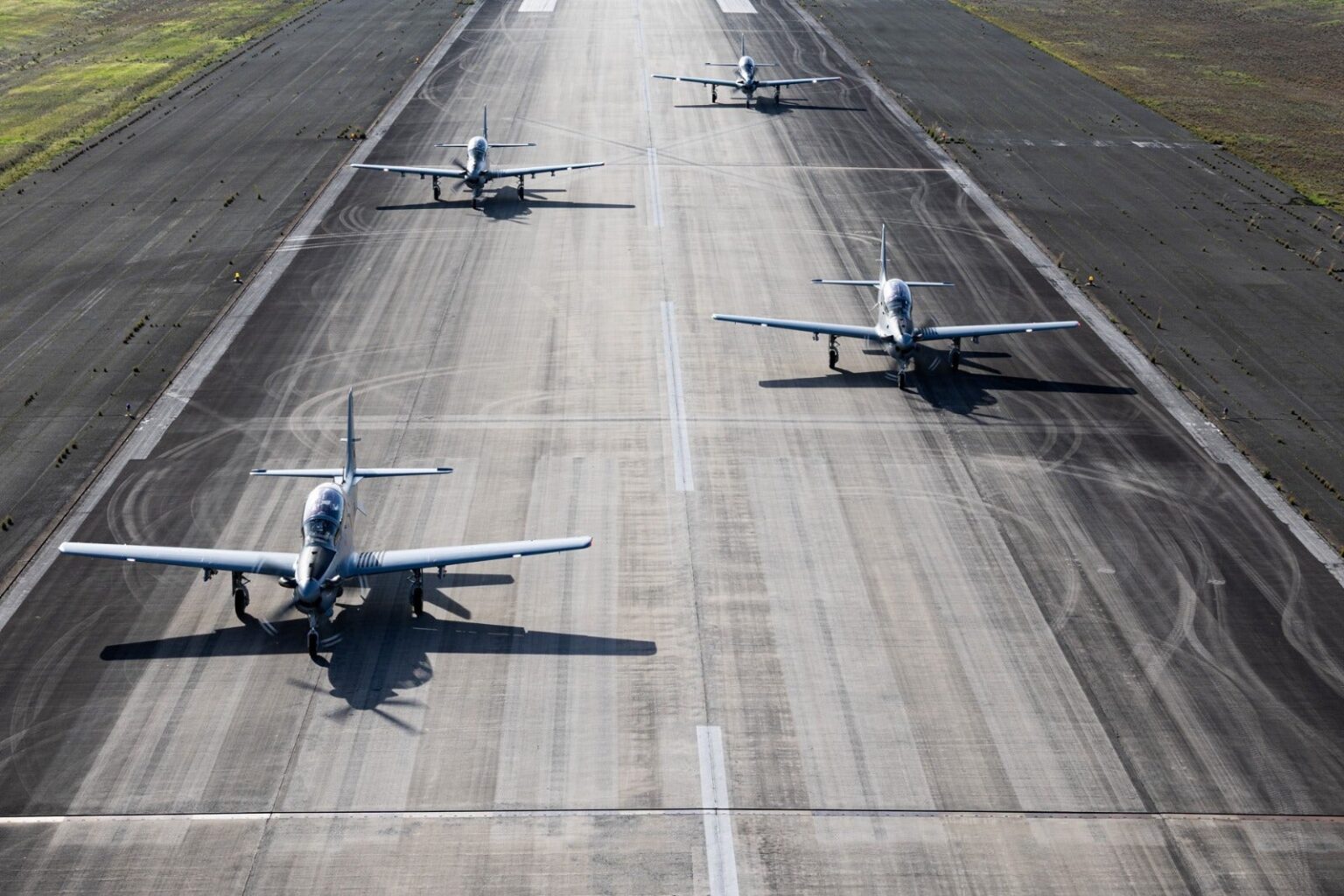
Brazilian aircraft maker Embraer has delivered the first five A-29N Super Tucano light attack and training aircraft in NATO configuration to the Portuguese Air Force. This delivery comes just one year and one day after the signing of the €200 million deal for 12 aircraft, a flight simulator, and support.
During the occasion of the delivery ceremony, Embraer and the Portuguese State also signed a Letter of Intent (LOI) aimed at the potential establishment of an A-29N final assembly line in Portugal. In its press release, the Brazilian company stated that aircraft produced at this facility would address possible demands from other European nations through government-to-government negotiations, contributing to the strengthening of the defense industrial base in Portugal and across Europe.
“The delivery of the first A-29N Super Tucanos to the Portuguese Air Force strengthens and expands the strategic partnership established between the Portuguese State and Embraer through the KC-390 Millennium multi-mission aircraft program. There is growing interest in employing the A-29 for counter-UAS missions in Europe, and a potential assembly line in Portugal paves the way for the development of new business and broader cooperation with the Portuguese defense industry,” said Bosco da Costa Junior, president and CEO of Embraer Defense & Security.
The A-29N Super Tucano, specially configured for NATO member states, is a new version of the Embraer EMB 314 turboprop light attack aircraft. As the first European operator and the world’s first operator of this version, the Portuguese Air Force will deploy the aircraft for Advanced Pilot Training, Light Attack, Close Air Support (CAS), and Intelligence, Surveillance, and Reconnaissance (ISR) missions.
In the coming days, the A-29N Super Tucano aircraft are expected to fly to Air Base No. 11 in Beja, where they will be formally handed over to the 101st Squadron, according to the Portuguese Air Force. With the aircraft’s arrival, the Portuguese Air Force will regain advanced training aircraft capabilities that it has been lacking since the retirement of the Alpha Jet in 2018.