
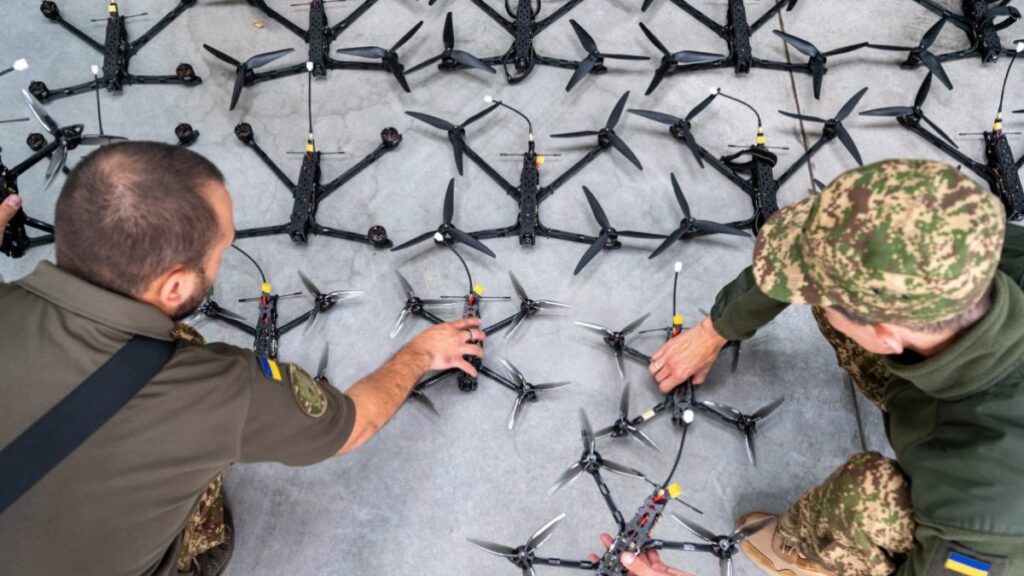
Officials from Latvia, Estonia, Lithuania, and Finland reveal to The i Paper how they are preparing for war
When eight of Europe’s leaders gathered in Helsinki earlier this month, they came away with one overriding message: Europe’s security depends on its eastern front.
Countries bordering Russia are demanding greater support from across the Continent to strengthen counter-drone systems and border defences, amid a growing belief that Vladimir Putin could seek to attack a Nato ally.
At the Helsinki summit, leaders pushed forward plans for a robotic, unmanned military shield designed to stand between them and Vladimir Putin’s war machine.
Russia’s escalating hybrid attacks on the region, including recent military drone incursions into Poland, have injected urgency into the plans.
Finland’s Prime Minister, Petteri Orpo, said: “No one is going to do this on our behalf,” urging that increased defences across the border with Russia will “increase stability and security throughout Europe”.
The i Paper spoke to six officials from Latvia, Estonia, Lithuania, and Finland, and reviewed leaked documents detailing plans for the drone wall, to show how eastern-flank nations are preparing for war at a pivotal moment for European security.
Protection of land, air and sea – by 2028
The officials agreed that Russia’s aggression toward Europe and Nato remains the region’s top security concern, whether peace is found in Ukraine or not.
Sven Kilemet, deputy director at the unit for security policy and crisis management at Finland’s Ministry of Foreign Affairs, said the country’s focus on resilience “is not dependent on one time or threat scenario”.
He added: “As long as Russia will not commit to its international obligations, Russia will remain a threat to European security even if its war in Ukraine would end.”
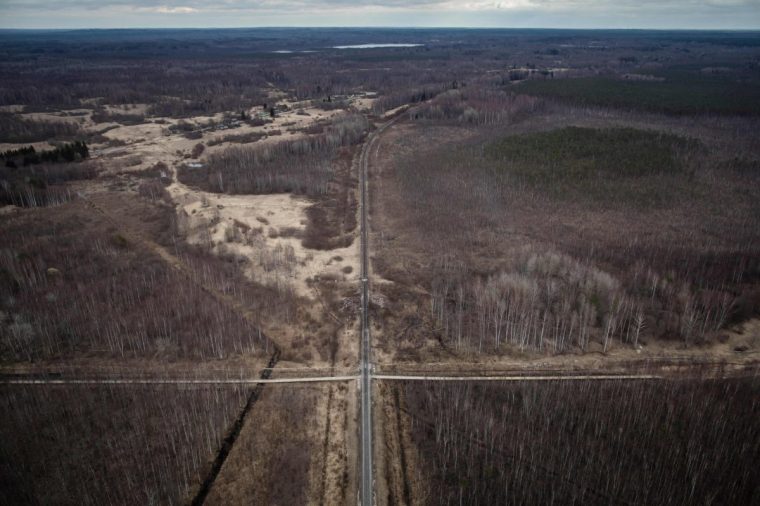 The Latvia-Russia border. Latvia joined Nato and the European Union in 2004 – but is geographically closer to Moscow than Brussels (Photo: Wojtek Radwanski/AFP)
Martin Roger, the undersecretary for political affairs at Estonia’s foreign ministry, said his country had a “sober assessment” of Russia’s threat to Europe. “We Estonians, we like to say we do not fear, we prepare,” he added.
Part of that preparation has come from the European Commission in the form of a “defence readiness roadmap”, and four flagship defence projects aimed at bolstering Europe’s defences by 2030.
Two were deemed especially urgent – the European Drone Defence Initiative, known as the “drone wall”, and Eastern Flank Watch, which aims to “fortify the EU’s Eastern borders across land, air and sea”. Both projects are expected to be fully functional by the end of 2028.
A robotic military
The plans draw inspiration from Ukraine’s use of a “drone wall” – layering military and surveillance unmanned aerial vehicles (UAVs) ahead of frontline troops so Russian assaults can be halted while limiting human exposure.
A Lithuanian defence document seen by The i Paper outlines how fully autonomous drones would monitor and engage hostile forces along the border.
It states that a drone wall “is not an option but a necessity”, describing it as a “rapid, flexible, and relatively inexpensive solution” that would become “a cornerstone of Lithuania’s deterrence and defence”.
“We need a system that is fast, responsive, autonomous, and capable of striking before the enemy even makes a decision,” the document states. “Lithuania must consistently move toward the robotization of its military, as these technologies will act as a multiplier of national defensive power in the future.”
The plans require 10 key elements for the wall under an “Unmanned Systems Batallion”, from early detection sensors to short, medium and long-range drones working attacking targets, delivering aid, and surveilling across land, sea and air.
Close-range UAV’s can be activated within seconds to scout targets and act as “kamikaze” drones with explosives, while larger aircraft can drop bombs and mines, perform “aerial mining functions,” creating obstacles along enemy movement routes, and deliver ammunition, medical supplies, food to the front line.
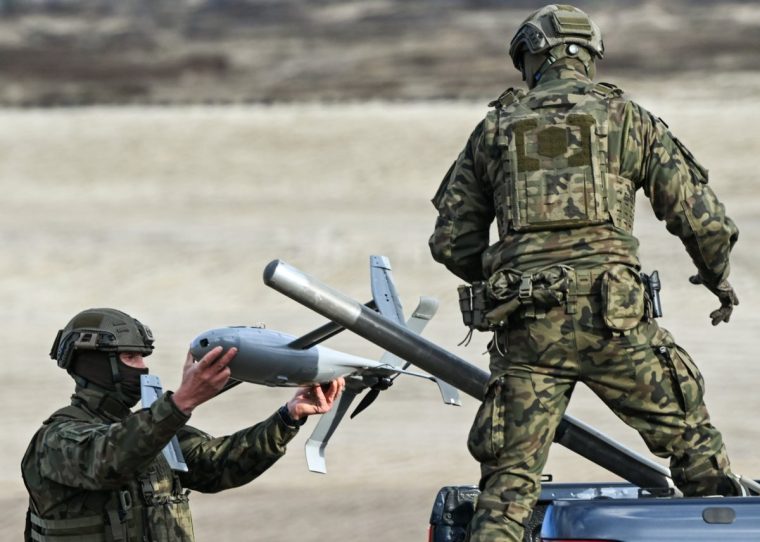 Polish soldiers prepare an AS3 Surveyor interceptor drone – part of the US counter-drone system Merops – during a Nato drill (Photo: Artur Widak/NurPhoto)
The system is designed to counter both overt military attacks and slow-moving, well-camouflaged objects. It combines “physical, electronic, unmanned, and artificial intelligence components” with a goal to “remove humans from the first-response chain and allow technology to react faster than the enemy can act”.
Ukraine’s besieged cities have become a live theatre to build and test new UAVs capable of seeking out and attacking targets without direct human control. Drones are believed to have caused around 80 per cent of casualties inflicted on Russian forces, many guided remotely to their targets.
Sir James Everard, Nato’s Deputy Supreme Allied Commander Europe until 2021, said an eastern-flank drone wall ensures the region’s “defensive dominance” so it can defend “every inch” of the alliance’s territory.
How civilians will be involved
As part of building resilience, Nato allies are looking to Taiwan for inspiration. Facing the threat of invasion from China, the island has focused on preparing non-military elements of society for defence.
James Appathurai, interim director of Nato’s innovation hub, Diana, told The i Paper that building an “absolutely impregnable system” across Europe’s eastern flank “is going to be an extremely difficult thing to do”.
He said military planners are working closely with civilian sectors to counter drone threats.
“The people who are most expert at defending against that kind of threat are the people who run prisons, because prisons are getting drones every night,” he said. “So they actually know what they’re talking about and are offering expertise.”
He pointed to Ukraine’s use of citizen-powered apps to help track hostile drones and missiles, with civilians reportings sightings via their smartphone’s GPS and camera, feeding real-time data to air defence for quicker interception.
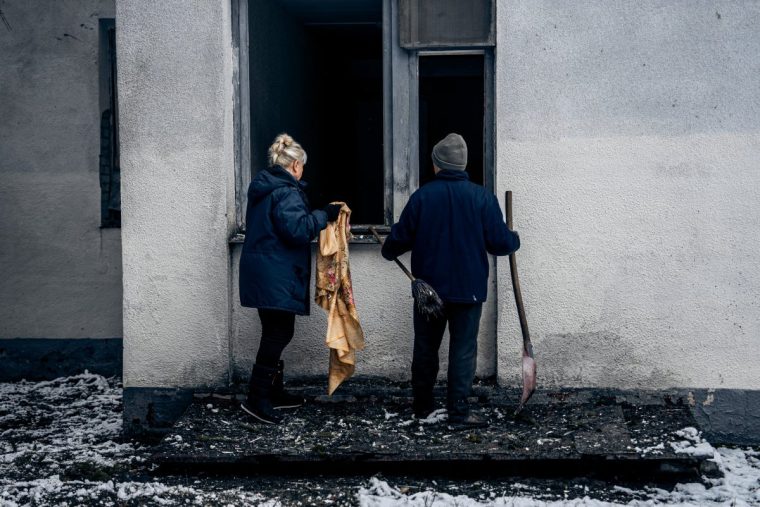 The result of drone attacks are clear in Ukraine – this was one on a health camp in Sumy (Photo: Pavlo Zarva/Kordon.Media/Global Images Ukraine)
He said: “Instead of getting two or three points of information, the air defence people have 1,000 or 2,000. They know direction, they know travel, they know speed. So you can get everybody involved, even in drone defence.”
Foreign ministries across the eastern flank see this “whole-of-society” approach as central to deterring Moscow. Lithuania said that informing the public about Russia’s security challenges helped citizens “actively support response measures”, while Latvia stressed that a whole-of-society and whole-of-government approach was “key to ensure these mechanisms and strategies function smoothly”.
Wavering US support
The urgency of European nations reflects the growing concern about US commitments to the region’s security under Donald Trump.
The President’s second term in the White House has shattered long-standing US assurances for Nato and European security, with repeated criticism of European defence spending and threats to withdraw support if allies fail to increase contributions.
Marko Mihkelson, chairman of foreign affairs committee of Estonia’s Parliament, said the alliance relationship between the United States and European countries is “no longer taken for granted”, adding that Trump would prefer to see the EU’s “disintegration”.
He told The i Paper: “Estonia must therefore continue active diplomatic engagement toward the US together with like-minded allies to prevent fractures within Nato, while simultaneously strengthening both our own and Europe’s overall deterrence and defence capabilities.”

Trump’s rhetoric against the decades-long alliance has pushed members to pledge to spend 5 per cent of their economic output and shocked European nations into building up their own resilience.
Kilemet, from Finland’s foreign ministry, said: “we are moving towards a new Nato” which will “become more balanced and more European.
“Nato is returning to back to its roots, to its core task. To making our deterrence and defence even stronger.”