
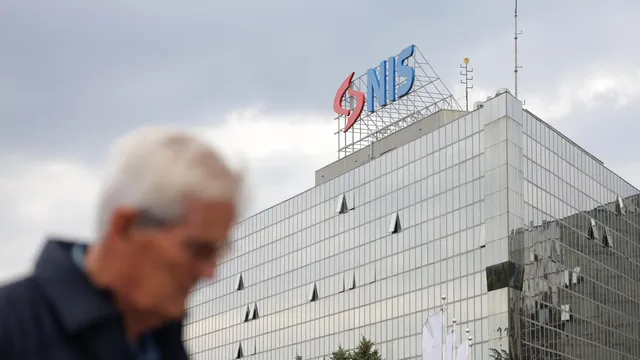
US sanctions on NIS have forced the country to import large quantities of fuel on a daily basis and stressed that the problem of energy supplies must be resolved as quickly as possible.
The US Treasury Department’s Office of Foreign Assets Control (OFAC) has issued a license to Serbia’s oil company Naftna industrija Srbije (NIS), extending the deadline for negotiations on the sale of the Russian stake in the company until March 24, 2026.
Under the decision, OFAC does not authorize NIS to conduct regular commercial operations while talks are under way to identify a potential new majority owner.
Serbian President Aleksandar Vučić said US sanctions on NIS have forced the country to import large quantities of fuel on a daily basis and stressed that the problem of energy supplies must be resolved as quickly as possible.
Unable to import crude oil, the Pančevo refinery — Serbia’s only refinery and NIS’s most important production facility — was shut down on December 2.
A fund based in St. Petersburg, Russia’s state-owned gas giant Gazprom and its subsidiary Gazprom Neft together hold 56.15% of NIS shares. The Serbian state owns 29.87%, while small shareholders hold just under 14%.
US sanctions against NIS took effect on October 9, aiming to prevent Russia from using energy revenues to finance its war in Ukraine. The US administration has made the removal of Russian ownership a condition for lifting the sanctions on NIS. Until October, Washington had repeatedly postponed the implementation of the embargo.
Russian President Vladimir Putin said on December 19 that Gazprom Neft has invested more than $3 billion in NIS and that dialogue with Serbia is ongoing to resolve the issue surrounding the company.
In recent months, officials from Hungary and Serbia have said that Hungary’s MOL and ADNOC of the United Arab Emirates have expressed interest in acquiring NIS.
NIS was sold to Gazprom in January 2008 under an intergovernmental agreement between Russia and Serbia on cooperation in the oil and gas sector, for €400 million. There is currently no official information on the market value of the Russian stake in the company.
Serbia remains heavily dependent on Moscow for energy supplies, with NIS providing around 80% of the domestic market with petroleum products, while roughly 80% of the country’s natural gas for households and businesses is purchased from Russia. Belgrade and Moscow maintain close political, economic and military ties. | BGNES