
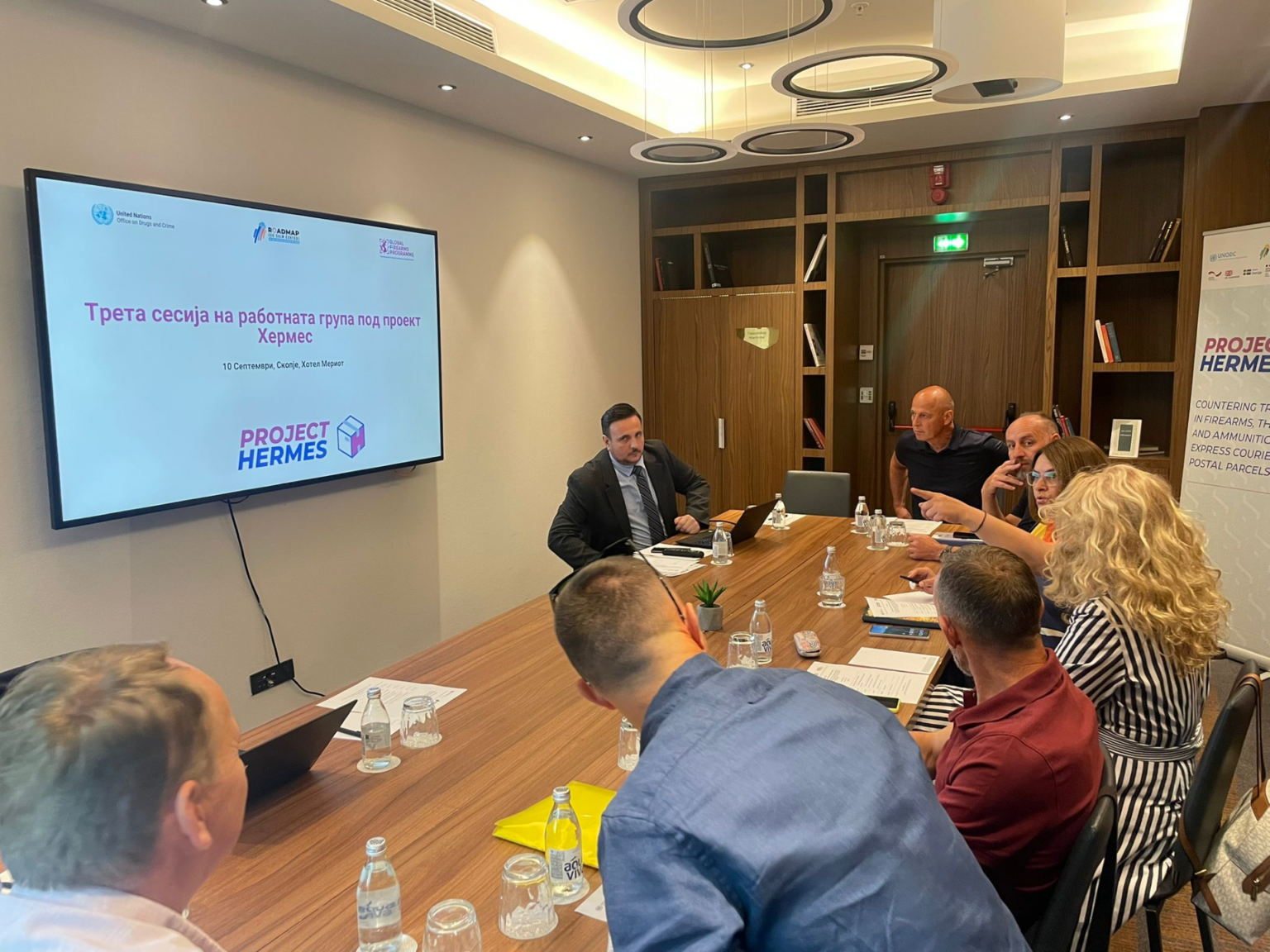

On 10 September 2025, customs and postal authorities of North Macedonia convened in Skopje for the third session of the inter-institutional Working Group established under Project HERMES.
Facilitated by UNODC’s Global Firearms Programme, the Working Group brings together the Customs Administration and the Post of North Macedonia to advance the implementation of the Memorandum of Cooperation and Standard Operating Procedures (SOPs) for detecting firearms, their parts and components and ammunition in postal shipments.
During this regular session, discussions focused on the upcoming delivery of an X-ray scanner, including preparations for its installation and operational use. Members of the Working Group also reviewed draft reporting templates designed to standardize the collection of data on detections, seizures and suspicious parcels, as well as a proposed set of Rules of Procedure to guide the internal functioning of the group.
In addition to national updates, participants benefited from regional exchanges of positive practices. Recent cases of detection of firearms and drugs in postal parcels from Albania demonstrate the value of close cooperation between customs, postal operators, prosecution offices and the police in the effective use of special investigative measures, particularly controlled deliveries.
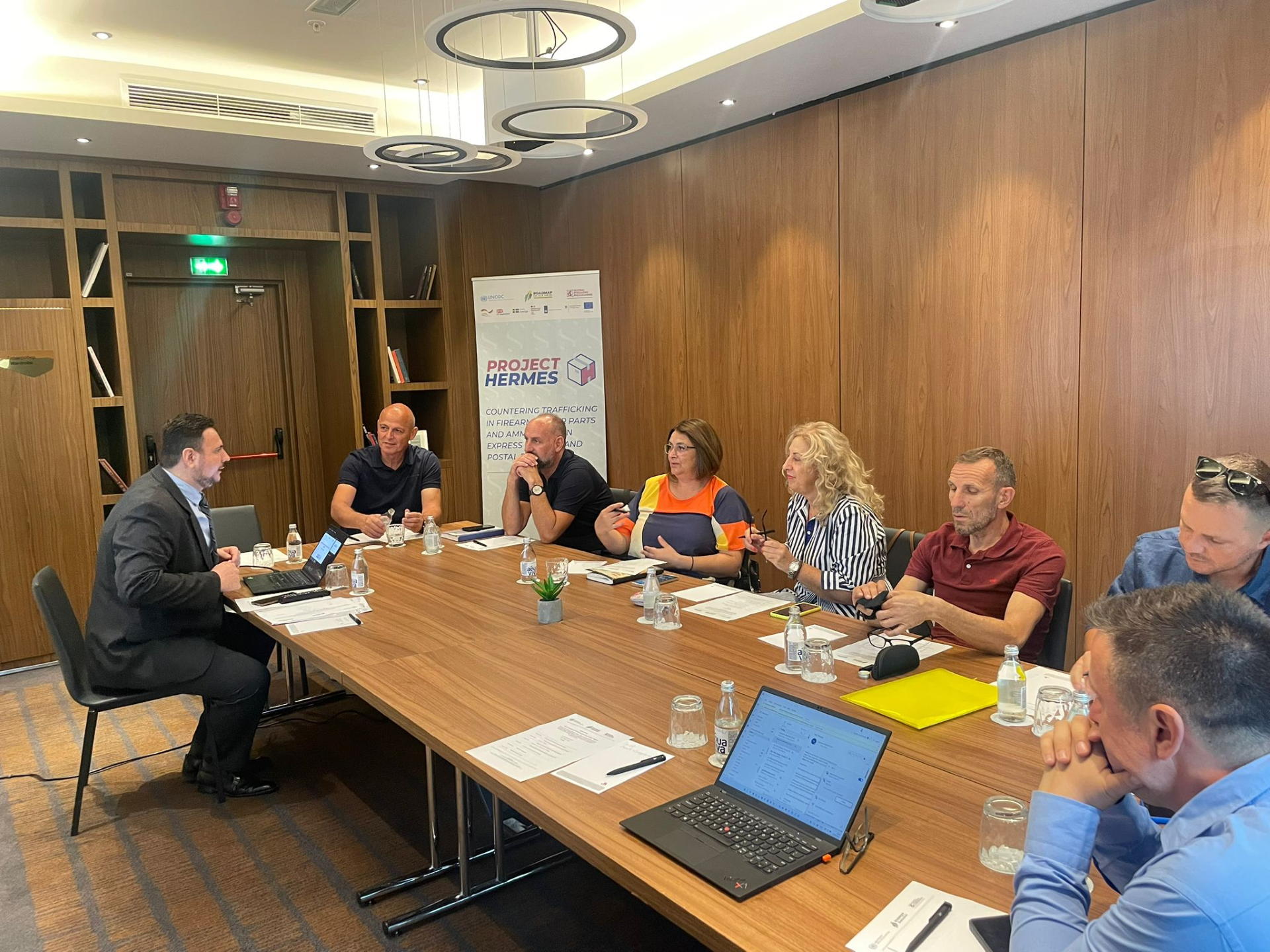
Based on the experience in Bosnia and Herzegovina, UNODC presented standardized templates for information exchange that have improved the speed and accuracy of inter-agency communication and operational responses.
These examples underscore the importance of learning from regional peers and adapting proven methods to the North Macedonian context. By drawing on such experiences, the Working Group aims to strengthen inter-agency coordination and enhance the detection of illicit firearms trafficking through postal channels.
The activity forms part of UNODC’s broader support to the Western Balkans under the SALW Control Roadmap, which seeks to enhance institutional capacities to counter firearms trafficking.
This activity is implemented with financial support provided by Germany, the United Kingdom, Sweden, France, the Netherlands and Norway through the Western Balkans SALW Control Roadmap Trust Fund and supported by the European Union.