

Serbian President Aleksandar Vu?i? has stated that Belgrade had expected big steps forward from the administration of United States President Donald Trump, but that such an impact has not been felt so far.
“When we talk about tariffs, when we talk about sanctions against NIS, none of this has been in the interest of Serbia. At the same time, when we faced difficult moments, we did not receive that support either from other great powers, or from the East, or from the EU,” Vu?i? said at the opening of the Conference of Ambassadors of the Ministry of Foreign Affairs in Belgrade.
The United States imposed sanctions in October on the Oil Industry of Serbia (NIS), Serbia’s main oil and gas company, due to Russian ownership.
On the other hand, Russia has not shown any willingness to sell its majority stake in NIS in order to enable the lifting of sanctions and help Serbia avoid a gas crisis.
Russian President Vladimir Putin said days ago that Moscow ” has ideas ” on how the NIS could get out of the crisis, but he did not provide details.
Regarding the US tariffs on foreign products, which Trump imposed in April 2025, of the Western Balkan countries, Serbia is the most affected.
US tariffs on Serbia have since been 37 percent, or two percent higher than the new tariffs imposed on products from Bosnia.
Speaking about the various problems facing Serbia , Vu?i? said that any of the great powers could have said in ” difficult moments for Serbia ” that they were by its side, but that each had its own additional reasons for pressure, expecting even more from Belgrade and ” demanding a lot, while giving nothing ,” Serbian Radio-Television broadcast.
“We have understood this message well and I think it is important that we have understood it well, knowing that we cannot be alone in the world. Therefore, we are on the European path and we will remain on the European path, at least as long as I am president and as long as there is this parliamentary majority, but this is a lesson for us,” Vu?i? said, among other things.
Over the past four years, Serbia has not opened any chapters in negotiations with the EU, which began more than ten years ago.
The latest conclusions of the Council of the European Union state that the path towards the EU is Serbia’s strategic goal, but that reforms have slowed down, while progress in justice and the fight against corruption is minimal.
In his speech to the ambassadors, Vu?i? accused the countries of the region of acting against Serbia, questioning their right to cooperate militarily.
He has previously accused Albania, Croatia, and Kosovo of creating a “military alliance,” after these three countries in March signed a joint declaration to strengthen cooperation on security challenges, hybrid threats, and other risks that could jeopardize regional stability.
“Why have they expanded these military agreements with Slovenia and why have they tried so hard to include Bulgaria in these processes? It is completely clear that they did not do this for some newspaper story. On the contrary, even when I talked to the NATO Secretary General and people in the EU, everyone shrugged their shoulders,” Vu?i? declared.
According to data from the Stockholm International Peace Research Institute (SIPRI), Serbia in 2024 invested the most in military purposes, compared to all other Balkan countries.
In 2024, Serbia has allocated $2.2 billion for the military, which constitutes 2.6 percent of the gross domestic product.
However, Vu?i? said that “the Americans are clearly and openly arming Albanians in Kosovo, as is Turkey.”
“The only goal is the direct threat to Serbia and its territorial integrity and, of course, attacks on the civilian population and military-police structures of Serbia. There is no other goal. Why is there so much armament of the Republic of Croatia? A continuous and permanent campaign against Serbia and the Serbian people,” Vu?i? stressed.
The most serious armed incident in recent times in the Western Balkans region occurred in September 2023 in northern Kosovo, when a group of armed Serbs attacked the Kosovo Police in the village of Banjska, killing a police sergeant. Three attackers were also killed.
Kosovo politician and businessman Milan Radoi? claimed responsibility for the attack, and has since been in Serbia, where he has not been prosecuted to date.
There have been no attacks from neighboring countries on the territory of Serbia.
Vu?i? also accused Kosovo and the major powers of not respecting anything that has been signed so far within the framework of the Brussels dialogue between Belgrade and Pristina.
The last agreement was reached precisely by Vu?i? and the Prime Minister of Kosovo, Albin Kurti, in February 2023.
The implementation of that agreement, for the normalization of neighborly relations, never began.
Contrary to the agreement reached at the time, according to which Serbia would stop the campaign to de-recognize Kosovo, Vu?i? warned that Serbia “will have to continue the difficult and tedious work of canceling the recognitions.”
“For us, Kosovo and Metohija are an inalienable part of Serbia – that’s how it has been and that’s how it will be, and I know it’s not pleasant when you have to talk about this in London or Washington… But that’s how it is, so please let’s not have a debate about this, let’s not have conversations,” Vu?i? said.
In 2025, more countries recognized Kosovo. Kenya, Sudan, Syria and the Bahamas recognized its independence this year, bringing the total number of countries recognizing Kosovo to 121./ REL
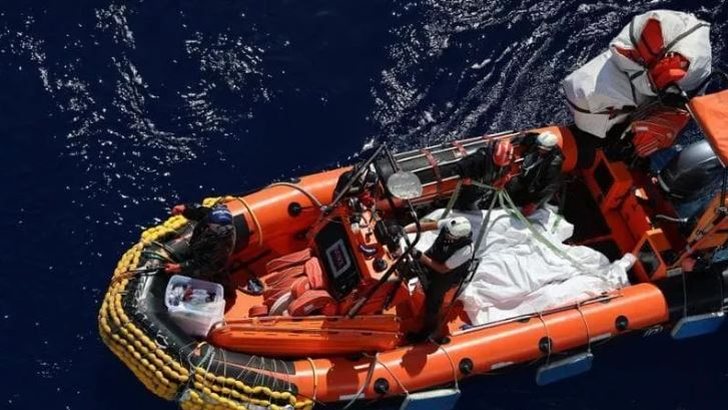
Another TRAGEDY in the Mediterranean/ Ship with migrants sinks, 116 victims reported!
Read
/ 2025-12-24 18:30:08Kosovo&World
/ 2025-12-24 17:17:37Kosovo&World
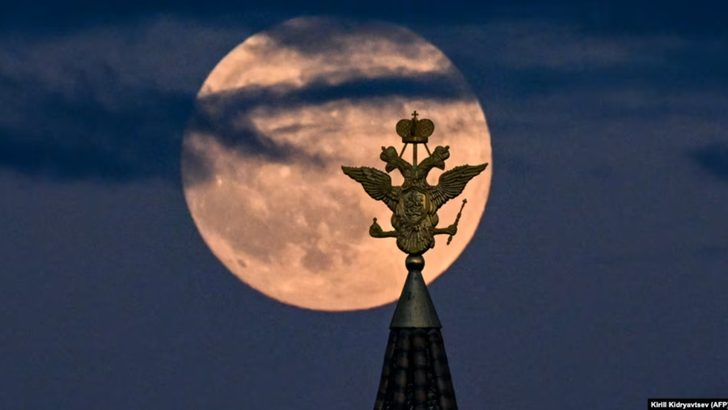
Russia aims to build a nuclear power plant on the Moon
Read
/ 2025-12-24 16:45:07Kosovo&World
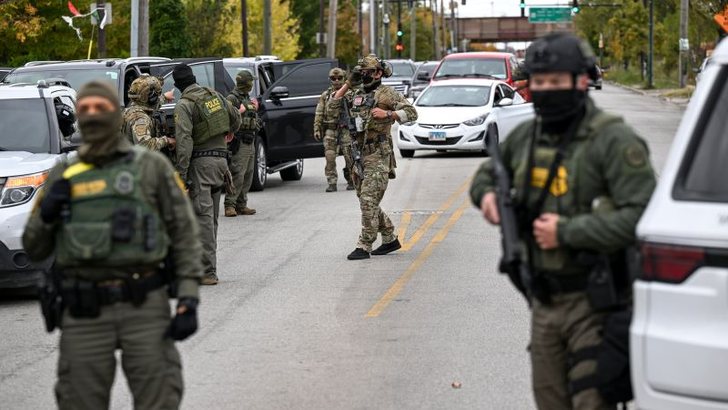
Big loss for Trump, Supreme Court blocks him from sending National Guard to Chicago
Read
/ 2025-12-24 10:59:32Kosovo&World

/ 2025-12-24 10:49:09Kosovo&World
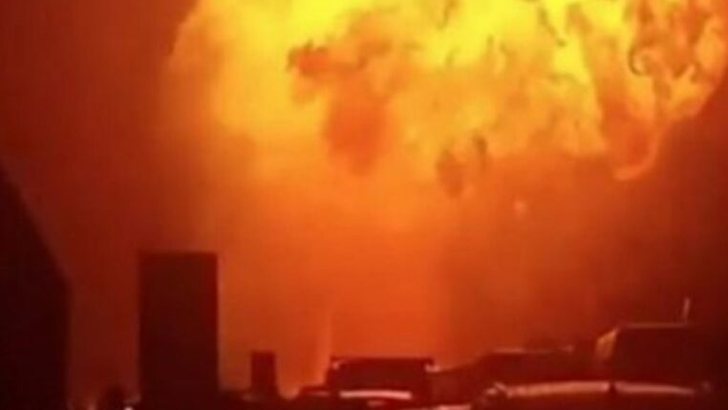
The moment a liquefied gas tanker exploded in Italy (VIDEO)
Read
/ 2025-12-24 09:33:07Kosovo&World
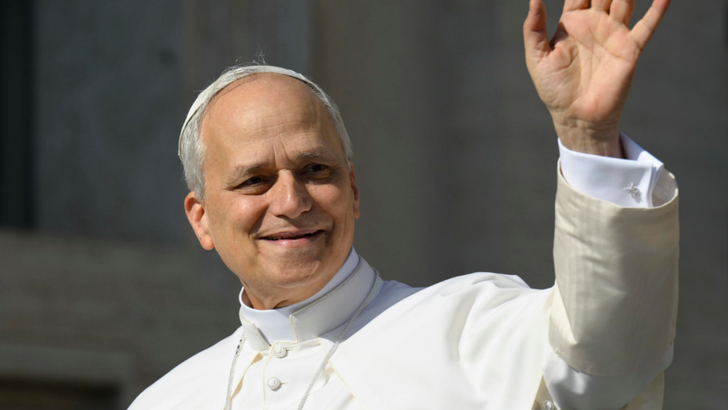
Pope and US government clash over immigration, Catholic Church against mass deportations
Read
/ 2025-12-24 08:50:54Kosovo&World
/ 2025-12-24 08:05:25Kosovo&World
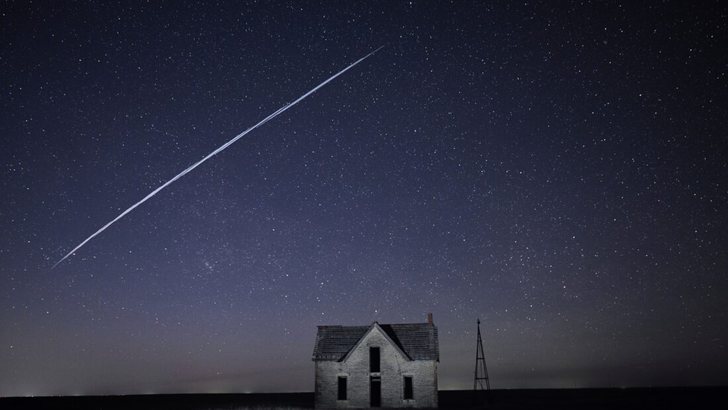
Russia is preparing for war in space, Western secret services: It could attack Starlink
Read
/ 2025-12-23 23:00:52Kosovo&World
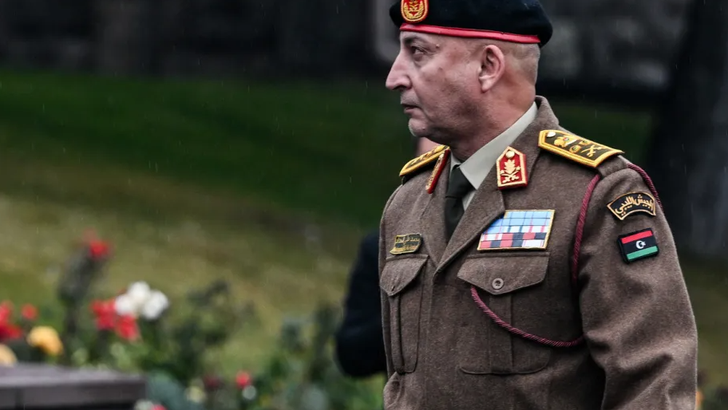
The plane disappeared from radar and crashed, the Libyan army chief dies in Turkey
Read
/ 2025-12-23 22:06:15Kosovo&World