
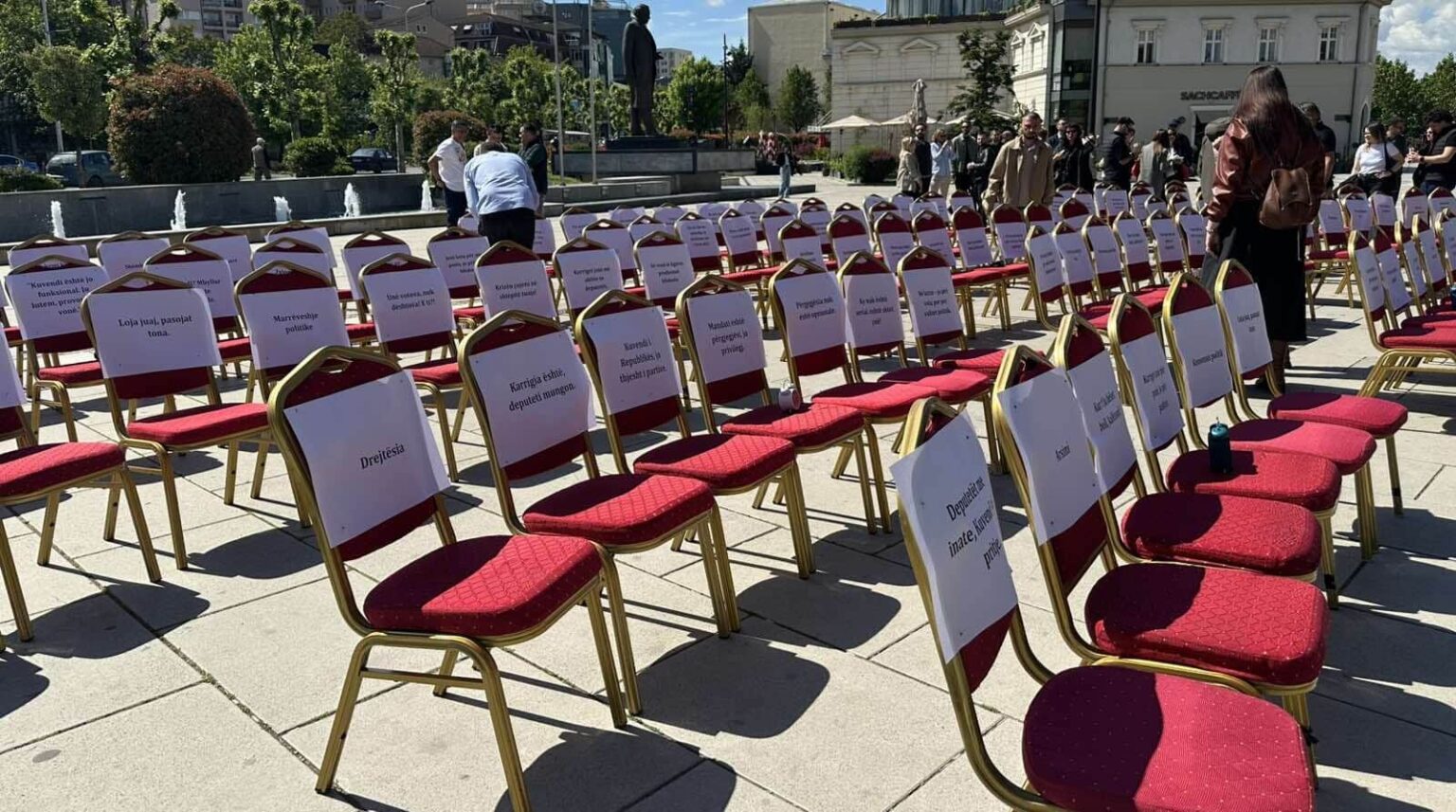
Back in February, citizens of Kosovo cast their votes hoping for political representation, institutional stability and reform progress. What followed was the longest political deadlock in Kosovo ever, putting the state on pause, freezing reforms, paralysing institutions and damaging Kosovo’s international credibility at a critical time in terms of its European perspective.
The parliamentary elections produced a clear winner but not a governing majority. Vetevendosje won 42.3 per cent of the votes, followed by the Democratic Party of Kosovo, PDK, with 20.95 per cent, the Democratic League of Kosovo, LDK, with 18.27 per cent, and the coalition of Alliance for Future of Kosovo, AAK, and Nisma with 7.06 per cent. Vetevendosje had expected to reinforce its 2021 unprecedented majority. The election night told a different story.
In such a fragmented political landscape, it was clear that building a coalition was inevitable, to form a new government. Yet, instead of seeking compromise and demonstrating political responsibility, the post-election period was marked by confrontational language and rigid positions, which led to a failure to translate the electoral results into a functional government.