
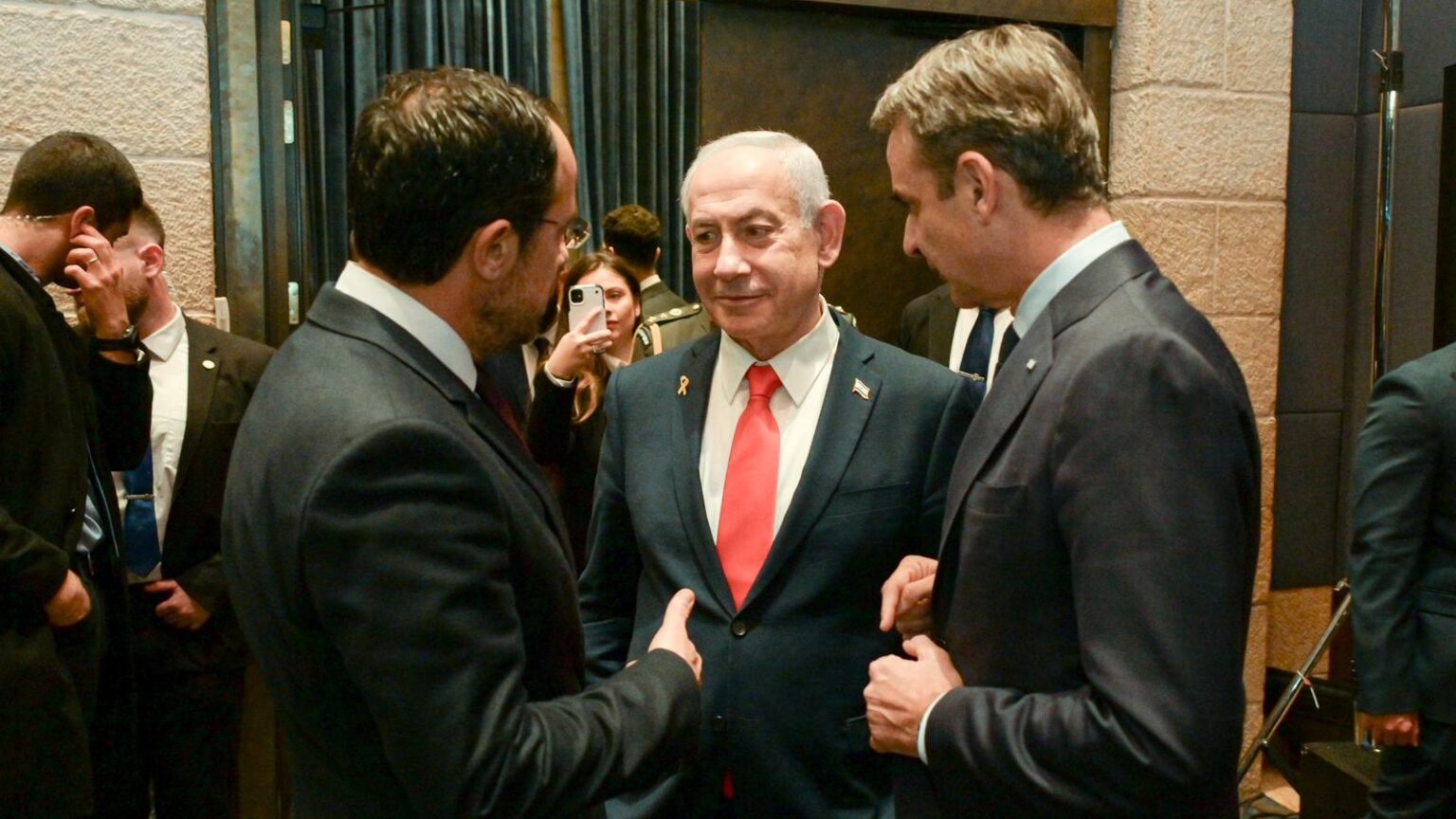
This meeting was planned immediately after last week’s revelation that Israeli Air Force Commander Bar Tomer had met with Greek Cypriot and Greek military delegations on the island. Prior to that, it was already known that in September Israel had established missile bases in Southern Cyprus against Türkiye and was planning to set up an air base there as well.
The Exclusive Economic Zone agreement signed between Southern Cyprus and Lebanon on November 26 aims both to block the Eastern Mediterranean interests of Türkiye and the TRNC through the use of €1 billion to be transferred from the European Union, and to draw Lebanon closer into Israel’s sphere of influence.
Cyprus is also important for Israel from another perspective. Netanyahu has openly stated that he wants to revive the India–Middle East–Europe Economic Corridor (IMEC) project, which was shelved during the campaign of terror in Gaza he launched following Hamas’s October 7, 2023 attack. Cyprus Island holds a strategic position for the Mediterranean passage of this extremely costly and risky project, which envisions connecting India to the Arabian Peninsula via an undersea tunnel, and from there to Israel and Greece. In other words, Israel’s military presence in Cyprus is also important for implementing this project, from which Türkiye is excluded.
Israel, Türkiye, Syria, SDF
The cheapest and most practical alternative to IMEC is Iraq’s Development Road project, supported by Türkiye, which aims to connect the Persian Gulf to both Europe and Central Asia solely through Iraqi and Turkish territory. The biggest obstacles to this project are, on the one hand, Iranian influence, and on the other, the security threat that the PKK could pose.
A byproduct of the “Terror-Free Türkiye” project—or the political solution initiative to the Kurdish issue through the disarmament of the PKK—is this issue of regional supply security.
Since October 7, 2023, Israel has been continuously attacking and seeking to expand its sphere of influence. In line with this objective, after pushing Iran into a defensive posture in Syria and Lebanon, Türkiye has now become its sole rival in the region.
The biggest obstacle to the Terror-Free Türkiye project is the SDF. After reaching an agreement with Damascus on March 10—just days after PKK leader Abdullah Öcalan’s February 27 call—the SDF began to backtrack following Israel’s message of “Resist, we stand behind you,” delivered while Israel was supporting the Druze uprising in July.
Meanwhile, the Israeli army has expanded its occupation in Syria and has positioned itself within artillery range of Damascus.
The Gaza–SDF Connection
It is no coincidence that at the press conference, Fidan stated that Türkiye stands by Syria against Israel’s political and military pressure.
Nor is it a coincidence that at the same press conference, al-Shibani emphasized that they had seen little “intent to make progress” from the SDF regarding compliance with the March 10 agreement. The provisions of the agreement were supposed to be fulfilled by December 31; only about a week remains.
Likewise, it is no coincidence that just before Ankara’s SDF-focused diplomatic push toward Damascus, Defense Minister Güler announced that Türkiye had provided Iran with intelligence during the June Israel–Iran war about the PKK transferring armed forces from Iraq to Iran.
During this process, the United States has expectations of Türkiye regarding Gaza. Following U.S. Ambassador to Ankara Tom Barrack’s contacts in Ankara on December 16, MİT Director Kalın met with Hamas officials in Istanbul, while Foreign Minister Fidan met in Miami with U.S. officials together with his Egyptian and Qatari counterparts, the other two mediators.
Will Türkiye always be the side that gives?
Meanwhile, it is of course no coincidence that the Greek Cypriot administration will assume the EU’s rotating presidency for six months starting January 1.
While hypocrisy continues in Türkiye–EU relations, a dangerous game is being escalated in the Eastern Mediterranean.