
Published on
December 26, 2025

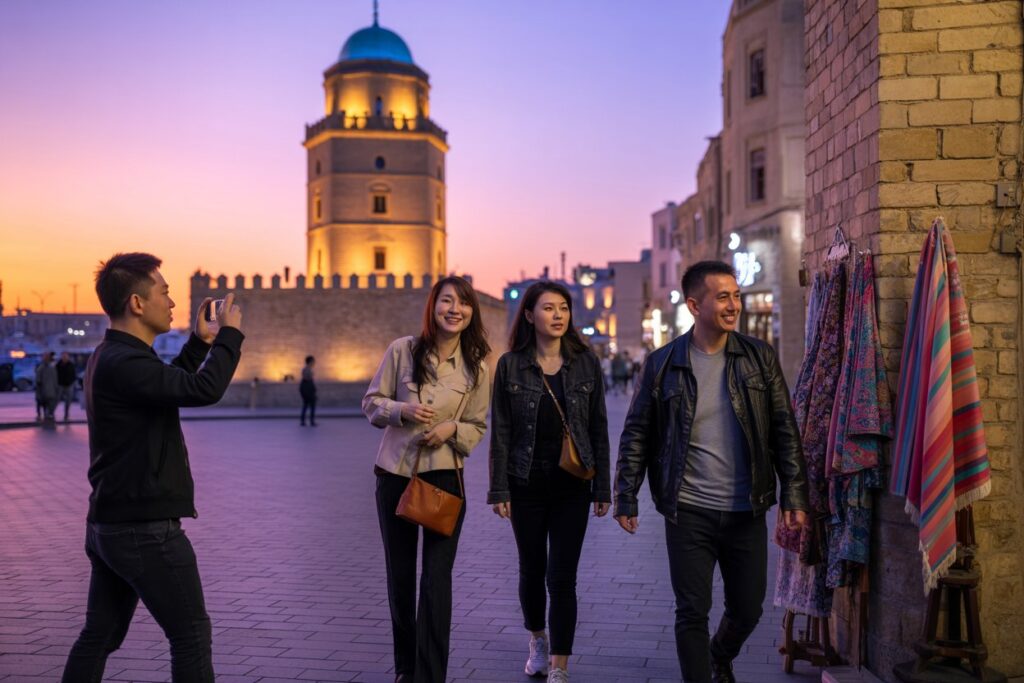
For centuries, the Silk Road served as a bridge between the Far East and the Caucasus, facilitating the exchange of silk, spices, and stories. Today, that ancient path is being retraced, not by caravans, but by a new generation of travelers. In a landmark development for Eurasian tourism, Azerbaijan has officially reported a staggering 50% increase in Chinese tourist arrivals in late 2025.
This surge isn’t a mere coincidence. It is the direct result of a strategic geopolitical and economic pivot. On December 25, 2025, the State Tourism Agency of Azerbaijan confirmed that the implementation of a one-year unilateral visa-free regime for Chinese citizens has fundamentally reshaped the country’s tourism landscape. As Azerbaijan positions itself as a premier destination for the world’s largest outbound travel market, the “Land of Fire” is experiencing a golden era of hospitality.
The Numbers: A New Record for Baku
According to the latest data from the State Tourism Agency, the growth is unprecedented. From January to December 2025, Chinese visitor numbers rose by 48.7% compared to the same period in 2024.
This brings the total number of Chinese visitors for the year to approximately 45,000, with peak months occurring during the summer and the recent December holiday season. While Azerbaijan has always been popular with travelers from neighboring Russia and Gulf nations, the rapid rise of the Chinese market represents a diversification strategy that is paying dividends.
The Catalyst: The One-Year Visa Experiment
The turning point occurred in mid-2024 when the Azerbaijani government announced a bold initiative: Chinese citizens would no longer require a visa to enter the country for stays up to 30 days. This unilateral exemption was designed to test the market’s appetite for the Caucasus, and the results have exceeded all expectations.
By removing the “bureaucratic friction”—the paperwork, the fees, and the waiting times—Azerbaijan moved from being a “niche interest” to a “top-tier consideration” for Chinese travelers. The ease of entry, combined with the launch of additional direct flights between Baku and major Chinese hubs like Beijing, Shanghai, and Guangzhou, created a seamless travel corridor.
Beyond the Capital: What Draws the Chinese Traveler?
While Baku’s mix of Parisian-style boulevards and the futuristic Flame Towers is a major draw, the 2025 report highlights a shift toward “Slow Travel” and cultural immersion.
Chinese tourists in Azerbaijan are increasingly looking for:
UNESCO Heritage Sites: The Walled City of Baku and the Gobustan Rock Art Cultural Landscape are top priorities for high-spending, culturally curious travelers.
The Silk Road Legacy: Cities like Sheki, with its historic Caravanserais and the Palace of Shaki Khans, offer a tangible link to China’s own history.
Gastronomy and Wine: Azerbaijan’s ancient wine-making traditions are gaining traction in the Chinese market, with wine tours in Gabala and Ismayilli becoming a staple of “High-Quality” travel packages.
Luxury Shopping: The premium boutiques of Neftchilar Avenue have seen a significant uptick in activity, as Chinese luxury consumers seek new destinations beyond Western Europe.
The “Human” Side of Tourism: Bridging Two Cultures
Tourism is about more than just numbers; it’s about the human connection. The Azerbaijani hospitality sector has adapted rapidly to this influx. Many major hotels in Baku now offer Chinese-speaking staff, Mandarin-language menus, and localized payment options like WeChat Pay and Alipay.
Furthermore, the State Tourism Agency has invested heavily in digital marketing on Chinese platforms like Weibo and Douyin. By partnering with top Chinese influencers to showcase the “hidden gems” of the Caucasus, Azerbaijan has successfully humanized its brand, making it feel welcoming and accessible to a demographic that values digital convenience and social proof.
Strategic Importance: A Hub Between East and West
The surge in Chinese arrivals is part of a larger vision. Azerbaijan is leveraging its position as a key node in the Middle Corridor (the Trans-Caspian International Transport Route). As trade ties between China and Europe strengthen, the “tourism bridge” follows.
The 2025 boom is seen as a pilot for 2026. Given the success of the visa-free regime, there are already discussions in the Azerbaijani Parliament about making the exemption permanent and expanding it to other key Asian markets.
Looking Forward: Can the Momentum Last?
As we look toward 2026, the goal is to reach 100,000 Chinese visitors annually. To achieve this, Azerbaijan is focusing on “Niche Tourism,” including medical tourism (the Naftalan oil baths) and winter sports at the Shahdag Mountain Resort.
The dragon has arrived in the Land of Fire, and for the local economy, the future looks bright. Azerbaijan has proven that when you open your doors, the world—especially a billion-strong market—is ready to walk through.
