
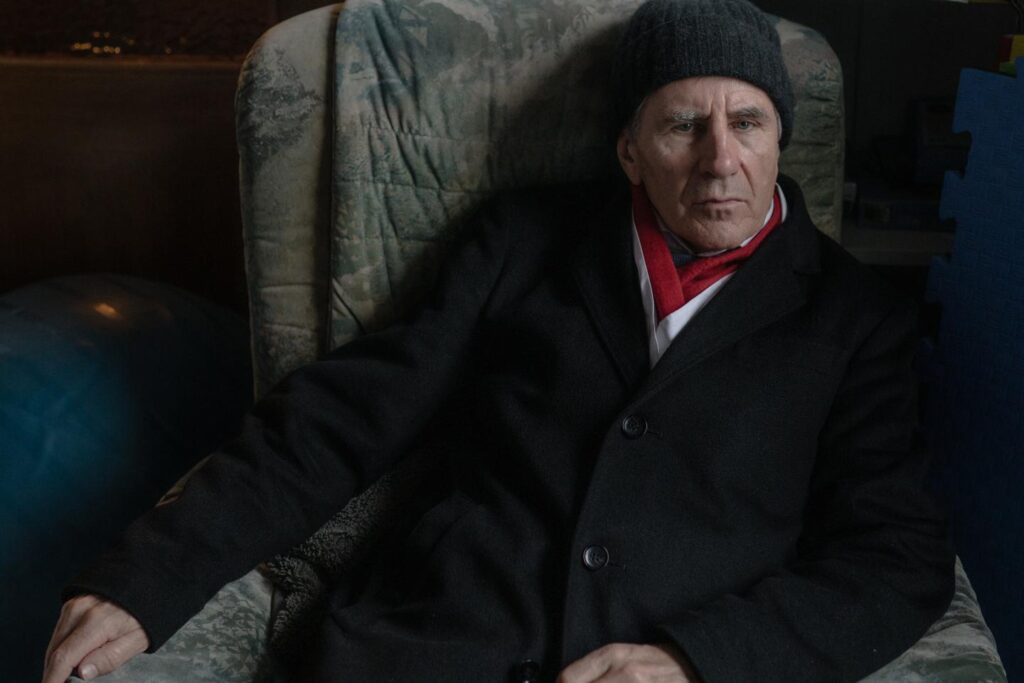
While imprisoned in Belarus, Andreï Krylou, a 63-year-old engineer, was made to wear a yellow badge on his shirt. It was how the guards identified political prisoners, whom the Minsk regime considered “extremists.” The badge displayed his name, photo, date of birth and the start and expected end dates of his incarceration. In 2020, Krylou was sentenced to five years in prison for a simple comment posted in a Telegram messaging group. He was released a few weeks before the end of his sentence, in September, along with 51 other political prisoners, and then expelled to neighboring Lithuania. “For me, this badge represents the five years of my life that were stolen from me,” he said.
Deprived, like all detainees, of housing, a passport and income and forced into exile far from his family, the opposition figure found refuge in the “castle” run by the NGO Dapamoga in Vilnius, which shelters persecuted Belarusians. At the end of December, Krylou was living there with four others who had been released at the same time as he was, in exchange for a partial lifting of US sanctions against the Belarusian airline Belavia. All five are listed among the political prisoners documented by the Belarusian human rights NGO Viasna, which monitors repression in the former Soviet republic.
According to the organization, 1,103 political prisoners remain in the regime’s custody, following the release on December 13 of 123 others, including 2022 Nobel Peace Prize Laureate Ales Bialiatski and several prominent opposition figures. However, that figure only includes prisoners whom Viasna, the Belarusian human rights organization, has been able to identify. In reality, the NGO warned, “several hundred” other Belarusians arrested for political reasons are still languishing in prison, unlisted by the organization due to a lack of sufficient information about them.
You have 80.17% of this article left to read. The rest is for subscribers only.