
Updated 4.24pm
Malta allowed Libyan coastguard vessels into its search and rescue (SAR) zone 16 times during the first six months of the year, according to an online resource tracking migration across the Mediterranean.
Between January and June, there were 242 distress calls within Malta’s SAR involving more than 10,000 people. Malta “responded to only two” of the cases, equivalent to less than one per cent, the operators of the Malta Migration Archive said.
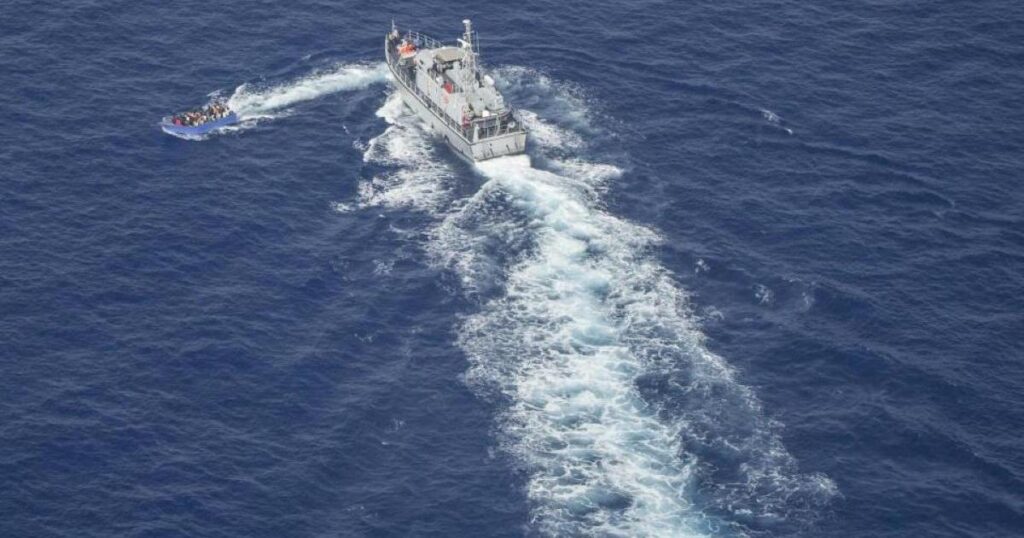
At the same time, so-called “forced pushbacks” of migrant boats to Libya “surged” as Maltese authorities allowed Libyan vessels into its rescue zone 16 times, “more than double” the number seen in the first half of the preceding year and “eight times” those seen in 2023.
Between January and June last year, some 800 people were forcibly returned to Libya, the archive said in a statement.
“These pushbacks are illegal under international law. Malta’s responsibility to assist people in distress in their SAR zone and ensure they are disembarked in a place of safety is incontrovertible.”
The Libyan coastguard is a loose collection of militias criticised by human rights organisations but sanctioned by the Libyan government.
The Malta Migration Archive is supported by organisations including the Civil Maritime Rescue Coordination Centre, human rights foundation Aditus, rescue NGO Alarm Phone, Moviment Graffiti and the UK Economic and Social Research Council.
Activists highlighted a case in February, when Alarm Phone received a distress call from a boat around 32 nautical miles south of Malta before losing contact with the boat shortly afterwards.
The NGO tried unsuccessfully to find out information about the boat, receiving “no response” from Malta’s Rescue Coordination Centre for two days, according to the archive.
Two days later, the organisation confirmed that 43 people had been intercepted in Malta’s SAR and forcibly returned to Libya.
Activists described Malta’s distress call response rate as “wanton abdication of Malta’s duty to respond to people in distress in its SAR zone”, while stressing that migrants returned to Libya faced “systematic violence”.
Treatment of migrants in Libyan detention centres includes “unlawful killings, torture and other violence, arbitrary detention, rape and other forms of sexual and gender-based violence, slavery and forced labour, extortion, and exploitation”, the statement read.
“Forced pushbacks to Libya from so far within Malta’s search and rescue zone are unprecedented and an alarming escalation of Malta’s unconscionable practices at sea.”
Archive data published earlier this year showed that rescues of migrant boats by Malta’s armed forces dropped by 90% in the years since Malta signed a secretive migration coordination deal with Libya, while interceptions by Libyan militia forces surged by a staggering 230%.
A 2023 documentary film detailed a litany of alleged human rights abuses against migrants held in Libyan detention centres.
Update: An earlier version of this article said the number of pushbacks in the first six months of the year was “almost triple” those in the preceding year. The Malta Migration Archive later clarified that the number was “more than double” while also providing comparisons to 2023 figures.