
Published on
December 27, 2025
 Silk Road Revival Routes and the Return of Cultural Travel
The Silk Road revival routes refer to modern travel corridors inspired by the ancient trade networks that once connected East Asia, Central Asia, the Caucasus, the Middle East, and Europe. Rather than recreating trade itself, today’s revival focuses on cultural continuity, heritage tourism, and cross-border travel experiences shaped by history.
These routes emphasize rail and road journeys, restored historical towns, and slower movement through landscapes once crossed by caravans. For modern travelers, the appeal lies in connection rather than speed, and in depth rather than distance.
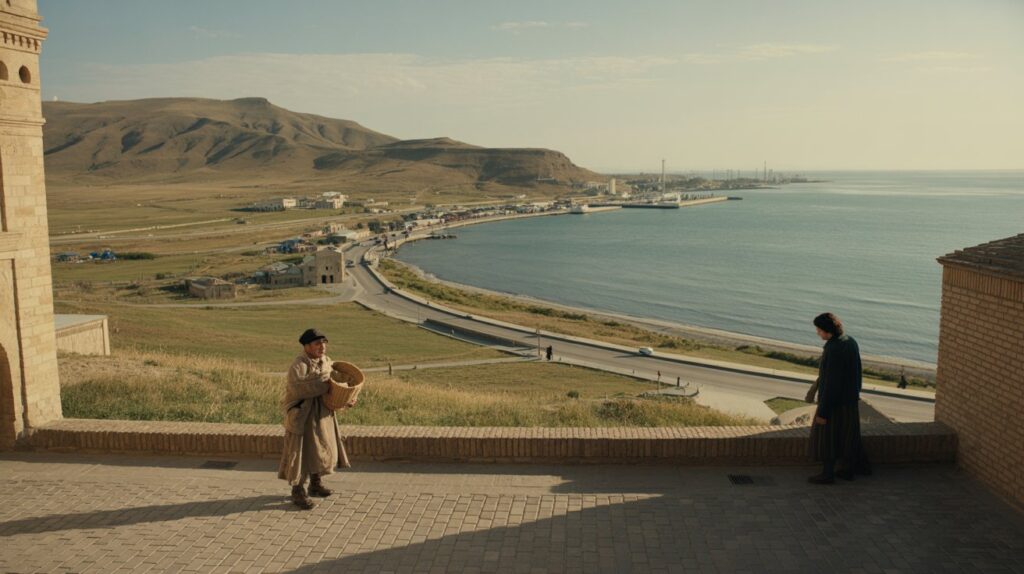
At the center of this renewed interest stands Azerbaijan, positioned along the Caspian Sea as a natural bridge between continents and cultures.
What the Silk Road Revival Represents Today
Modern Silk Road travel differs significantly from mass tourism models. The revival prioritizes experience-driven journeys that reconnect travelers with historical movement, local cultures, and regional diversity.
Key characteristics include:
- Reconnecting historic caravan routes through modern railways, highways, and Caspian Sea ferry links
- Promoting heritage towns, crafts, cuisine, and community-based tourism
- Encouraging multi-country itineraries rather than single-destination travel
- Supporting tourism through regional cooperation and infrastructure development
This approach resonates strongly with travelers interested in slow travel, cultural immersion, and meaningful overland journeys.
Why Azerbaijan Is Central to the Silk Road Revival
Historically, Azerbaijan functioned as a strategic crossroads linking multiple regions:
- Central Asia to the Caucasus and Anatolia
- Persia to the Black Sea and Eastern Europe
- Maritime Caspian trade routes to inland caravan cities
Today, Azerbaijan continues this role through geography, infrastructure, and preserved heritage. The country offers active Caspian Sea crossings, compact travel distances, and a high concentration of Silk Road-era towns within a relatively small area.
Additional advantages include improving international connectivity, simplified visa processes, and a growing focus on heritage tourism, Azerbaijan-wide. These factors position the country as a natural hub within the broader Silk Road revival.
Major Silk Road Revival Routes Through AzerbaijanTrans-Caspian Silk Road Route (East–West Corridor)
Route:
China and Central Asia → Caspian Sea → Azerbaijan → Georgia → Turkey → Europe
Key Stops in Azerbaijan:
Baku, Absheron Peninsula, Shamakhi
Baku’s historic port and Old City reflect centuries of Caspian trade, while the Absheron Peninsula preserves remnants of caravanserais and trade infrastructure. Shamakhi, once a major political and commercial center, anchors the inland route.
This corridor preserves the classic east–west Silk Road flow, combining rail, sea ferry, and road travel with strong historical continuity.
Caucasus Silk Road Route
Route:
Iran → Azerbaijan → Georgia → Black Sea
Key Stops in Azerbaijan:
Sheki, Lahij, Shamakhi
Sheki stands as one of the most iconic Silk Road towns in the Caucasus, known for its preserved caravanserai and architectural heritage. Lahij adds an artisanal dimension through its copper craft traditions, while Shamakhi contributes literary, religious, and trade history.
This route is particularly suited to slow travel Silk Road experiences, offering dense cultural heritage with fewer crowds than Central Asian routes.
Northern Silk Road Branch: Highlands and Ethnographic Routes
Route:
Central Asia → Caspian Sea → Northern Azerbaijan → Dagestan and Russia
Key Stops in Azerbaijan:
Quba region, Khinalug, Samur forest corridor
This northern branch highlights ethnographic diversity and highland landscapes. Ancient villages, distinct languages, and forest corridors provide opportunities for community-based tourism, hiking, and cultural study.
It is especially appealing for travelers interested in anthropology, rural traditions, and off-grid journeys.
Southern Silk Road Route: Persian Corridor
Route:
Iran → Nakhchivan → Mainland Azerbaijan → Caucasus
Key Stops in Azerbaijan:
Nakhchivan, Ordubad, Alinja Fortress
This route reflects deep Persian and Turkic cultural interaction. Nakhchivan preserves ancient caravan paths, while Ordubad’s orchards and urban fabric reveal a long history of trade and agriculture. Alinja Fortress stands as a strategic stronghold overlooking historic movement routes.
The southern corridor remains one of the least visited yet most historically layered Silk Road segments.
Maritime Silk Road Extension: Caspian Sea Route
Route:
Central Asian ports → Caspian Sea → Baku → Overland to Europe
Key Stops in Azerbaijan:
Port of Baku, Caspian coastal settlements
This route revives the maritime dimension of the Silk Road, offering travelers an inland-sea crossing experience rarely found elsewhere. It blends maritime heritage with overland Silk Road travel, reinforcing Azerbaijan’s role as the Caspian gateway.
How the Silk Road Is Being Revived for Tourism
Across Azerbaijan, Silk Road revival efforts focus on preservation rather than reconstruction. Historic caravanserais are restored and repurposed as boutique hotels, while towns are positioned as heritage stops rather than entertainment hubs.
Key initiatives include:
- Adaptive reuse of historic buildings
- Promotion of traditional crafts, food, and music as living culture
- Encouragement of community-led guesthouses and local guiding
- Integration of Silk Road narratives into regional tourism planning
This approach supports economic development while maintaining cultural integrity.
Sample Azerbaijan-Centered Silk Road Itinerary
Day One to Two: Baku – Old City exploration, Caspian port history, waterfront walk
Day Three: Shamakhi – Trade-era heritage and cultural landmarks
Day Four to Five: Sheki – Palace visit and overnight in a historic caravanserai
Day Six: Lahij – Copper workshops and mountain village life
Day Seven to Eight: Quba region and Khinalug – Highland Silk Road routes
Optional extensions include travel onward to Georgia or a Caspian Sea ferry crossing toward Central Asia.
Strong Story Angles for Travel Journalism
- Following the Silk Road without mass tourism
- Azerbaijan is the Caspian gateway between Asia and Europe
- The transformation of caravanserais into modern travel spaces
- Slow travel across the Caucasus Silk Road
These angles connect Azerbaijan’s local experience with global travel trends.
Why the Silk Road Revival Matters Now
The Silk Road revival routes are not historical reenactments but evolving travel corridors shaped by contemporary values. They emphasize sustainability, cultural preservation, and regional cooperation over speed and volume.
With its Caspian access, preserved heritage towns, and compact diversity, Azerbaijan stands out as one of the most authentic and accessible Silk Road destinations today. For travelers seeking depth, continuity, and meaningful movement across regions, the country offers a rare opportunity to experience the Silk Road before it becomes crowded once again.
