
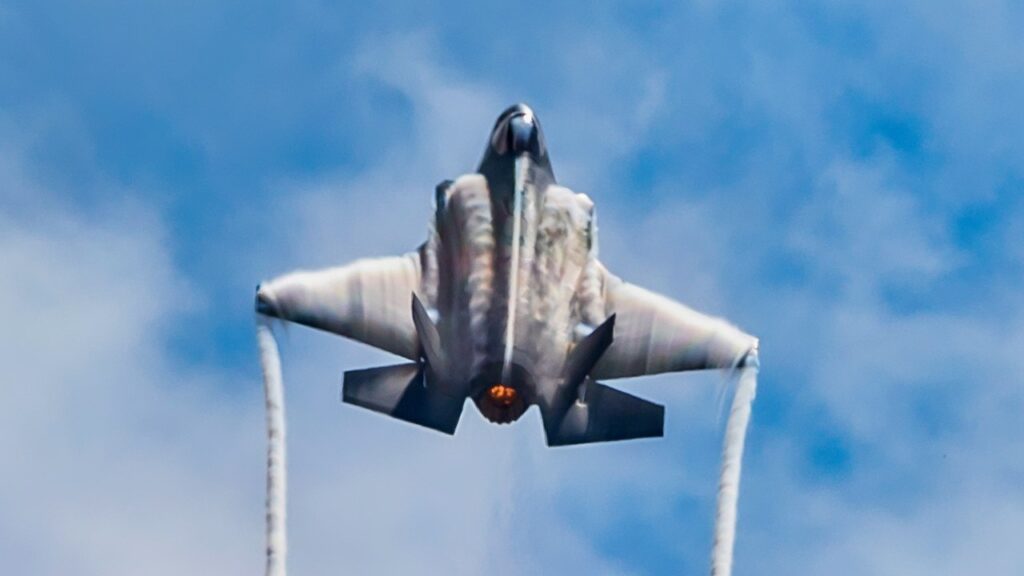
Key Points and Summary – The F-35 Lightning II is simultaneously NATO’s most capable fighter and its most controversial. Critics highlight soaring costs, poor availability, and U.S. control of software, data, and maintenance—fueling sovereignty debates in Portugal, Spain, Switzerland, and Canada.
-Europe’s answer has been ambitious “autonomy” projects like FCAS and GCAP, but those sixth-generation efforts are delayed, divided and risky.
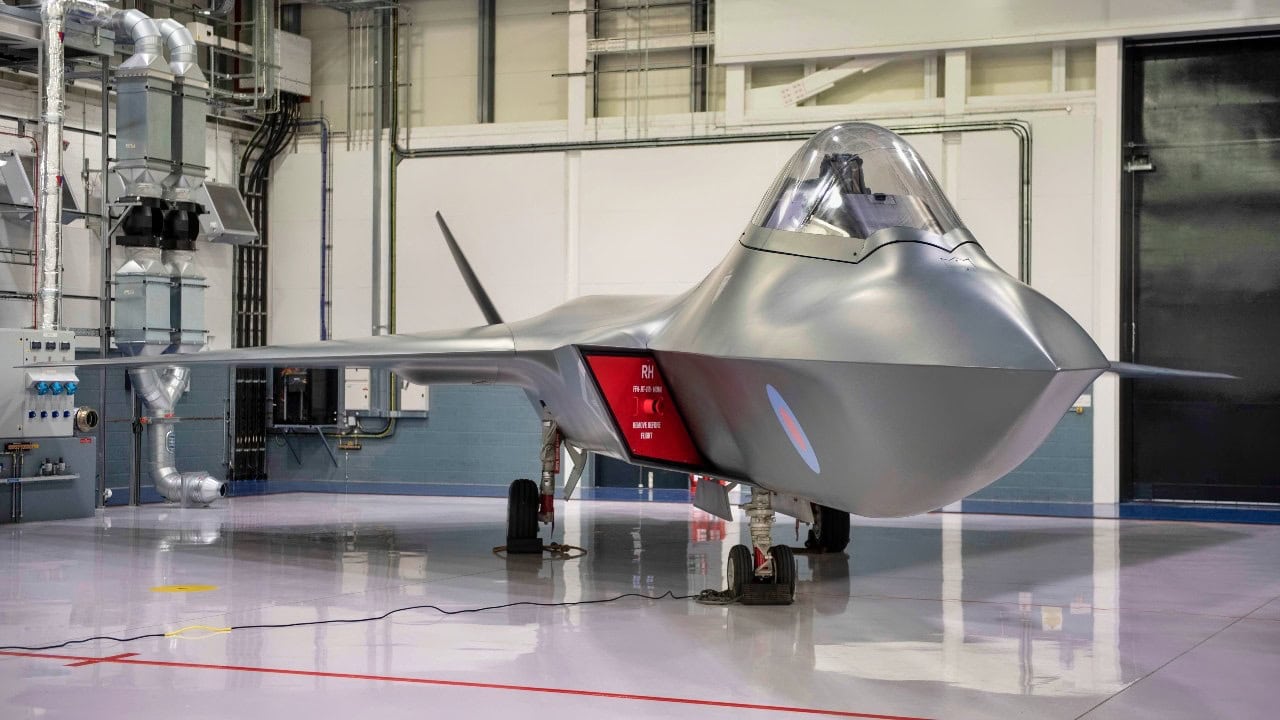
Image of the UK’s concept model for the next generation jet fighter “Tempest”, which was unveiled by Defence Secretary, at Farnborough International Air Show back in 2018.
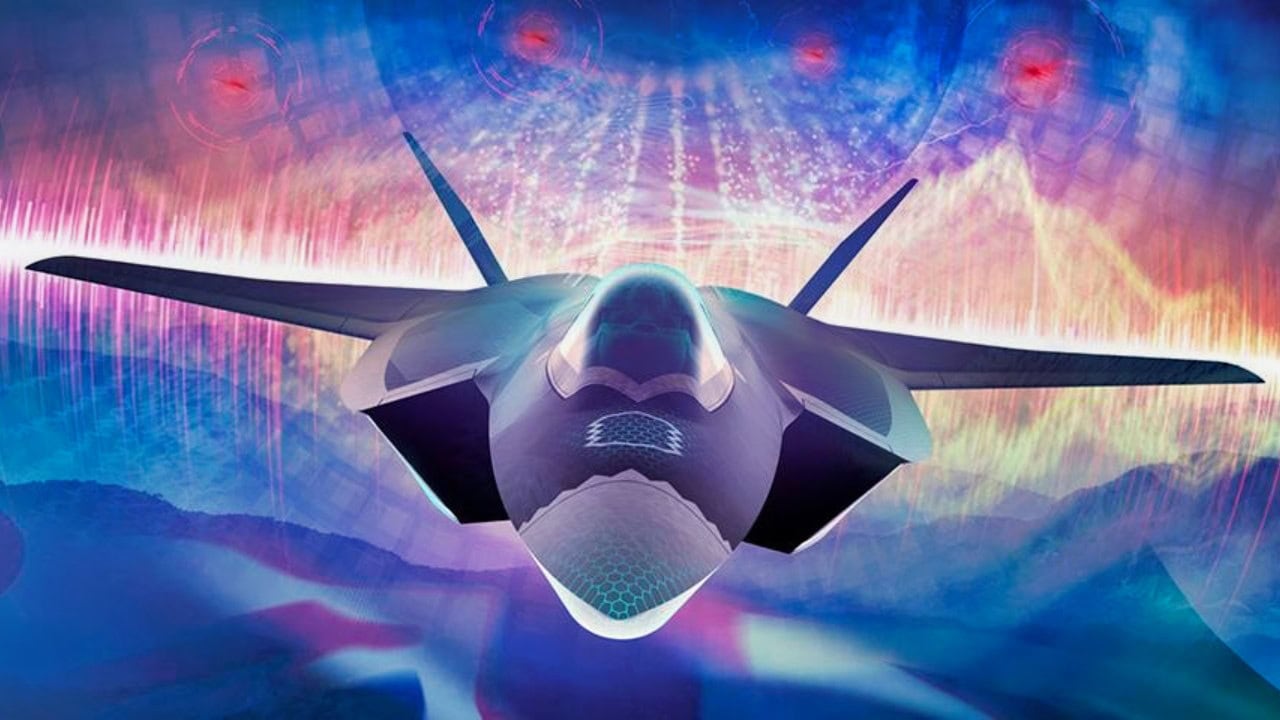
GCAP Fighter. Industry Handout Image.
-For now, the F-35 already delivers what Europe needs: stealth, sensor fusion and alliance-wide interoperability that Russia cannot match.
-Until a credible European successor exists, the real choice isn’t between perfect independence and flawed dependence, but between sustained air dominance and strategic risk.
Europe Wants Out of the F-35 Club – But Can It Afford To?
The Lockheed Martin F-35 Lightning II is the most advanced stealth fighter jet on the planet, but its capabilities can’t overcome some of its flaws.
While America’s fifth-generation fighter jet is used by around 20 countries worldwide, the platform is facing growing criticism over the complexity of its systems, its price, and data sovereignty.
But despite the bickering and Europe’s efforts to move away from the platform, the F-35 is a proven, capable, and current platform that serves NATO well and could continue to do so – even if many of the complaints are legitimate.
The F-35: Gripes, Reality, and Structural Challenges
Since its inception, the F-35 has been criticized for schedule delays, cost growth, and technical difficulties. The aircraft’s development involved overlapping testing and production – a strategy that has led to expensive retrofits and schedule slippages.
Recently, a contentious report revealed that F-35s were operational only about 50 percent of the time in 2024 due to maintenance shortfalls and contractual problems with Lockheed Martin. And that’s just the tip of the iceberg; the F-35 has been plagued by issues like this for some time now, and despite ambitious plans to grow the global fleet, they persist.
Simultaneously, a recurring theme among NATO partners weighing F-35 purchases is the matter of strategic autonomy – specifically, control over software, mission data, and maintenance flows.
Critics say that national air forces cede their operational control to the U.S. when purchasing the F-35, and that assessment is, to be fair, accurate.
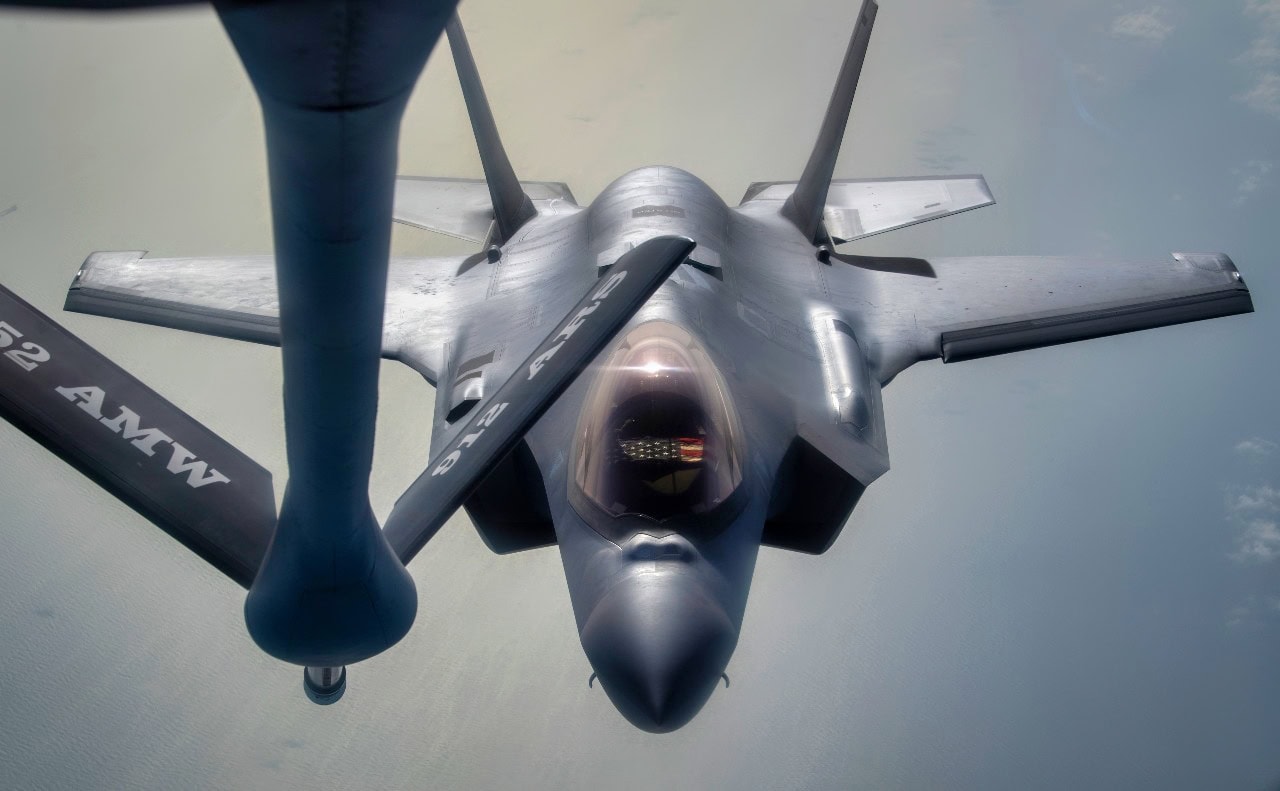
A U.S. Air Force F-35 Lightning II approaches a U.S. Air Force KC-135 Stratotanker over the U.S. Central Command area of responsibility, July 22, 2020. The F-35 Lightning II is an agile, versatile, high-performance, multirole fighter that combines stealth, sensor fusion and unprecedented situational awareness. (U.S. Air Force photo by Airman 1st Class Duncan C. Bevan)
The U.S. does control most aspects of F-35 repair, maintenance, and data flow, but the question for partners is whether they trust the United States to oversee that data.
Rather than a partnership, countries buying into the F-35 platform are increasingly concerned that they are becoming dependent on the United States.
Those concerns have sparked extensive debates in Portugal, Spain, Switzerland, and Canada, where scrutiny has focused on U.S. export controls, costs, and potential reliance on U.S. policy decisions. Choices made in the U.S., they say, could ultimately affect their national defense down the line.
How Europe Is Responding
Europe’s answer to perceived dependency has been ambitious next-generation projects like FCAS – a Franco-German-Spanish effort to deliver a sixth-generation manned fighter and networked combat cloud.
This effort, and others, was meant to double down on European strategic autonomy and reduce reliance on U.S. systems in the long run – not as a solution to their need for fifth-generation fighters now, but to prevent this dynamic from causing further debate or problems, in the future.
However, FCAS is facing severe delays and internal disagreements and is on the verge of being scrapped entirely. Some defense leaders are now openly questioning whether the program can even proceed with plans to produce a networked Combat Cloud – let alone an entire aircraft platform.
The broader European fighter landscape – which also includes the U.K.-Japan-Italy GCAP initiative – reflects a fragmentation across the continent driven by different national priorities, budget constraints, industrial base realities, and strategic visions.
That fragmentation means multiple projects are competing, and while one could well win, FCAS could prove that the dream of autonomy and sovereignty could be harder to achieve than initially anticipated.
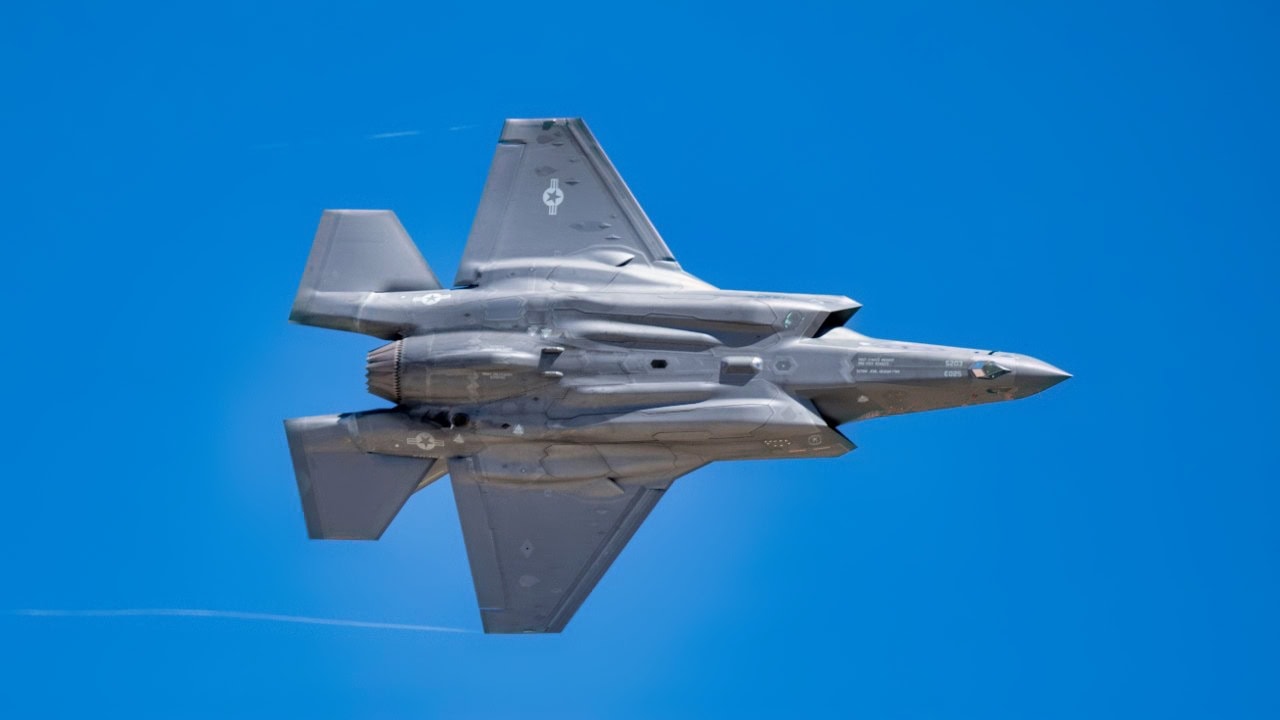
The F-35 Lightning II Demo Team flown by Commander, Maj. Kristin “BEO” Wolfe, performs during the 2023 Gowen Thunder Open House and Airshow at Gowen Field in Boise, Idaho, August 27, 2023. The purpose of Gowen Thunder was to provide a safe and memorable community event that thanks Idaho’s citizens, employers, and community partners for their unwavering support; promote patriotism, service, and volunteerism; and ignite the imagination of the next generation. (U.S. Air National Guard photo by Tech Sgt. Mercedee Wilds)
With that in mind, it’s hard to ignore the elephant in the room: if the F-35 already provides the capabilities Europe needs now, and if interoperability is more easily achieved when NATO members share a common platform, might the F-35’s woes be worth the power it provides? And could building a next-generation fighter that mirrors the success of the F-35 be a smart move, too?
After all, the F-35 is unmatched by adversaries, surrounds Russia, and is a ready-made, competent platform that delivers precisely what NATO requires in the near and medium term: survivable stealth, deep sensor fusion, and alliance-spanning interoperability at scale.
Europe may yet succeed in fielding a sovereign sixth-generation system, but that goal is decades away and carries immense industrial and political risk. Until then, the F-35 represents a complex strategic reality rather than an ideal one.
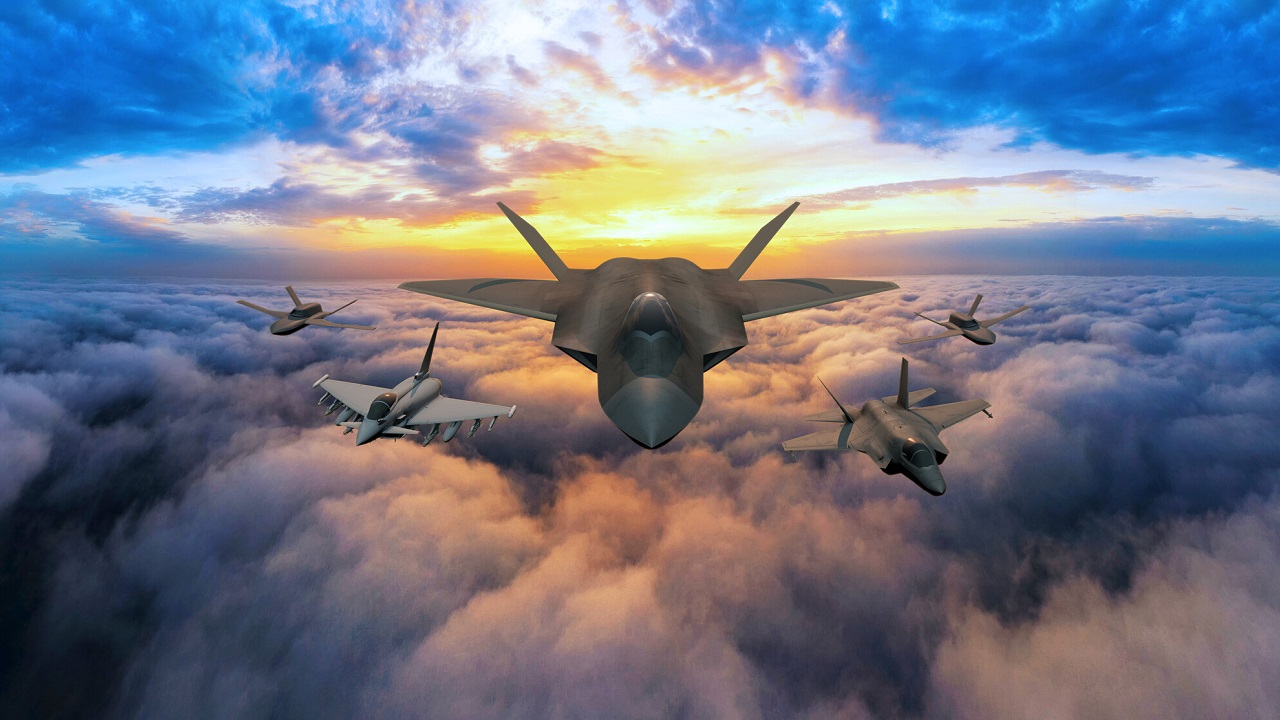
BAE Systems artist image of Tempest Stealth Fighter. Image Credit: BAE.
Few would argue that the situation is perfect, in fact, but that doesn’t change the reality.
Russia cannot match it technologically, nor can it counter a continent-wide network of allied F-35s operating as a single combat system. For NATO, the choice may not be between perfection and compromise, but between dominance and failure.
About the Author:
Jack Buckby is a British author, counter-extremism researcher, and journalist based in New York. Reporting on the U.K., Europe, and the U.S., he works to analyze and understand left-wing and right-wing radicalization, and reports on Western governments’ approaches to the pressing issues of today. His books and research papers explore these themes and propose pragmatic solutions to our increasingly polarized society. His latest book is The Truth Teller: RFK Jr. and the Case for a Post-Partisan Presidency.