
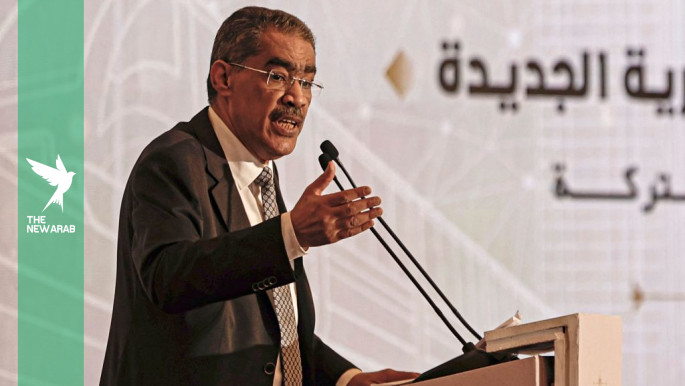
Diaa Rashwan said Netanyahu was “seeking by all means to avoid moving forward with the second stage of the agreement” [Getty]
Egypt has accused Israeli Prime Minister Benjamin Netanyahu of attempting to obstruct the implementation of the second phase of the Gaza ceasefire deal and of trying to ignite tensions in the wider region.
“Netanyahu is seeking by all means to avoid moving forward with the second stage of the agreement, by diverting US attention to other regional issues, particularly Iran, Syria, and Lebanon”, Diaa Rashwan, the head of Egypt’s State Information Service, told Al-Qahera News channel late on Thursday.
Rashwan added that the Israeli premier is trying to spark conflict outside of Gaza by exploiting tensions in US-Iran relations, hoping to push Washington toward confrontation with Tehran in a way that could reignite violence in Gaza and derail the second phase of the agreement.
But despite Israel’s manoeuvring, the Egyptian official said there is a clear American veto against renewed hostilities in Gaza, battered by two years of genocidal war that has left more than 70,000 Palestinians dead.
Rashwan said all evidence indicates the US administration has decided to begin the second phase in early January.
President Donald Trump says he expects the second phase of the agreement to commence early next year. He will personally lead a “Board of Peace” that will oversee the management of post-war Gaza.
This phase will include an interim government in the Palestinian territory that does not include Hamas, a withdrawal of Israeli forces, and the deployment of an international peacekeeping mission.
It also stipulates the disarmament of Hamas and other militant groups, something mediators and guarantors of the ceasefire are trying to negotiate.
Ideas have floated about what to do with Hamas and other groups’ arms, but Hamas has refused to surrender its weapons as long as Israel occupies and attack the Gaza Strip.
Commenting on the feared expulsion of Palestinians from Gaza – something many far-right Israeli government officials have advocated for – Rashwan said the current ceasefire plan makes clear that Palestinians would not be forced to leave.
He added that anyone who does leave voluntarily must retain the right to return. Egypt has repeatedly warned Israel against pushing Gaza’s inhabitants into Sinai.
A scheduled meeting between Trump and Netanyahu next week in the US could signal the actual start of the second phase, Rashwan said, describing Trump as a “practical man” who wants to complete what he sees as a historic solution, and whose main foreign policy legacy this ceasefire plan represents.
Efforts to move onto the second stage have been very slow, with ongoing Israeli violations in Gaza that have seen hundreds of Palestinians killed since the ceasefire began on 10 October.
The first phase has seen Hamas release all the remaining living captives it once held, as well as the bodies of all but one, which it is still searching for.
Israel released just under 2,000 Palestinian prisoners but continues to hold around 9,300, many of them in administrative detention without trial. Palestinian prisoners have been tortured, starved and raped in Israeli custody.
Aid was supposed to be transported to Gaza under the ceasefire agreement in quantities enough to give its population the minimum needed to survive, but Israel has continued to prevent this from happening.
Gazans are still suffering from malnutrition, even though the UN recently declared the famine in the territory over.
Netanyahu is wanted by the International Criminal Court for war crimes and crimes against humanity in Gaza.
Iran, Syria, and Lebanon are reportedly expected to be on the agenda in the potential meeting between Netanyahu and Trump, amid fears of renewed regional conflict.
Israel is reportedly seeking a greenlight from Trump to resume strikes on Iran, aimed at degrading its missile capabilities and again targeting its nuclear facilities.
The US is also pushing for a security arrangement between Israel and Syria, where Israeli forces occupy territory in the country’s southwest.
In Lebanon, where Israel maintains troops at five points along the southern border, there are growing fears of a renewed Israeli offensive targeting Hezbollah.