
Dejana Vukadinović
BBC journalist
Pun krug.
Kosovo is seeing off 2025 as it began – by holding parliamentary elections.
The Self-Determination Party of Albin Kurti, the caretaker prime minister, despite winning the largest number of votes in February, was unable to form a government on its own.
She followed institutional blockade lasting several months and finally, new parliamentary elections were called for December 28th.
While waiting for a resolution to this political equation, residents are concerned about another calculation – whether there will be enough money in their wallets.
Prices and the cost of living are the main problems for more than 50 percent of people in the youngest European country, according to a survey by the International Republican Institute. published in 2025.
“When the government is bad, then everything else is bad,” says 40-year-old Armend, bitterly.
What’s so bad, I ask him on the decorated promenade in Pristina.
“Well, everything… young people are leaving, we haven’t had institutions for months, the economy is sinking,” he answers me.
“Nothing will change on December 28th and everything is disgusting,” he adds.
When you leave the wider center of festively ‘dressed’ Pristina, where the cafes are packed to the brim, the scene is strikingly different.
Scenes of dilapidated buildings with gray facades, gloomy like the morning, filled with fog and smog that makes it hard to breathe, alternate.
A boy is hanging around near the market, holding a plastic cup with collected coins in his frozen hands.
There aren’t very generous offers at the market stalls, hardly anyone stops to buy anything, but dozens of construction machines and cranes can be seen in the distance.
This year, one gets the impression that as much as there is construction, there is also voting.
Watch a video about the Kosovo elections – a third time to vote in 2025: BBC journalist Dejana Vukadinović reports
Between the two election cycles, in mid-October, elections were also held composition of local assemblies.
The announced parliamentary elections are being held in a polarized atmosphere, which has also been contributed to by the ruling Vetëvendosje party, although it is trying to reduce the intensity of its messages, points out Ilir Deda, a political advisor.
“There is not much optimism for 2026 and everything depends on the election results, which no one can predict,” he added to BBC Serbian.
The division is best illustrated by the fact that the Speaker of the Assembly was elected for a record 57th time and Kurti’s inability to find a coalition partner to form a government.
More than two million people with the right to vote will choose between 24 political options.
In addition to Vetëvendosje, other well-known actors are also participating – the Democratic League of Kosovo (LDK), a party founded by Ibrahim Rugova, Democratic Party of Kosovo (PDK), Memlji Krasniqi (formerly led by Hashim Thaci, who is responsible for war crimes before the Hague Tribunal).
The Alliance for the Future of Kosovo (AAK) is also on the ballot. Ramush Haradinaj, a former prime minister, who was also suspected of war crimes before the Hague Tribunal as one of the commanders of the Kosovo Liberation Army.
Their former coalition partner, Fatmir Limaj’s Social Democratic Initiative (NISMA), is now going it alone.
The 10 seats guaranteed to the Serbian community are being contested by the Serbian List, which has the support of official Belgrade, the “For Freedom, Justice and Survival” party of Nenad Rašić, the former Minister for Returns in Kurti’s government, and the recently established Kosovo Federation.
The balance of power will probably be similar to winter again, believes Ilir Deda.
“Vetevendosje will be first, PDK second, followed by LDK, AAK fourth, and Serbian List fifth.”
“We don’t know how many parliamentary seats they will get, and it will depend on whether a new government can be formed,” he adds.

Higher salaries and a stronger army
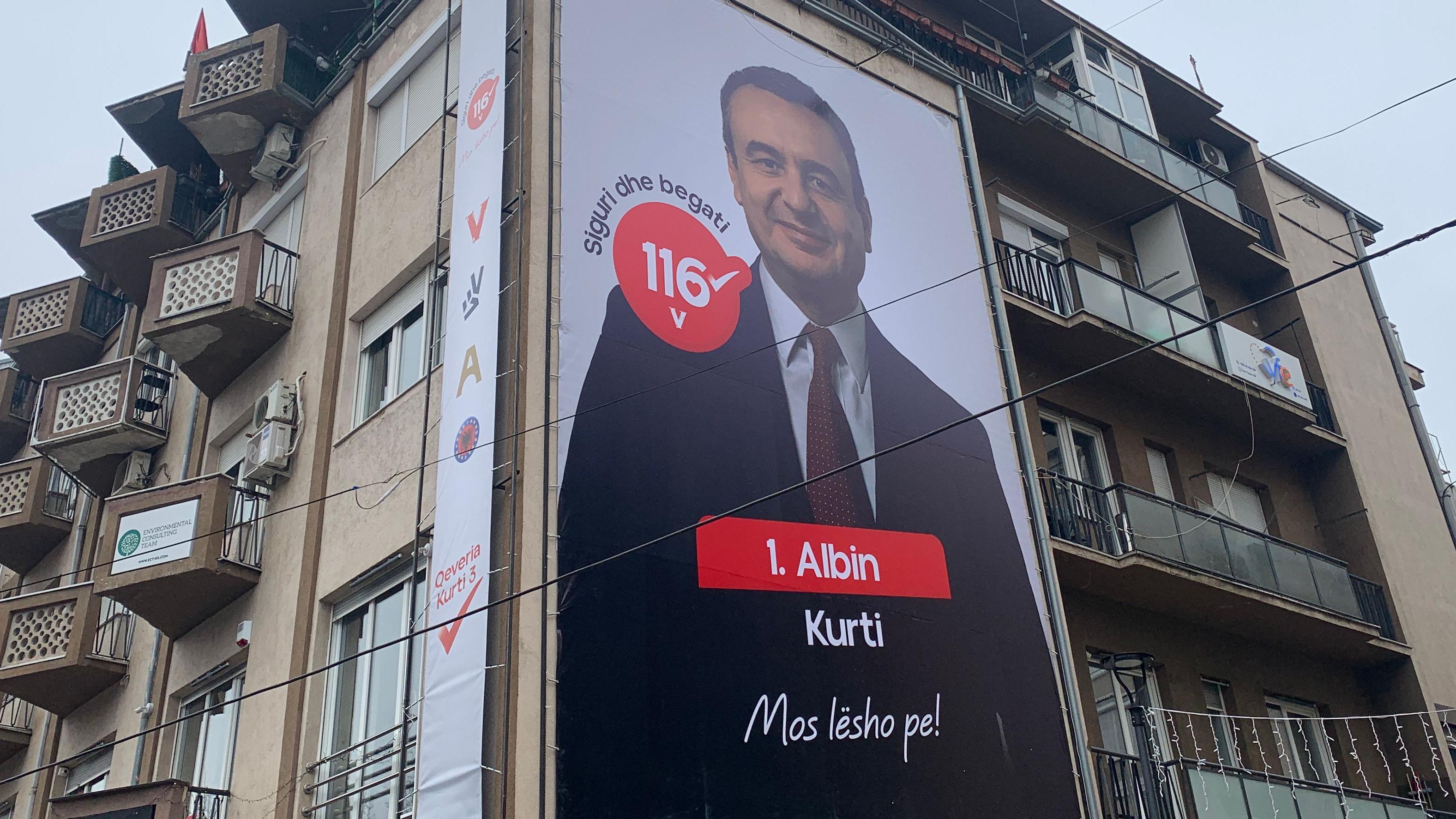
Albin Kurti announces increase salary to more than a thousand euros, and promises to strengthen the army and open an ammunition factory.
Ministry of Defense has already acquired the German anti-tank missile system, and in October “thousands” arrived military kamikaze drones from Turkey.
Opposition parties also promise economic prosperity PDK i LDKs in pre-election messages, but they say they will not enter a coalition with Kurti.
“The divisions are great, Kurti is not a figure whose behavior has earned opposition parties to overlook some things.”
“After the February elections, none of them wanted to cooperate with Kurti and I doubt that attitude will change,” political scientist Aleksandar Šljuka told BBC Serbian.
BBC/DEJANA VUKADINOVIC
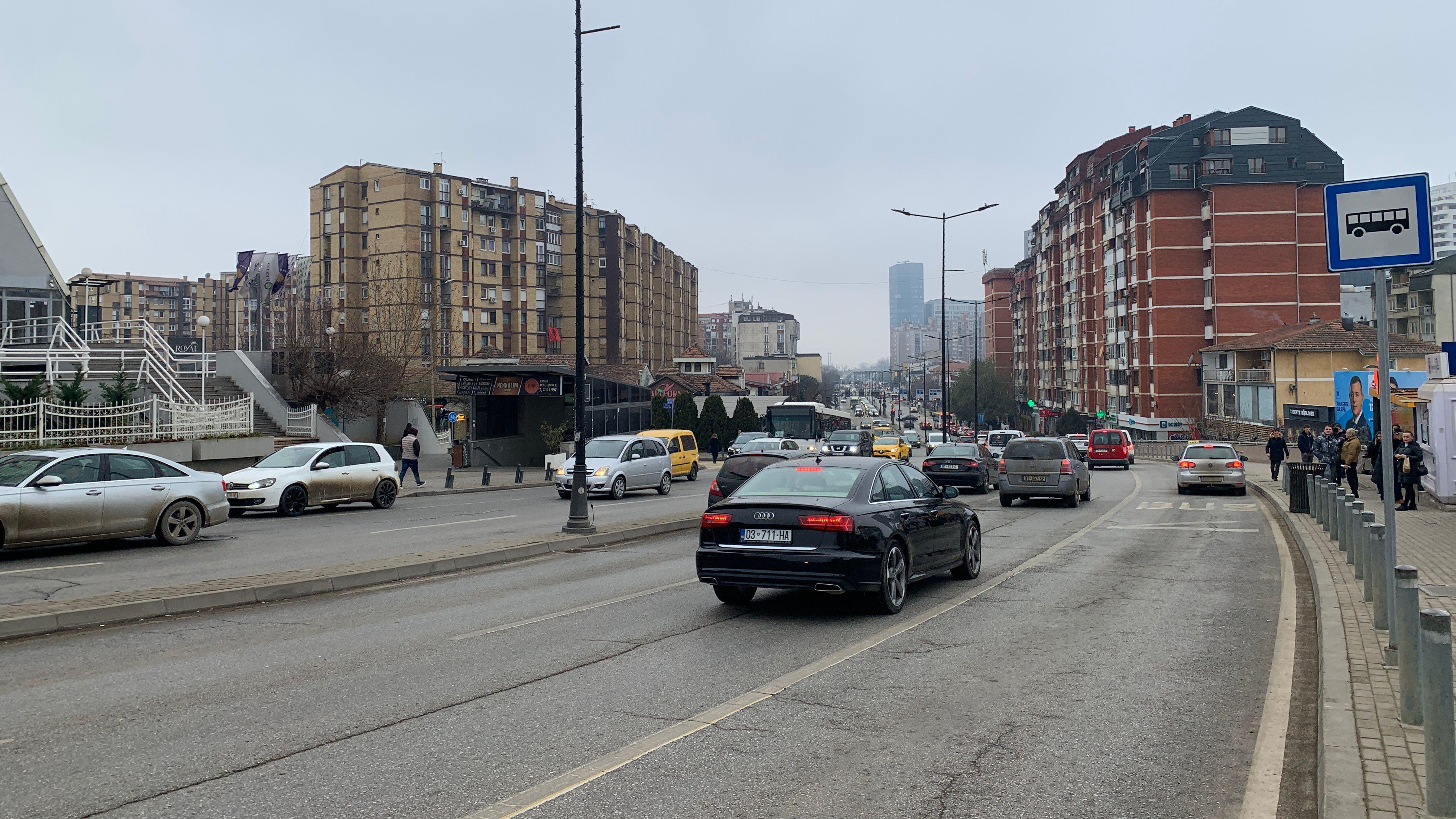
The taxi driver who takes me to the municipality of Gračanica, 10 kilometers away, claims that “life is very good there.”
The opinion is supported by the very buildings under construction that we pass by.
“There’s money, there’s work, there’s construction going on,” he adds.
Kurti, this military retiree is convinced, will have enough votes to form a government on his own.
How are you so sure, I ask him.
“People who live here have come over”, they are his voters,” he explains, not wanting to introduce himself.
From the Merdare administrative crossing to Pristina, I mostly noticed foreign license plates – Swiss, Dutch, and a few German ones.
“Kurti is counting on a large diaspora, but the question is how much they can help him achieve such a result that he does not need coalition partners,” Šljuka points out.
Vote abroad in Kosovo elections more than 19.000 people.
The promise of crazy joy
At an informal taxi stand in Gracanica, where Serbs make up almost half of the population, I meet Nedžat Sulejmani from Pristina.
“Politics is not good – neither for the young nor for the old, especially not for pensioners, and they have been filling the budget by working in previous years,” says the 83-year-old.
“I always vote and everyone should vote for those they believe will bring something better, but that better never comes,” he adds to BBC Serbian.
Rami, a 68-year-old fruit and vegetable seller by the main muddy road, is also disappointed.
“You always hope it will be good, but nothing changes.”
“They promise, they promise, and I still don’t have a pension, no social security – I’m managing as best I can,” he tells the BBC in Serbian.
BBC/DEJANA VUKADINOVIC
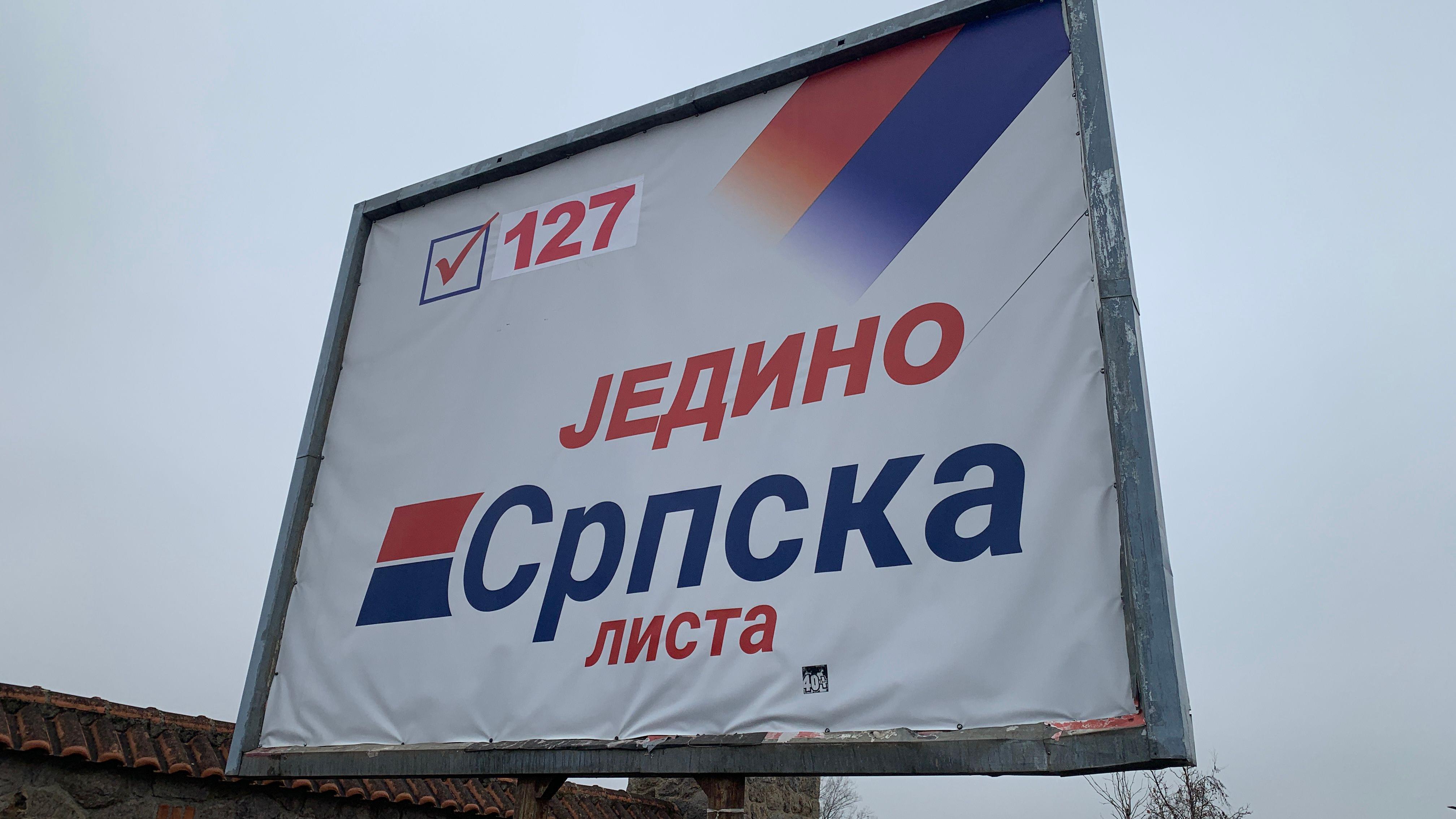
Across the street is a large billboard that says Only – Serbian list.
The largest party representing the Serbian community in Kosovo, with strong support from officials in Belgrade, has returned to the political game after a two-year boycott.
She participated in the February parliamentary and then local elections, winning in all ten municipalities with a majority Serbian population.
Jovica Vasić has been voting for them for years, but now he is bitter.
“Godfathers, friends are employed, the same people receive donations, and my sister-in-law with four small children is not working, even though she applies for the job every year.”
“Instead of creating jobs for young people, they are employing their relatives,” he tells the BBC in Serbian angrily.
He has been retired for years, having earned it while working at the Health Center in Pristina, a city he still visits regularly.
“Nobody touches us, we respect each other, but politics…” he doesn’t finish the sentence and waves his hand.
Through the Office for Kosovo and Metohija, Serbia pays social assistance and employs Serbs in Kosovo, and a competition for 350 jobs in health institutions is underway.
While the opposition interprets this as abuse and vote buying, representatives of the Serbian List are responding in kind. counter-protest.
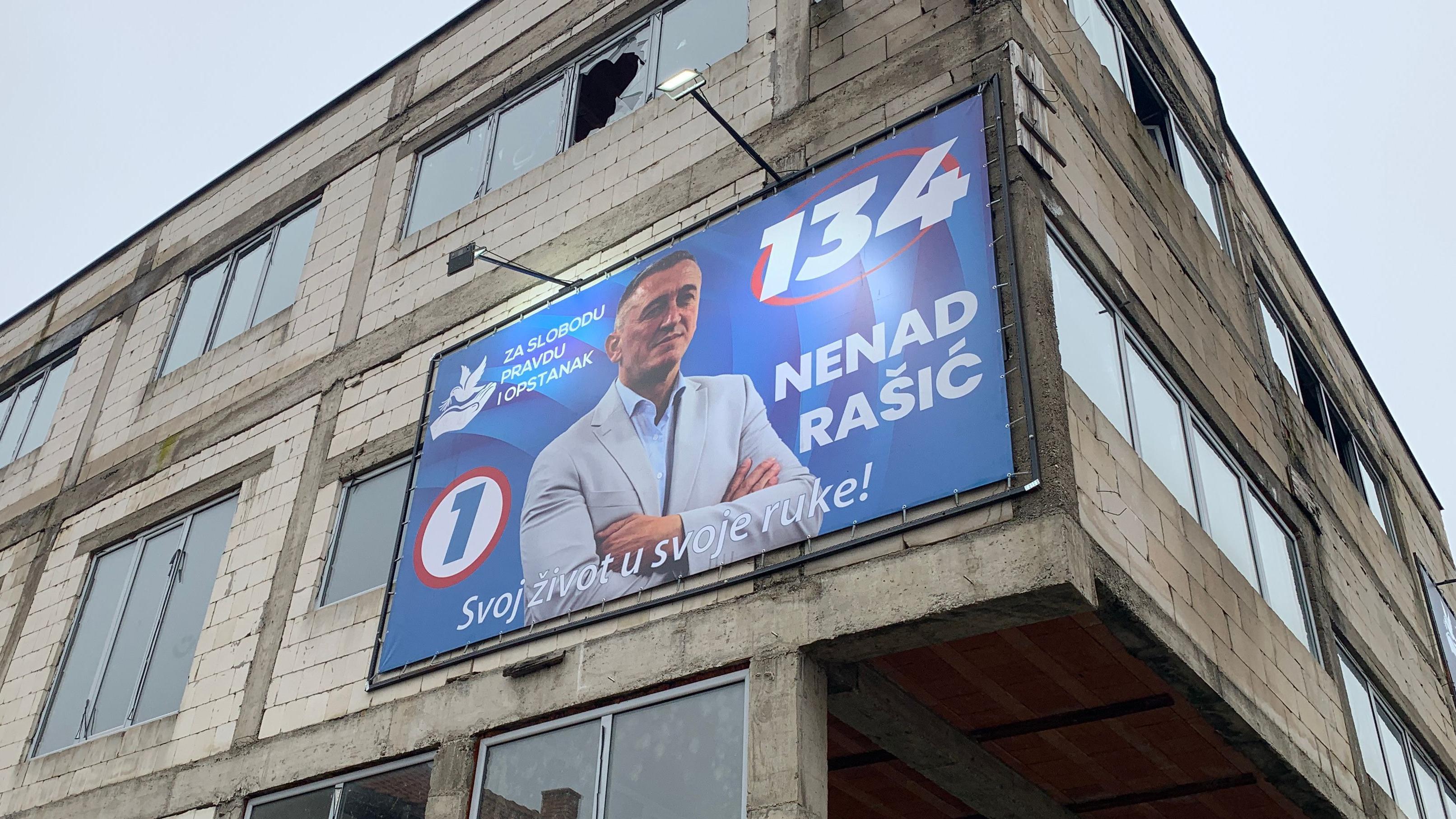
BBC/DEJANA VUKADINOVIC
Iljir Deda assumes that the Serbian List will win the majority, but what is more important is what political messages it will send.
“They are not an autonomous player and this makes political communication with other parties difficult, and what is missing is healthier communication with Serbs in Kosovo,” he adds.
The Serbian List has new leadership, but it has not fundamentally reformed, and that is their mistake, because it has not shown that it is ready to cooperate with the Albanian List, points out political scientist Šljuka.
“If they win all ten seats, a new problem may arise, because one of them has to be the deputy speaker of the parliament.”
“If Rašić wins one term, then he can be re-elected, but the question is how many votes he will receive,” he adds.
A line of criticism, a line of praise
In addition to internal turbulence, Kosovo has also been hit by a wave of criticism from the international community.
The United States of America is frozen strategic dialogue with Pristina indefinitely due to “the actions of the technical government (Albina Kurti) that have increased tensions and instability”.
“There has never been and will never be an anti-American government in Kosovo.”
“The people of Kosovo are the most pro-American people in the world, and every Kosovo government comes from that people,” she ordered Vjosa Osmani, President of Kosovo, ahead of a meeting with members of the US Congress on deepening cooperation.
During the months-long political crisis, Germany is repeatedly pointed out that Kosovo urgently needs a government in order to function internally and externally.
Good news from the European Union (EU) arrived in early December that by the end of January 2026, it would lift all punitive measures previously imposed due to tensions in northern Kosovo, where the majority Serb population lives.
Pristina will be able to use financial assistance worth one million euros, and the decision was made after the peaceful transfer of power in local areas in the north, she explained Ursula von der Leyen, President of the European Commission.
“I met many Serbs both in the north and throughout Kosovo.”
“There is no Prime Minister of Kosovo who has met with more Serbs than me, nor has anyone spoken more Serbian than me,” Kurti said during the opening of the pedestrian bridge over the Ibar River, which connects North and South Mitrovica.
However, there are no recordings to confirm this.
The Serbs don’t want it to be published because the Security and Intelligence Agency (BIA) from Belgrade immediately calls them and asks: ‘Why are you talking to the Prime Minister of Kosovo?’ Kurti added.
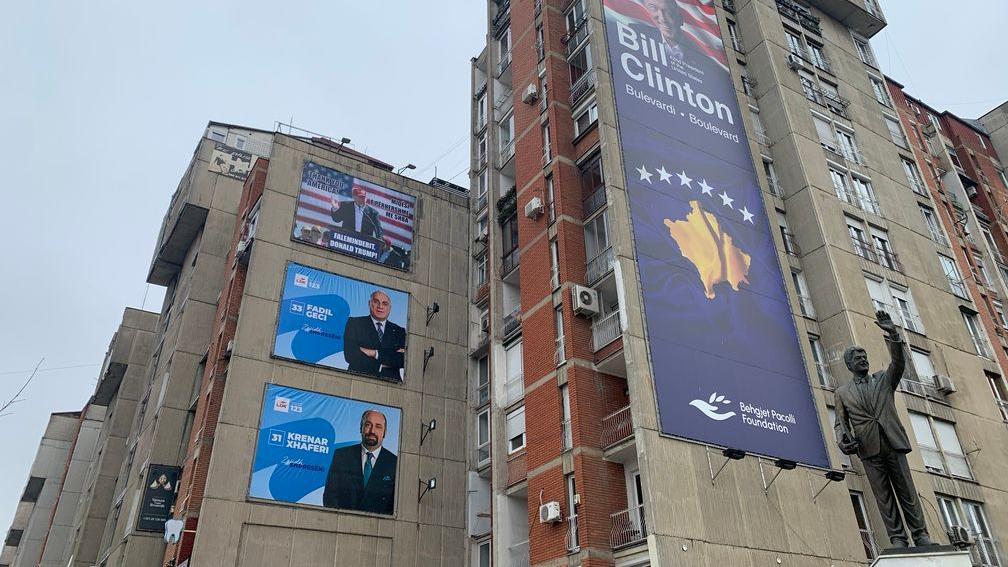
Kosovo needs a government that will work in partnership with the EU and the US, manage to attract more serious investments for the private sector, and create a framework for building trust with Serbs in Kosovo, especially in the north, points out Ilir Deda.
“There is a lot of homework for the new government, but it all depends on who will do it.”
“Opposition parties are saying that they would most like to form a post-election coalition with each other – but that’s easy to say, harder to do,” he adds.
Due to a political blockade, Kosovo has not adopted the 2026 budget, which will be one of the key issues after the December elections, political scientist Šljuka points out.
“Kurti may play that card to get someone to support him so the budget can be voted on,” he adds.
By March 2026, a new president, who is elected in the parliament, should be elected, which requires a two-thirds majority of deputies – otherwise, a new election cycle will follow, Deda points out.
“If the parties are willing, they can agree on the president, but we are back to the fact that everything depends on the distribution of power in the parliament.”
“And what it will be like is hard to guess now,” he concludes.
Watch the video about the opening of the bridge over the Ibar River
Seventeen years after declaring independence, Kosovo has been recognized by around 100 countries. However, the exact number is unknown.
Pristina cites a figure of 117 countries, and in Belgrade they say that there are far fewer.
Among the countries of the European Union that have not recognized Kosovo are Spain, Slovakia, Cyprus, Greece and Romania, and when it comes to world powers, they are Russia, China, Brazil and India.
Since 2008, Kosovo has become a member of several international organizations, such as the IMF, the World Bank and FIFA, but not the United Nations.
BBC is in Serbian from now on and on YouTube, follow us HERE.
Follow us on Facebook, Twitter, Instagram i Viber. If you have a topic suggestion for us, please contact bbcnasrpskom@bbc.co.uk


News