
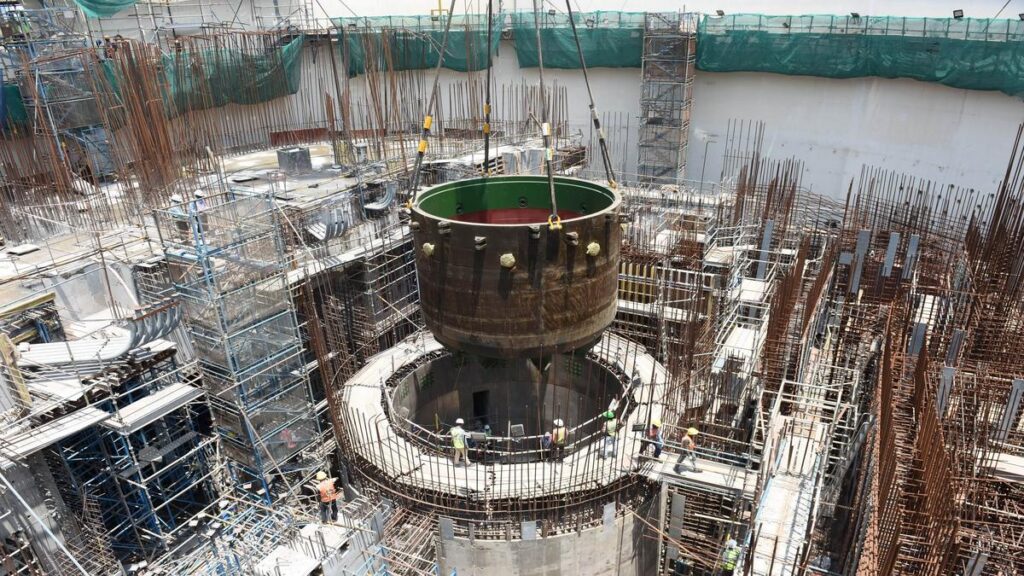
“The opening of other sectors such as electricity to private parties have been very rewarding. We also have a goal to achieve Net Zero by 2030. Hence, we must move from traditional sources of energy to clean sources. Nuclear Power is Aatmanirbhar, clean and can provide 24×7 energy,” argued Union MoS Dr. Jitendra Singh in Parliament.
Defending the drastic changes brought in the nuclear sector by the Sustainable Harnessing and Advancement of Nuclear Energy for Transforming India (SHANTI) Act, 2025, Dr. Singh stated that privatisation will ensure ‘cheaper power over time’ and ensure energy security. The Act, which replaces two laws – the Atomic Energy Act, 1962 and the Civil Liability for Nuclear Damage Act, 2010, has received the President’s assent on December 19 – a day after Parliament passed it.
“One person can control mining, fuel fabrication, reactor operation and waste handling. This concentration of power with one entity is dangerous,” warned Congress MP Shashi Tharoor when the Bill was debated in the Lok Sabha, urging the Centre to send it to a select committee for further scrutiny. To no avail, each House debated and passed the Bill in a day on December 17-18
Here’s a look at how much of India’s nuclear sector is open to private players
What can private/foreign players do in nuclear sector now?
Apart from any government company, any company (whether domestic or foreign), any joint venture or any person permitted by Centre, can apply for a single licence to – build, own, operate or decommission a nuclear power plant or reactor, fabricate, refine, enrich nuclear fuel. This licence can be used to import, export, store, transport nuclear fuel, any technology or software to be used for the above processes.
Only after safety authorisation, will they be permitted to undertake these activities. Upon application, Centre can extend, renew a company’s licence or safety authorisation for any period of time it deems necessary. It may also modify, suspend, cancel or curtail the duration of the licence. Centre also has the power to exempt any radioactive material or any radiation generating plant from safety authorisation.

Why open up the sector?
“In May 2025, US President Donald Trump passed an executive order in which he stated that they (US) should enhance diplomatic pressure on countries for getting more business for their (US) nuclear reactor companies. Very surprisingly, the SHANTI Bill was bulldozed through Parliament last week,” says Dr. E.A.S Sharma, former Principal Adviser (Energy) The Hindu.
“And then, on December 19 (a day after Parliament passed SHANTI), Mr. Trump signed the National Defense Authorization Act, in which they (US) said India and other countries should be brought in alignment with US liability requirements. They don’t want to take any liability for a possible accident, which is attributable to their lapses, reactor design defects, use of substandard material.
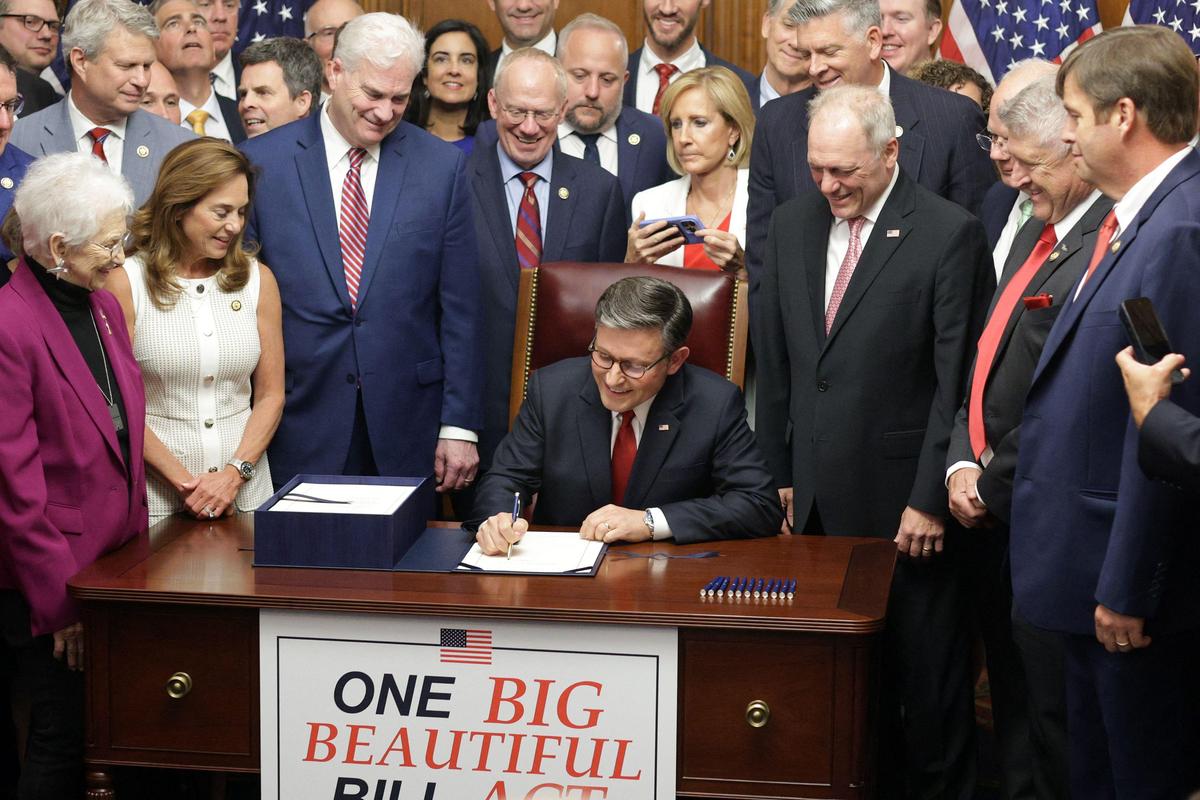
U.S. President Donald Trump signs the National Defense Authorization Act (NDAA) for fiscal year 2018 in the Roosevelt Room of the White House in Washington, D.C., U.S. on Tuesday, Dec. 12, 2017. Photo: Getty Images via AFP
With the entry of foreign reactors in Indian nuclear plants, he says that usage of different technologies will result in no standardisation in operation. Lamenting that India is moving further away from Dr. Homi Bhabha’s nuclear vision for India – indigenous core, reactors and fuel, he adds, “Imported fuel is very expensive. Uranium suppliers around the world have formed a monopoly, and they declare terms on the price”.
What can private players not do?
However, only Centre or wholly-owned government institution can deal in enrichment or isotopic separation of radioactive substance, management of spent fuel, production of heavy water. Mining of any land, seabed for uranium or thorium will also be carried out only by these government institutions and any mined substance will be under government control. They will not be sold, transferred, or otherwise disposed of unless the Centre permits it.
The fissile material, spent fuel, heavy water used in any nuclear process will remain under the surveillance and control of Central government. A national registry of radioactive substances will be maintained by Centre which can also inspect any consignments or plant for such substances to ensure its security.
Dr. Sharma counters this stating that Centre has allowed mining of nuclear materials through the years by weaking its mining laws. He explains, “Monazite – which is an ore for thorium, was banned from private mining, restricting it only to public sector like Indian Railroad Ltd. However, Dr. Manmohan Singh, in UPA-I, came under pressure and allowed sand mining by private players but not monazite. The problem is when you mine beach sands minerals, monazite will be present. So, they (Centre) set the the permissible limit at 0.5%. All of it (monazite) must be kept under surveillance of Department of Atomic Energy”.
Beach sand minerals, also called rare earth, comprise a suite of seven minerals — garnet, sillimanite, rutile, ilmenite, leucoxene, zircon and monazite. File
| Photo Credit:
The Hindu
Inspite of being under ‘surveillance’ of the Centre, Dr. Sharma cites several instances when monazite was smuggled by private players in Odisha, Andhra Pradesh, Tamil Nadu. In February this year, Madras High Court ordered a CBI probe after finding massive illegal mining of monazite with the “collusion, corruption and connivance” among politicians, the executive and the private miners.
“The Department of Atomic Energy staff is limited and all that there is no surveillance, so some of these private miners have been quietly smuggling out monazite. In 2019, all private mining of beach sands were banned. But in 2021, the NDA government amended the Mines and Minerals Development Regulations Act (MMDRA) to permit private mining in beach sands and soon Adani applied to mine sands in Odisha and Andhra Pradesh. With SHANTI, they claim that no mining for nuclear materials will be allowed, but using MMDRA such minerals can be mined and problems of smuggling will persist,” says Dr. Sharma.
Even the spent fuel which will remain under Centre’s surveillance is not feasible due to its limited manpower, opines Dr. Sharma.
Blanket exemption from RTI
The most troublesome aspect of SHANTI is section 39 which gives Centre the authority to declare ‘any information’ as restricted, giving it a blanket exemption from Right to Information (RTI). The information which it can restrict includes – location, design, construction, operation of nuclear reactors, processing and extraction of nuclear materials, research on such materials and any proposed plants to be operated. No one is allowed to publish any of the information deemed restricted by the Centre.
While Dr. Sharma agrees that some information should be restricted from the public, he points out that private players will now have access to it, which was not the case when only NPCIL was India’s sole nuclear operator.
“Private players will now know how much fuel is processed, how much fissionable material, heavy water is used, but civilians will not know. Once you allow private players, anybody (even a foreign agency) can become a partner with that private firm, and access this information. We won’t even know which foreign agency is a partner of this private company.”
Highlighting the need for civilians to know about spent fuel stored in their vicinity, he warns, “Nuclear waste is highly radioactive and it does not lose its radioactivity for decades. So wherever you store it, it will be a threat to people’s health and endangers their lives. Even a low radiation from (nuclear waste or stored spent fuel) can cause cosmogenic diseases among people”.

Nuclear as a ‘clean’ source
With an aim to reach 100 GW nuclear capacity by 2047, Dr. Singh claimed that India’s nuclear sector needed rapid expansion which was possible only via private players. Touting nuclear energy as a clean source, he said it would “provide better cancer treatment & diagnostics, safer food preservation, clean drinking water, improved agriculture and reliable supply for India’s growing AI, data centres, hospitals and industries”.
Decrying rapid nuclear sector expansion, Dr. Sharma says, “Groundwater around nuclear power plants too face radioactive contamination. Even in case a nuclear plant needs to be decommissioned after an accident, it cannot be done immediately due to radioactivity. The government has not taken people, parliament into confidence. Everything is one-sided, and driven by business interests”.