
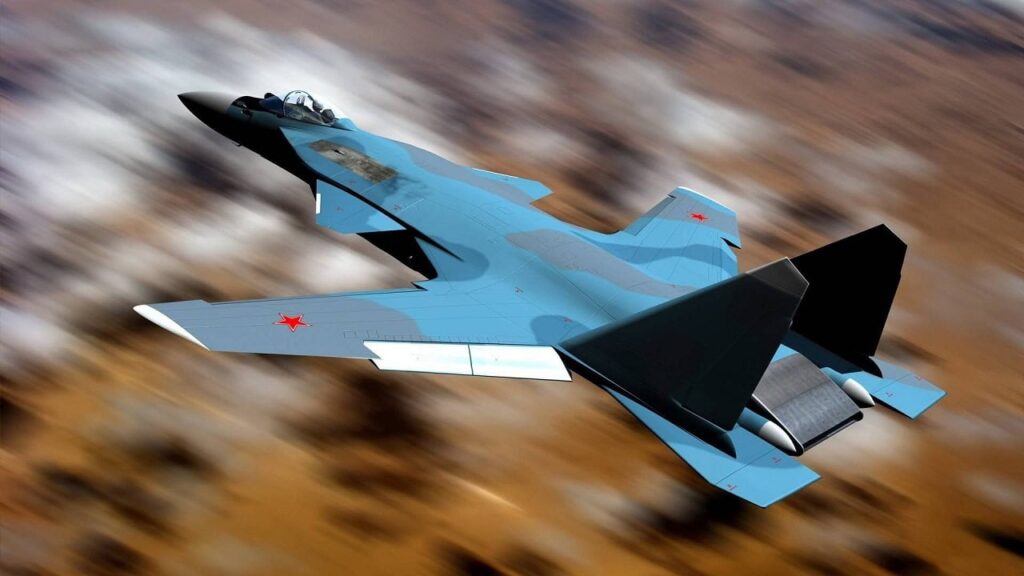
Synopsis: Forward-swept wings promise sharp subsonic agility, better lift behavior, and shorter takeoffs—exactly why designers flirted with them for carrier and air-superiority fighters. But both Russia’s Su-47 and America’s X-29 proved the same point: the aerodynamics work, the structure is the problem.
-Without fly-by-wire, the layout is brutally unstable; with it, the jet can fly, but the wings still twist and fatigue under high-G loads unless advanced composites and aeroelastic tailoring are perfected.
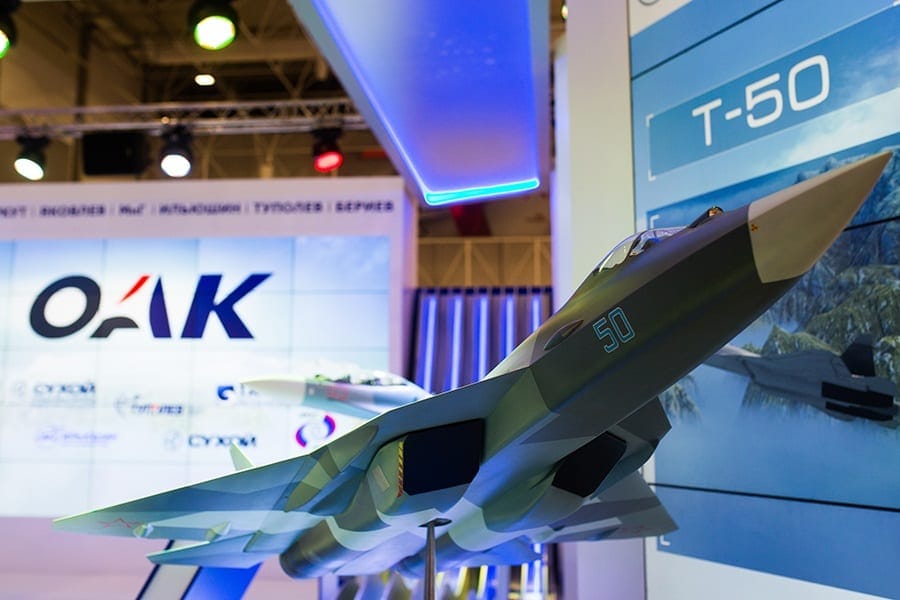
Su-57 Model. Image: Russian Government.
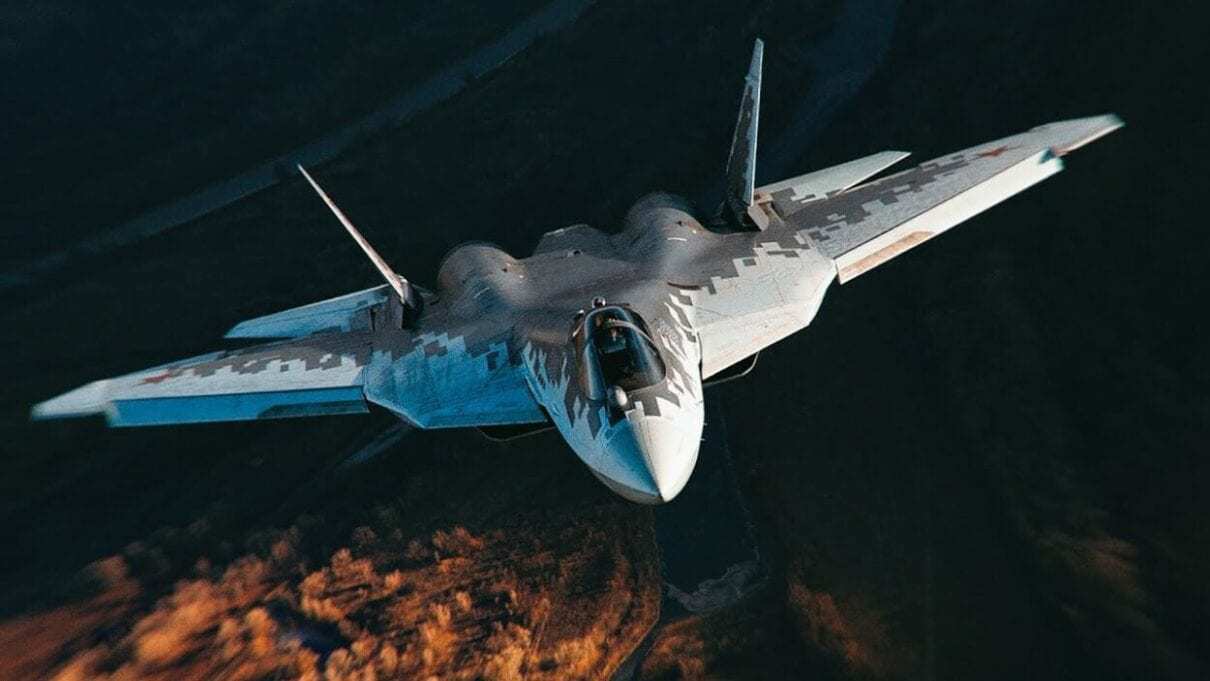
Su-57 Fighter. Youtube Screenshot.
-Add post–Cold War budget realities, plus the shift toward stealth over pure maneuverability, and the Su-47 stayed a one-off technology demonstrator—valuable for lessons, not production.
Su-47’s Big Problem: Forward-Swept Wings That Wanted to Twist Apart
Airplanes with a forward-sweep wing, however, do have a few advantages compared to more conventionally winged aircraft. For one, jets with forward-swept wings are highly maneuverable, in particular at subsonic speeds below the speed of sound.
They also have novel lift characteristics and can take off more quickly than conventional aircraft. On paper, at least, this could have been a distinct advantage — and sparked initial interest from the Russian Navy. Flying off Russian flattops, jets like the Su-47 would have been at an advantage, though the wing design is not without its disadvantages.
Virtually all modern jet aircraft benefit from fly-by-wire technology, which enables them to maintain stable flight despite, in some cases, having inherently unstable airframes. The Su-47 is certainly one of these aircraft, as its forward wing sweep would make the aircraft extremely unstable were it not for fly-by-wire technology.
But the Su-47 did have a significant, crippling drawback, one that fly-by-wire technology could not rectify: the jet’s wings themselves.
Given the intense stresses placed on the wings during high-G maneuvers, the Su-47’s wings needed to bend — but not break. High-G maneuvers placed an incredible amount on the jet’s wings, and repeated bending likely accelerated metal fatigue. Still, the jet is very maneuverable.
There had been some speculation after Russia revealed the Su-47 that the jet’s design was partially inspired by a desire to defeat adversary radar — that is to say, a stealth jet.
That speculation may have been partially stoked by the Su-47’s dark livery, which is somewhat reminiscent of the SR-71 Blackbird spy plane or the F-117 Nighthawk, both of which were close to jet black in color thanks to radar-absorbent paint.
The thought toward stealth was also aided by the jet’s weapon bay, which stored its weaponry internally.
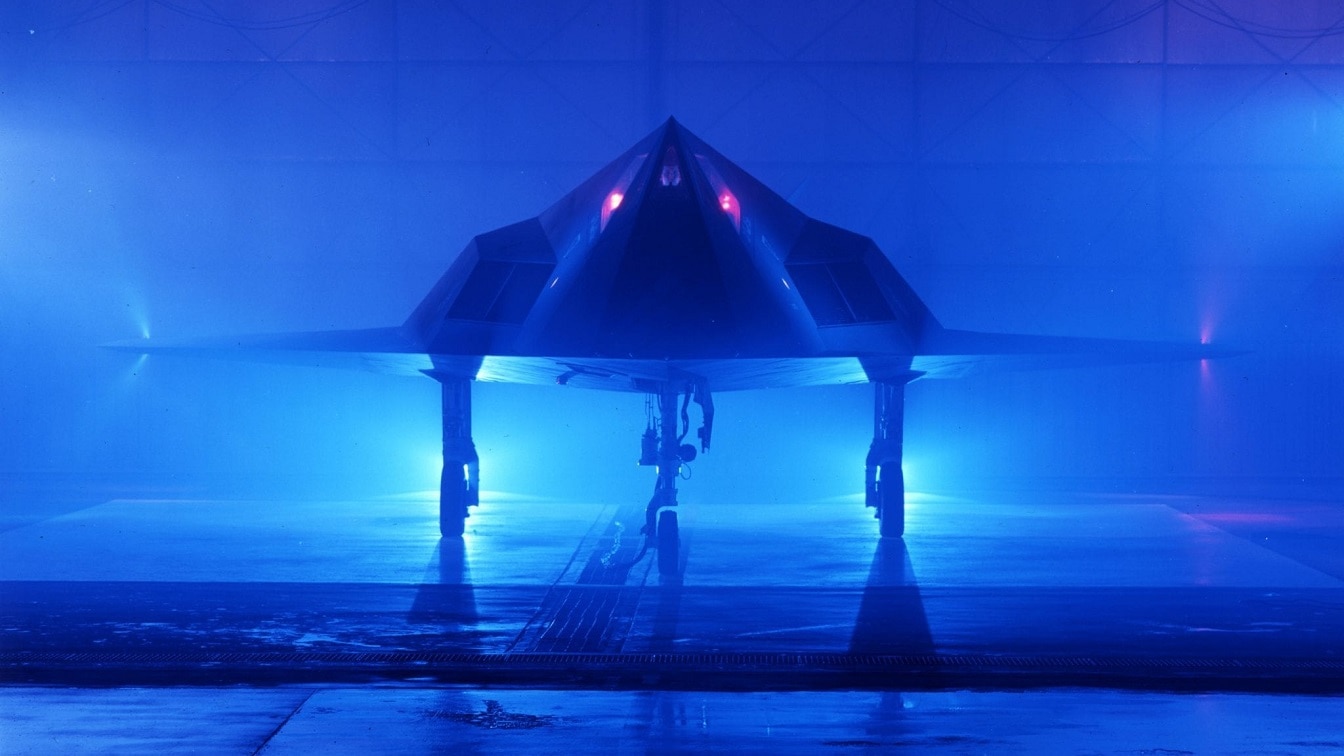
F-117. Image Credit: Lockheed Martin.
While that payload storage decision does aid maneuverability, it is also consistent with stealth aircraft, which opt for internal weapon carriage to preserve their low radar cross-section, a measure of detectability by radar.
Ambitious though the project was, several factors conspired to put the kibosh on the project, and Sukhoi ultimately built only a single technology demonstrator. The collapse of the Soviet Union and the end of Cold War hostilities with the West were a boon for peace, but were devastating to the economies of the post-Soviet space.
Soviet military drawdowns across Europe were staggering, and with the Russian economy (and many other post-Soviet economies) scrambling to cut costs, advanced and experimental projects like the Su-47 stood little chance of surviving deep budget cutbacks.
Ultimately, the Su-47 was not a totally unsuccessful design, however, though only a single prototype ever left the drawing board and took off into the sky. But some of the technologies that went into the aircraft were later useful in the development of more advanced aircraft, such as the Su-57, nominally a fifth-generation stealth fighter.
Here Comes the X-29
Interestingly, the idea of an aircraft with severely-swept wings also found fertile ground in the United States — before the Su-47. The outwardly similar X-29 first flew in 1984, an experimental aircraft funded by the U.S. Air Force, the Defense Research Projects Agency, and NASA.
Like its later Russian counterpart, the X-29 also sported canards on the fuselage ahead of the wings, additional control surfaces that aided maneuverability.
DARPA famously dubbed the X-29 “the most aerodynamically unstable aircraft ever built,” though it did complete hundreds of flight tests before its retirement in 1990. Despite the aircraft’s multiple innovations, the U.S. Air Force was at a crossroads: on the one hand, it could pursue increasingly maneuverabe aircraft, platforms that could, in theory, outmaneuver anything else in the air — or alternatively, it could invest its resources into further developing radar-defeating stealth technology.
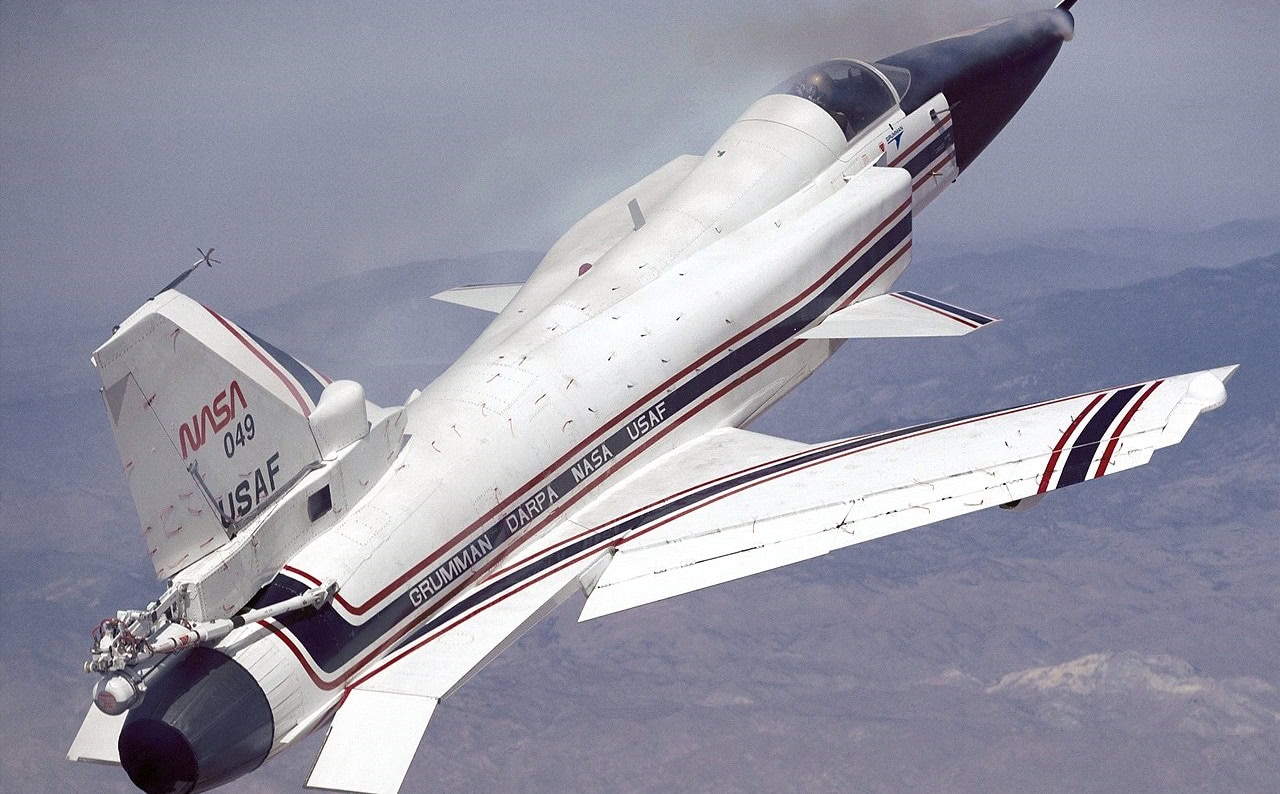
This photo shows the X-29 during a 1991 research flight. Smoke generators in the nose of the aircraft were used to help researchers see the behavior of the air flowing over the aircraft. The smoke here is demonstrating forebody vortex flow. This mission was flown September 10, 1991, by NASA research pilot Rogers Smith.
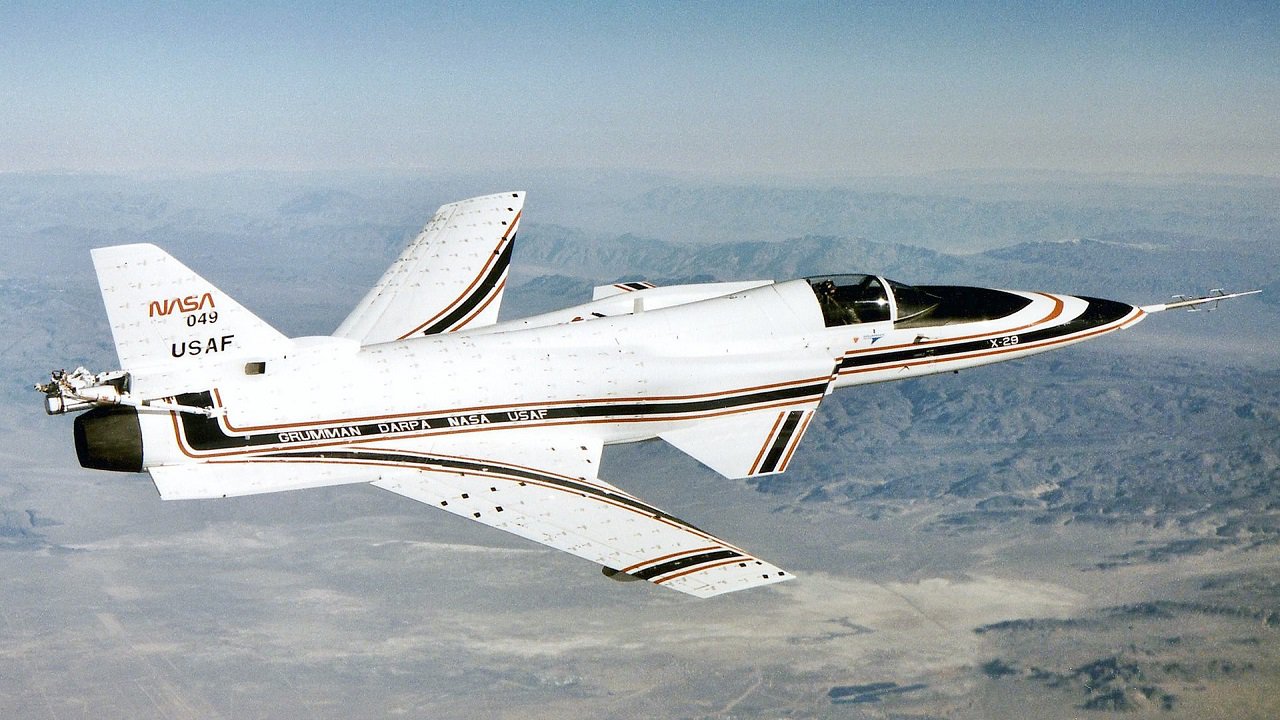
X-29.
“Although Air Force fighter designs ultimately embraced DARPA’s stealth revolution rather than the high maneuverability promised by forward-swept wings, other X-29 technologies found their way into future aircraft,” DARPA writes.
Like the U.S. Air Force X-29, the Su-47 did not progress beyond the prototyping and research stage, though the latter aircraft did appear in 2007 at the MAKS Air Show in Russia.
The Su-47 Failure?
Ultimately, one of the most critical engineering concepts behind both Russia’s Su-47 and its earlier American counterpart was not fully realized in later aircraft: no production combat aircraft today sport the same wing style.
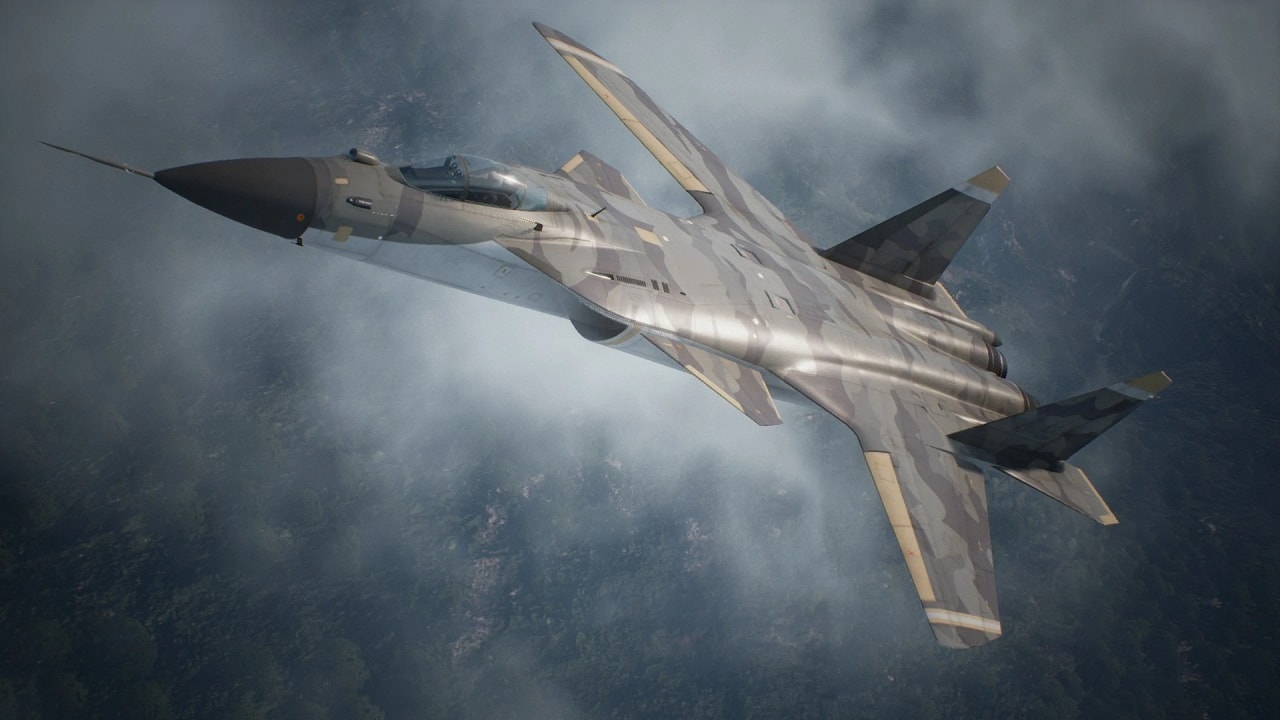
Computer generated image of the Su-47 fighter. Image Credit: Creative Commons.
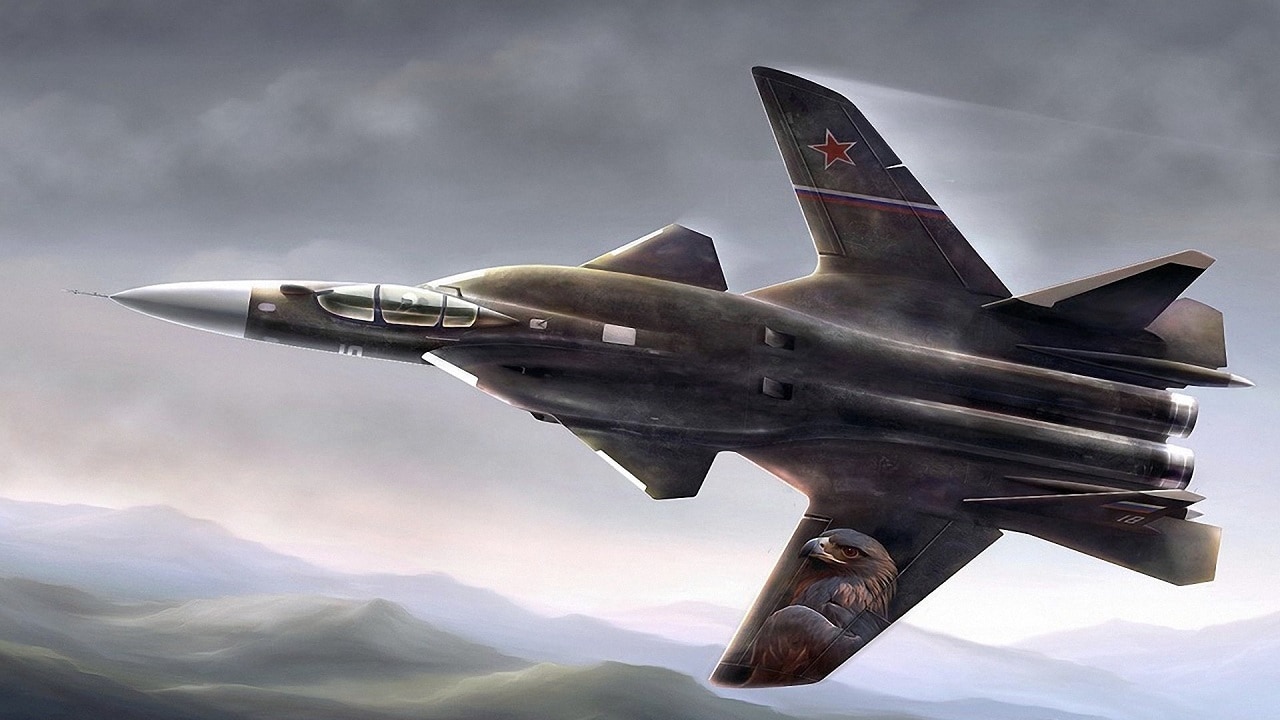
Su-47. Artist Rendition. Image Credit: Creative Commons.
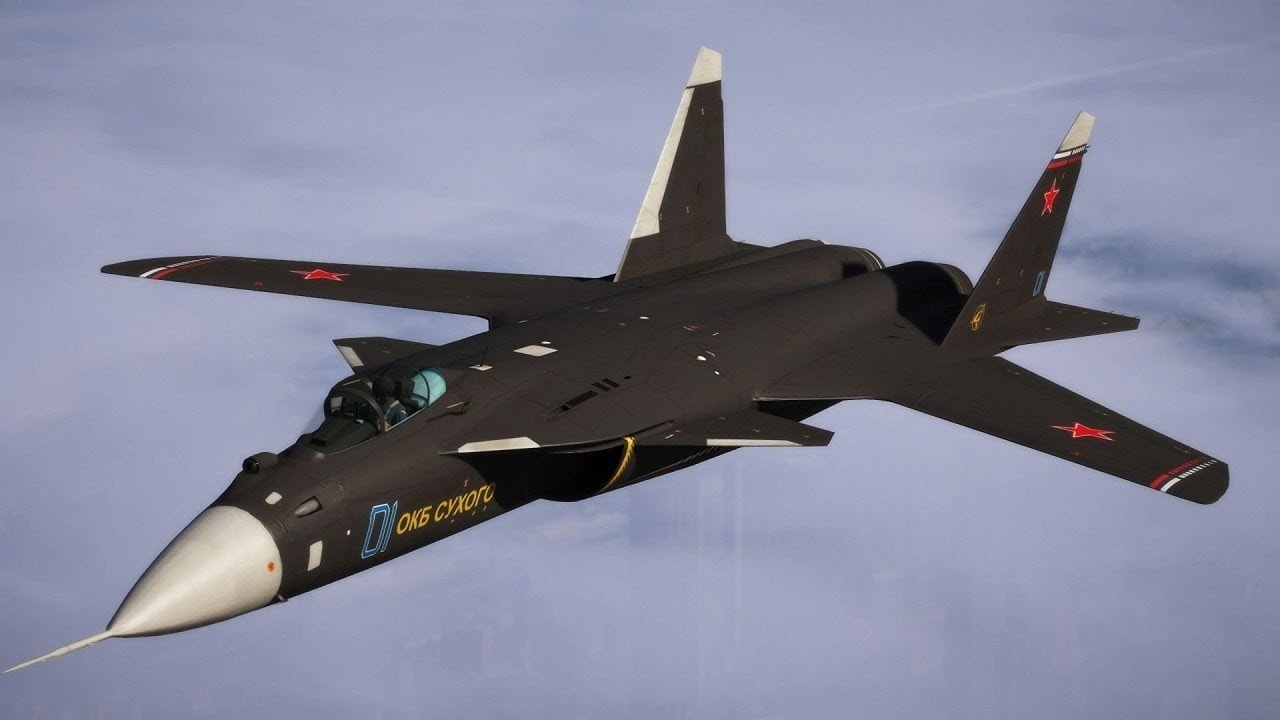
Su-47. Image Credit: Artist Rendering/Creative Commons.
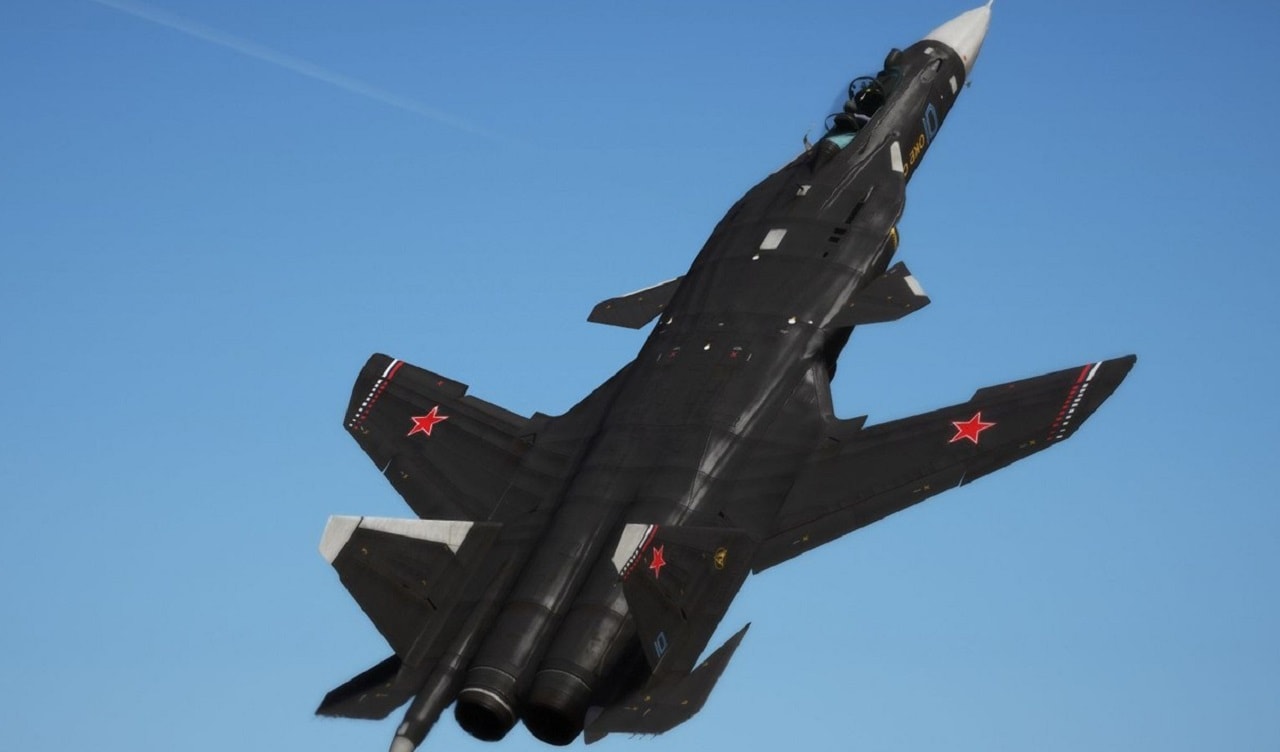
Su-47 fighter. Image Credit: Creative Commons.
But not all was for naught. “Advanced composite materials are now used extensively in military and commercial aircraft,” DARPA explained. “Aeroelastic tailoring to resist twisting under flight loads is now a standard tool for advanced designs with relevant outcomes including the long, thin wings of the Global Hawk, an unmanned surveillance aircraft.”
About the Author: Caleb Larson
Caleb Larson is an American multiformat journalist based in Berlin, Germany. His work covers the intersection of conflict and society, focusing on American foreign policy and European security. He has reported from Germany, Russia, and the United States. Most recently, he covered the war in Ukraine, reporting extensively on the war’s shifting battle lines from Donbas and writing on the war’s civilian and humanitarian toll. Previously, he worked as a Defense Reporter for POLITICO Europe. You can follow his latest work on X.