
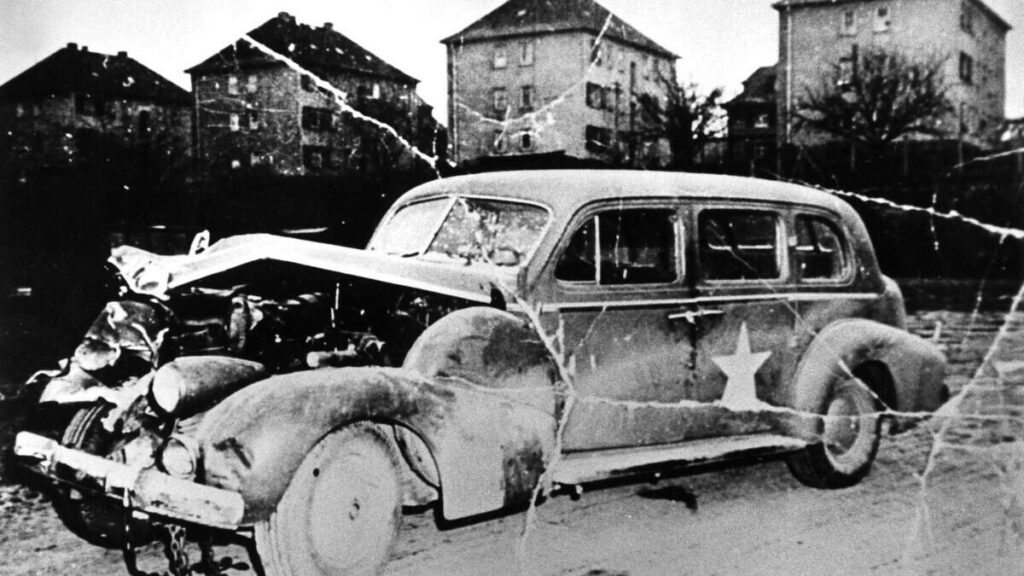
Eighty years ago this month, US General George S. Patton died, not on the battlefield, but in a road accident in Germany, bringing an abrupt end to one of the most celebrated — and controversial — military careers of the Second World War.
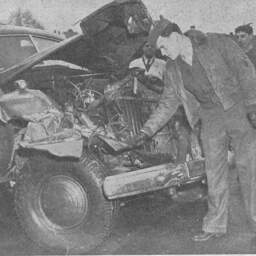
Patton had survived countless battles unscathed. Yet on 9 December 1945, while travelling in an official Cadillac near Mannheim, his car collided with a US army truck that turned left without warning. Patton, seated in the rear, was thrown forward, striking his head and fracturing a cervical vertebra. After twelve days in hospital, he died on 21 December at 17:55.
It was a bitter finale for a general who had been due to retire within months. Following disagreements with army leadership, Patton had been relieved of command of his Third Army and sent to Bad Nauheim to collect historical material — a task he reportedly found humiliating. He had planned to return to the United States by ship, stopping first for a pheasant hunt near Mannheim.
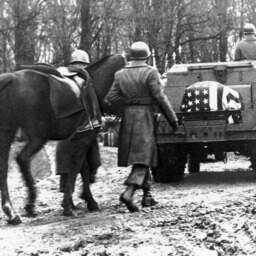
At his own request, Patton was buried in Luxembourg, alongside the soldiers of his Third Army who fell during the Battle of the Bulge. He was laid to rest at the American military cemetery in Hamm on 24 December 1945.
At the time, Luxembourg mourned him deeply. Writing in the Luxemburger Wort, Pierre Grégoire called for honorary citizenship for the “glorious field marshal,” adding: “Wherever he may have come from, wherever his remains may one day go, he will never leave us. He is inextricably linked to us through his work. And look: he is already ours!”
The final chapter of a brilliant military career on 24 December 1945: US soldiers carry General Patton’s coffin to his final resting place at the military cemetery in Hamm © Photo credit: LW-Archiv
Patton’s legacy, however, has never been uncomplicated. A brilliant and driven commander, he was also headstrong and prone to extreme views. In his diaries and letters, he expressed racist and antisemitic sentiments, describing Arabs as “the mixture of all the bad races on earth” and Holocaust survivors as “the biggest stinking pile of people” he had ever seen.
Even so, Supreme Allied Commander Dwight D. Eisenhower tolerated his excesses, arguing that “Patton is indispensable to the war effort — one of the guarantors of our victory.”
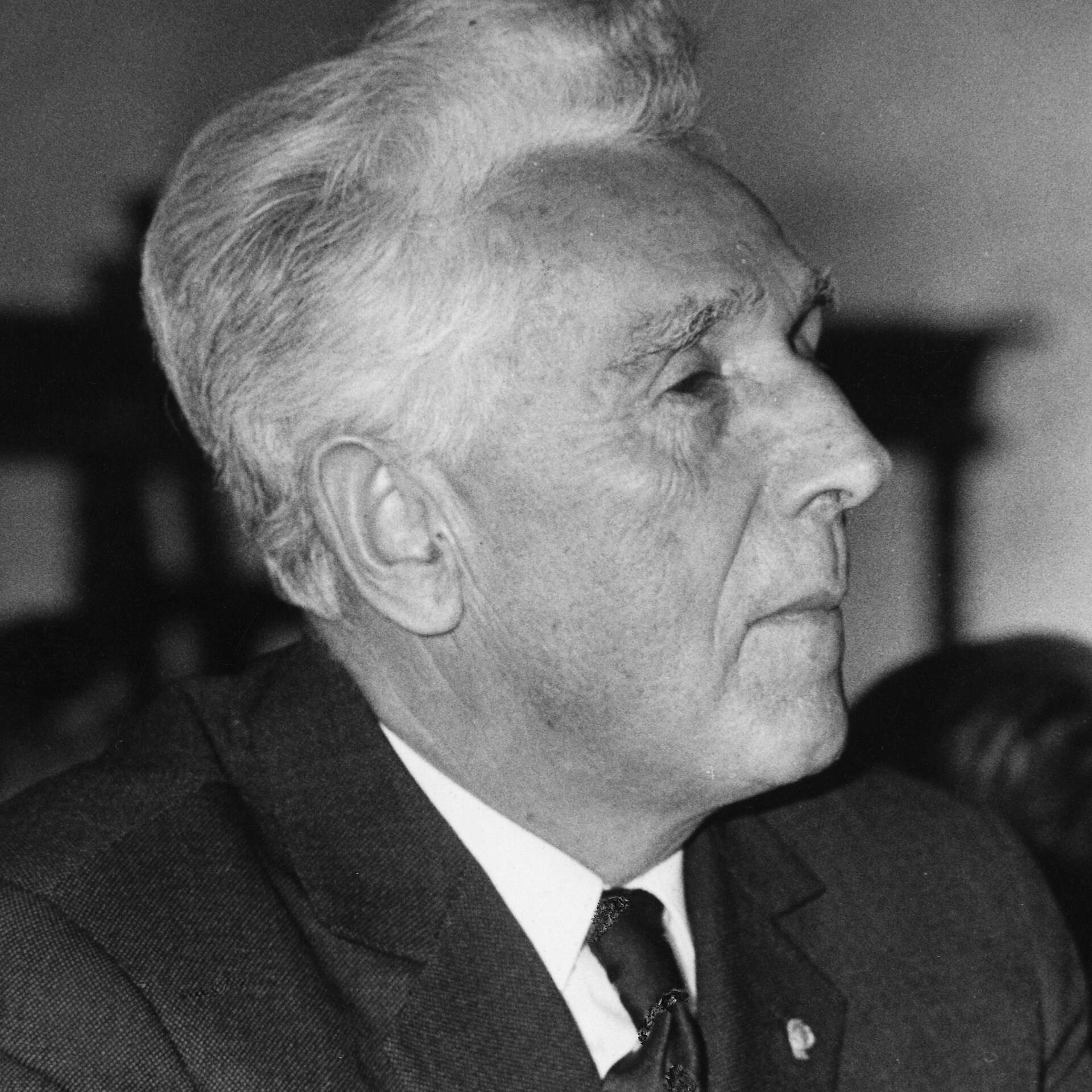
Wherever his remains may one day go, he will never be able to leave us. He is inseparably linked to us through his work
Pierre Grégoire
Luxemburger Wort, 24 December 1945
Nicknamed “Old Blood and Guts,” a phrase derived from his own words about “blood and brains,” Patton cultivated a fearsome image. He slapped two traumatised soldiers in Sicily, threatened them with execution, and once remarked: “To restore a coward’s dignity, you have to humiliate him.” The incidents nearly ended his career.
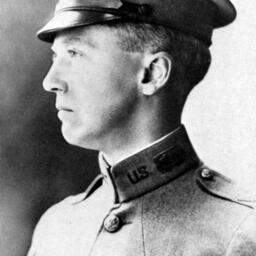

Yet in Luxembourg, Patton’s decisive role during the Battle of the Bulge cemented his reputation as a liberator. Feared by German commanders and admired by allies — General Gerd von Rundstedt would later say, “Patton! He is your best.” — he remains a towering, if deeply contradictory figure.
Eisenhower congratulates Patton, General Omar Bradley in the background © Photo credit: LW-Archiv
As US General Omar Bradley later observed after his death: “It may be hard to say, but I believe it was better for Patton and his reputation as an officer that he died at that time.”
(This article was originally published by the Luxemburger Wort. Translation and editing by Kabir Agarwal.)